
Stay with us and find out where the next one takes us.
- How Game Designers Use Music to Build Suspense and Anticipation - November 25, 2026
- How to Choose Wedding Songs That Keep Guests of All Ages on the Dance Floor - November 24, 2026
- Rosalía Net Worth 2026, Her Music Earnings, World Tours and Major Brand Deals - November 23, 2026
An empty corridor in Alien: Isolation can feel more dangerous than a room full of enemies. A low orchestral note interrupts the silence. The player slows down, uncertain about what waits behind the next door.
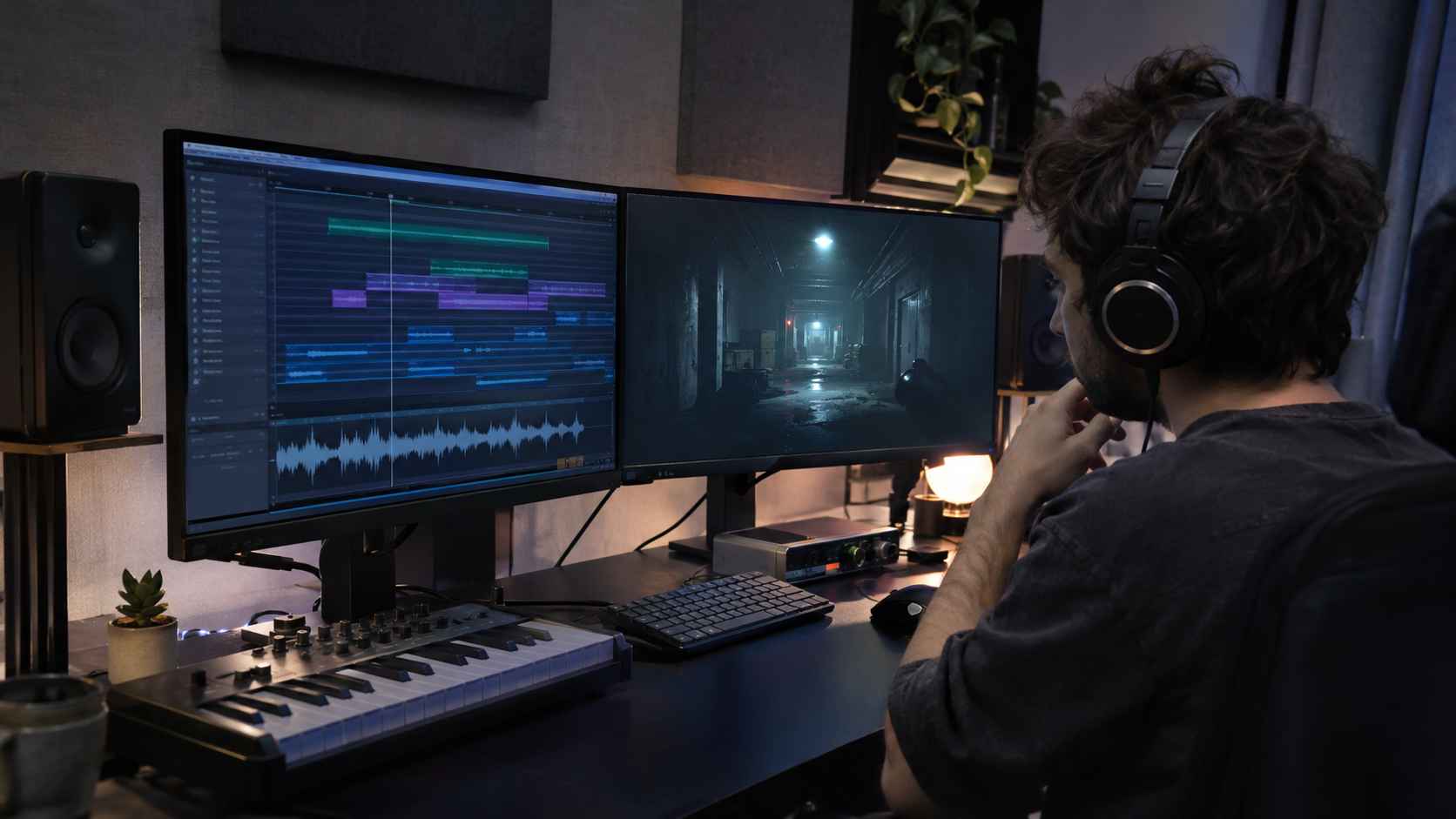
Game designers use music to build suspense and anticipation through dissonance and unresolved harmonies. Repetitive rhythms and adaptive soundtracks reinforce the effect. Even silence can create considerable tension.
Unlike film composers, video game composers have limited control over the pace of a scene. A player might spend thirty seconds in a room or hide beneath a desk for five minutes. The soundtrack must accommodate both possibilities without premature musical cues.
The Chord That Never Comes
Music creates expectations. A familiar chord progression suggests a particular destination. When composers delay the expected resolution, listeners can experience a sense of unease.
The psychology of musical suspense revolves partly around uncertainty and the desire for resolution. The same principle extends beyond conventional video games. Digital casino platforms such as Casino.Draftkings offer another context for the relationship between sound and uncertain outcomes. Musical cues can influence how players perceive a result without any effect on the actual odds.
In horror games, a melody might stop just before its final note. A sustained bass note can create discomfort beneath an unresolved chord. The player anticipates a musical resolution alongside the outcome of the encounter.
Silent Hill Turned Musical Discomfort Into an Art Form
Horror composers frequently use harmonies that lack a comfortable sense of stability.
- Tone clusters: Closely spaced notes that produce harsh harmonic textures.
- Chromatic passages: Sequences of semitones that can weaken tonal stability.
- Drones: Sustained notes that create persistent tension.
- Unresolved chords: Harmonies that postpone musical resolution.
Akira Yamaoka’s work on the Silent Hill series demonstrates the dramatic potential of musical dissonance. His scores combine industrial noise with distorted guitar textures. Delicate melodies occasionally offer relief.
Fans of experimental rock and industrial music will recognize much of his musical vocabulary.
An Orchestra That Changes With Every Move
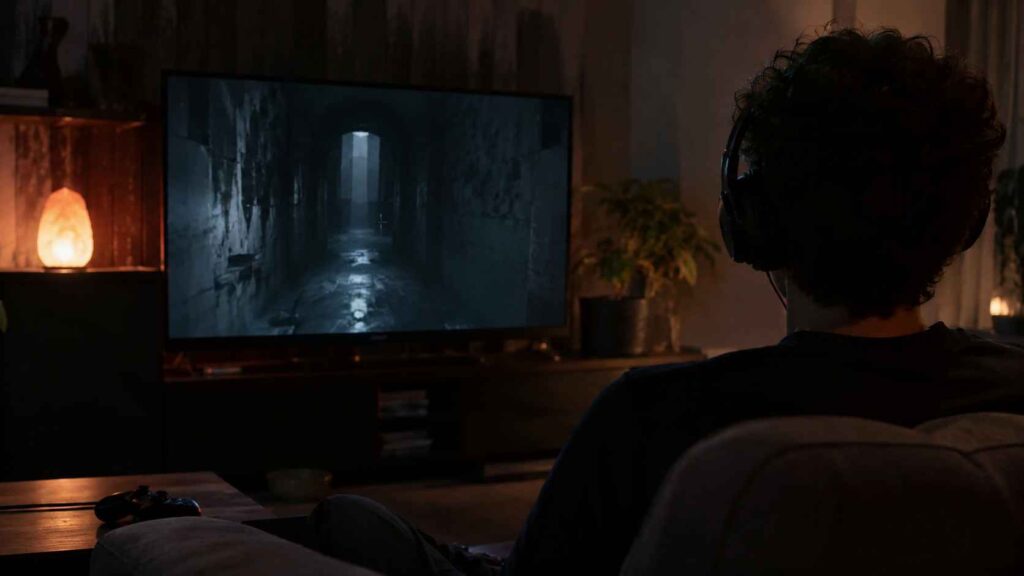
Traditional film scores follow a predetermined sequence. Video game soundtracks can react to enemy proximity or changes in player behavior.
Composers often divide a piece of music into separate instrumental tracks. The game introduces or removes individual elements according to events on screen.
| Musical technique | Purpose |
| Vertical orchestration | Adds instrumental layers as tension increases |
| Horizontal resequence | Changes the order of musical sections |
| Crossfades | Creates gradual transitions between passages |
| Musical stabs | Introduce brief musical cues at dramatic moments |
A quiet bass pattern might develop into an aggressive orchestral passage within seconds. Compatible musical structures allow individual instrumental parts to blend naturally.
The developers of Alien: Isolation even incorporated the player’s field of vision into the audio system. Music could otherwise expose the Xenomorph before the player had a reason to suspect its presence.
An effective horror soundtrack should never become a reliable enemy detection system.
Two Notes Were Enough to Terrify an Entire Generation
John Williams demonstrated the dramatic power of repetition with his famous two-note motif for Jaws in 1975. The audience quickly learned to associate its distinctive rhythm with danger.
Video game composers employ similar techniques. A steady pulse can establish tension before an encounter. Additional notes and percussion gradually increase its intensity.
Tempo alone cannot determine the emotional effect. A fast punk song can produce excitement. A slow industrial drone can produce considerable discomfort. Harmony and instrumental texture often determine how the listener interprets the rhythm.
When the Music Stops, Fear Takes Over
The sudden absence of music can disrupt a player’s expectations. Environmental sounds become more distinct once the score disappears. Even a distant footstep can alter the atmosphere of an apparently empty room.
Composers can use extended periods of relative silence to make the next orchestral cue feel more dramatic. Constant musical intensity eventually reduces the impact of individual moments.
Resident Evil and the False Comfort of a Familiar Melody
The Resident Evil franchise approaches suspense through musical contrast. Its famous safe room themes offer temporary emotional relief.
Composer Shusaku Uchiyama deliberately combined peaceful melodies with a trace of unease in the original Resident Evil 2 score. The familiar music allows players to relax without a complete sense of security.
Eventually, the player has to open that door again.
Suspense Has a Place Outside Haunted Corridors
Licensed soundtracks have introduced entire generations to classic rock songs. Original compositions can establish equally strong emotional associations through anticipation.
Tetris Effect (2018) offers an unusual example. Its interactive soundtrack develops in real time according to player actions. Musical details accompany the movement of individual pieces. Successful sequences become part of a larger composition.
Adventure games can use orchestral crescendos ahead of major discoveries. Competitive games can introduce more aggressive rhythms before decisive encounters. Anticipation can produce excitement just as effectively as fear.
The Most Powerful Note Is Sometimes the One You Never Hear

Video game composers must support events with no fixed duration. Musical patterns need enough consistency to establish expectations and enough variety to preserve suspense.
An elaborate orchestra can create tremendous tension. A solitary piano note can produce a similar effect under the right circumstances.
Sometimes, the most memorable part of a video game soundtrack is the note the player expects to hear next.