

Stay with us and find out where the next one takes us.
- How Much Does It Cost to Make a Music Video? - October 19, 2026
- 8 Future Classic Cars Worth Buying Before Prices Start Rising - October 19, 2026
- 7 Celebrities Who Actually Look Better After Plastic Surgery - October 19, 2026
In 1995, Michael Jackson and his sister Janet reportedly spent $7 million making the music video for Scream. They hired director Mark Romanek, built futuristic sets across seven sound stages and filled the finished video with special effects that looked as though they belonged in a science fiction movie.
Eleven years later, the band OK Go released a music video featuring four men dancing on eight treadmills. It was filmed in a small dance studio with a single camera, yet millions of people watched it. The video won a Grammy and became one of the defining music videos of the early YouTube era.
Both videos did exactly what their creators wanted. People remembered the songs, talked about the performances and kept watching.
Today, you can shoot a respectable music video for a few hundred dollars, commission a professional production for several thousand or spend six figures creating something elaborate. Cameras are cheaper, editing software is accessible, and even artificial intelligence can generate scenes that once required expensive equipment and specialist crews.
But what does a music video actually cost in 2026? And why were record labels once willing to spend millions on something that viewers could watch for free?
How Much Does a Music Video Cost in 2026?
View this post on Instagram
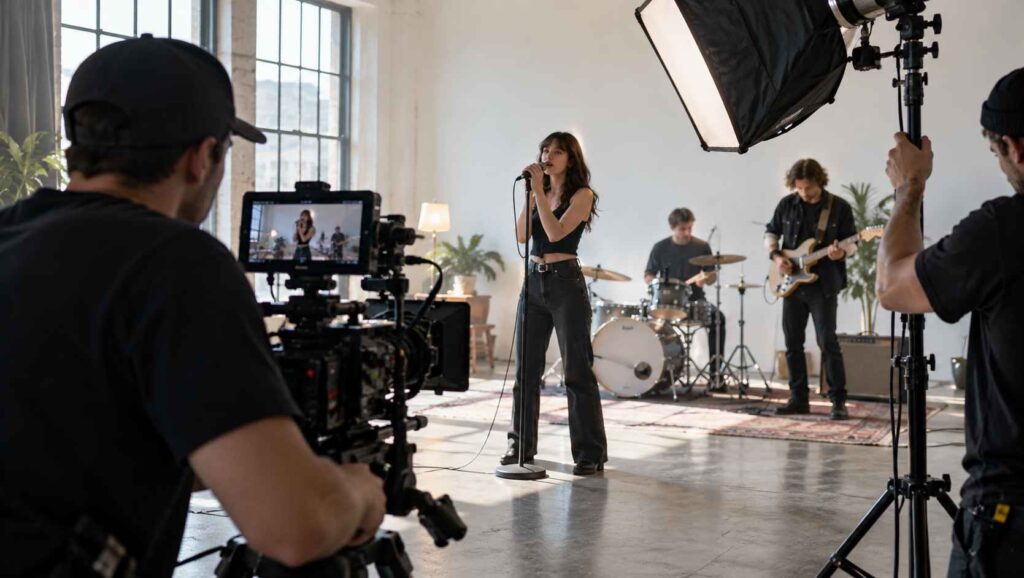
For an independent musician, a simple music video can cost anywhere from $300 to $2,000 if the artist handles much of the planning, keeps the shoot short and works with a small crew. A more polished production involving professional camera operators, lighting, several locations and detailed editing can cost $3,000 to $15,000.
Established artists working with production companies may spend $20,000 to $100,000 or more. Elaborate videos featuring large crews, choreography, custom sets and extensive visual effects can reach hundreds of thousands of dollars.
There is no official industry price list. Production companies quote projects individually, and expenses depend on the concept, location, crew, equipment and editing requirements.
| Type of Music Video | Illustrative Budget | What the Budget Can Cover |
| DIY video | $0 to $500 | Personal equipment, free locations, self-editing |
| Basic independent video | $500 to $2,000 | Freelance camera operator, simple lighting, basic editing |
| Professional low-budget video | $3,000 to $10,000 | Small crew, professional equipment, controlled lighting, editing |
| Mid-range production | $10,000 to $50,000 | Experienced director, multiple locations, production design, larger crew |
| Major-label production | $50,000 to $250,000+ | Large crew, custom sets, choreography, specialist equipment, visual effects |
| High-end spectacle | $500,000 to several million | Complex sets, celebrity performers, extensive effects, lengthy production schedules |
The ranges above are illustrative planning budgets in US dollars, not measured industry averages. A one-day shoot in a small town will have very different expenses from a production filmed across several locations in Los Angeles.
One of the biggest mistakes independent musicians make is thinking that a more expensive camera automatically produces a more interesting video. Lighting, locations, performance and editing usually influence the finished result more than the difference between two modern professional cameras.
When MTV Made Music Videos Worth Millions
On August 1, 1981, MTV began broadcasting in the United States. Its first video was The Buggles’ Video Killed the Radio Star, an appropriate choice for a television channel that would radically change how record companies promoted music.
Before MTV, promotional films already existed. The Beatles had made clips for songs such as Paperback Writer and Rain, while Queen released the famous Bohemian Rhapsody promotional video in 1975.
MTV turned those occasional promotional films into a regular part of the music business.
During the 1980s, a successful video could help turn a single into a major hit. Television exposure was particularly valuable because audiences could watch an artist perform without attending a concert or purchasing a record.
Record labels began commissioning increasingly elaborate productions. Artists needed strong visual identities, and directors were encouraged to produce videos that audiences would remember after the song ended.
If you remember Madonna’s Like a Prayer, Peter Gabriel’s Sledgehammer or Duran Duran’s Rio, you probably remember the images as clearly as the music.
We previously explored the cultural history in our article on the evolution of music videos, including the arrival of MTV and the move toward online platforms.
Michael Jackson’s Thriller Changed the Ambitions of the Industry
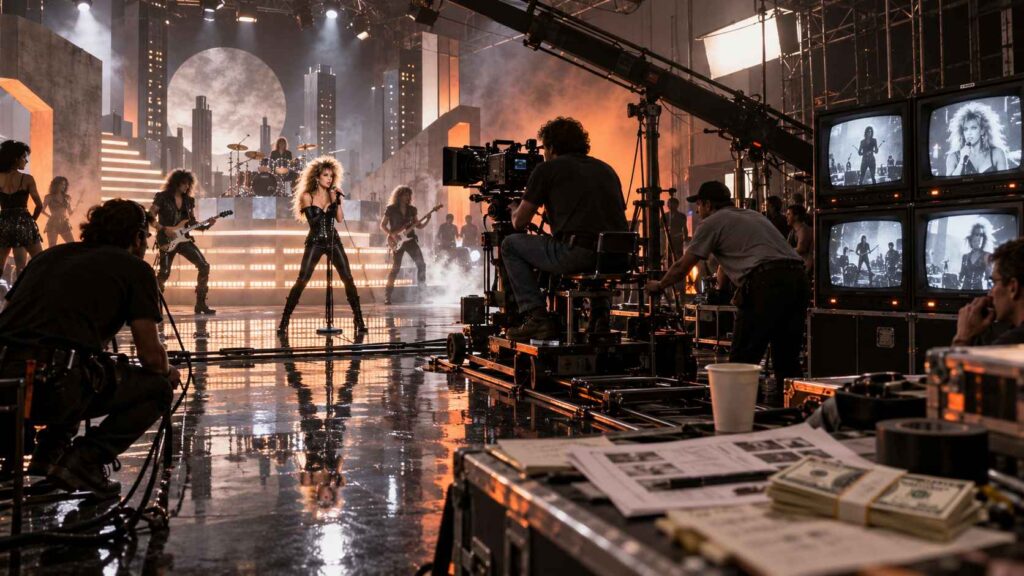
Michael Jackson did not want Thriller to look like a conventional promotional video. He wanted a short horror film, complete with dialogue, costumes, makeup and a large choreographed dance sequence.
Director John Landis, who had previously made An American Werewolf in London, was brought in to direct the project. Legendary makeup artist Rick Baker created the monster effects, and the production used professional dancers and extensive rehearsals.
Released in December 1983, the finished video ran for nearly fourteen minutes.
Landis later said the production cost close to $500,000. The extraordinary budget created a financing problem because Jackson’s record label was reluctant to cover the entire expense.
The producers found an unusual solution. They created a documentary showing how the video was made and sold television rights to help finance the project.
According to The Guardian’s examination of the Thriller production, MTV paid $250,000 for broadcast rights to the making-of documentary, while Showtime paid $300,000 for cable rights.
The documentary also became a commercial success on home video, creating another way to earn money from a music video.
Thriller proved that a promotional film could become an entertainment event in its own right. It helped establish the idea that a major artist could justify a much larger production budget if the video generated sufficient attention.
How Much Did the Most Expensive Music Videos Cost?
During the late 1980s and 1990s, record labels financed music videos that looked closer to feature films than traditional band performances.
Madonna worked with directors who later became major Hollywood filmmakers. Guns N’ Roses created lengthy cinematic productions filled with expensive locations and elaborate scenes. Janet Jackson and Michael Jackson took futuristic production design to another level with Scream.
| Music Video | Artist | Year | Reported Production Cost |
| Thriller | Michael Jackson | 1983 | Close to $500,000 according to director John Landis |
| Express Yourself | Madonna | 1989 | $5 million |
| Estranged | Guns N’ Roses | 1993 | $5 million |
| Scream | Michael Jackson and Janet Jackson | 1995 | $7 million |
| Bedtime Story | Madonna | 1995 | $5 million |
Historical budgets are reported nominal amounts from their original production periods, without inflation adjustments. Figures for the most expensive videos come from published industry estimates and are not necessarily independently audited.
Guinness World Records lists Scream as the most expensive music video, with a reported $7 million budget in 1995.
The video was directed by Mark Romanek and filmed across seven sound stages. Its futuristic setting included enormous white rooms, digital effects and elaborate choreography.
The production won a Grammy Award for Best Music Video, Short Form, and helped establish a lasting visual identity for the song.
Interestingly, Romanek has disputed the accuracy of the famous $7 million figure in later interviews, noting that other productions may have been more expensive. The commonly cited amount remains the historical record listed by Guinness.
What Actually Makes a Music Video Expensive?
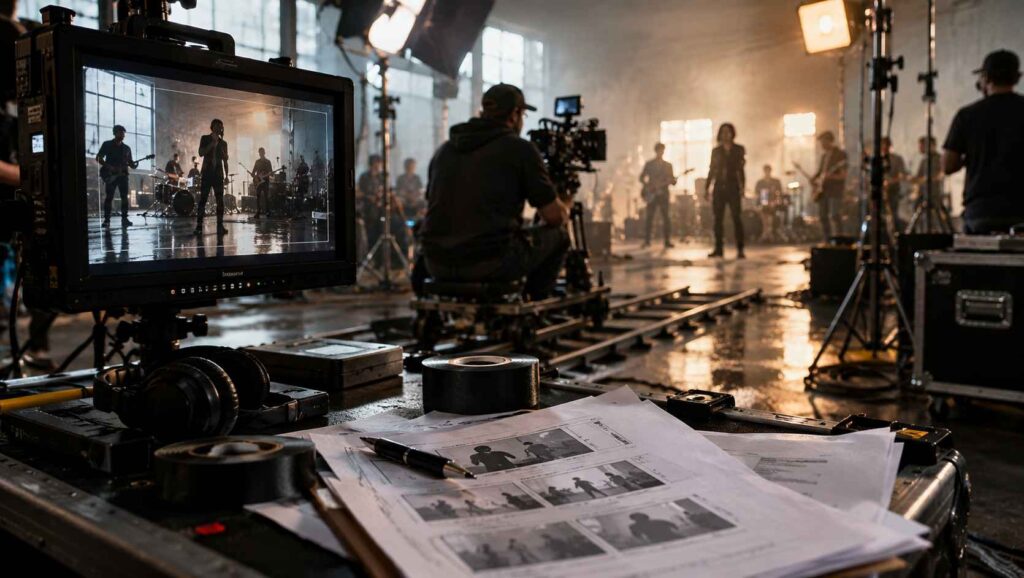
A three-minute music video may require several days of preparation, an entire day of filming and weeks of editing. The running time tells you very little about how much work was involved.
Think of a scene in which a singer walks through a crowded nightclub. On screen, it may last only twenty seconds. Behind the camera, the production might involve renting the venue, hiring extras, setting up lighting, arranging costumes and repeating the performance until the director gets the desired shot.
Director and Production Crew
A professional director develops the visual concept, plans the shots and oversees the creative decisions during filming.
Depending on the production, the crew may also include a cinematographer, camera assistant, lighting technician, production designer, makeup artist and production assistant.
For a small independent video, one experienced filmmaker may handle several of those roles. Hiring separate specialists improves the ability to manage complex scenes but increases labor expenses.
Camera Equipment and Lighting
Professional cinema cameras are available to rent, so musicians rarely need to purchase expensive equipment for a single video.
However, camera rental is only one part of the equipment budget. Lenses, stabilizers, lighting fixtures, stands, batteries and recording media may all be needed.
Lighting deserves particular attention. A singer standing in a dark room illuminated by carefully positioned lights can look more cinematic than a performance filmed in daylight with an expensive camera and little thought given to the scene.
Locations, Sets and Permissions
Filming in a rehearsal room, a friend’s apartment or an empty studio can keep costs relatively low.
Renting a nightclub, theater, warehouse or historic building adds location fees and sometimes security or insurance requirements. Outdoor filming may require permits depending on the city and the equipment involved.
Custom sets are another major expense. Building a convincing spaceship interior or recreating a historical street scene requires skilled workers, materials and time.
Performers, Costumes and Choreography
A video featuring only the artist can be filmed with a small crew. Add twenty dancers, elaborate costumes and synchronized choreography, and the production becomes considerably more complicated.
Performers may need to be paid for rehearsals as well as filming. Costume changes require preparation, and choreographed scenes can involve repeated takes.
Professional musicians also need to consider how much time they can spend filming. A performer who is touring may have only one available day, making careful scheduling essential.
Editing and Visual Effects
Filming is only part of the job. Someone must organize the footage, select takes, synchronize performances with the finished track and create the final sequence.
Color grading gives the images a consistent appearance, while visual effects can add elements that were never physically present during filming.
Complex computer-generated scenes may involve specialists working frame by frame. For a small music video, the editing budget can be controlled by limiting the number of scenes and avoiding effects that require extensive manual work.
What Happened When YouTube Replaced MTV?
By the mid-2000s, music television was changing. MTV increasingly featured reality programs, while YouTube made it possible for artists to publish videos directly without waiting for a television programmer to select them.
The change reduced the need for enormous promotional budgets. A record label no longer controlled the only realistic route to a large video audience, and independent musicians could experiment with ideas that traditional television might have ignored.
One of the clearest examples arrived in 2006.
OK Go Proved That Eight Treadmills Could Beat an Expensive Set
OK Go’s Here It Goes Again featured all four band members performing a choreographed routine on eight moving treadmills.
There were no elaborate digital effects or extravagant locations. The video was filmed at a dance studio belonging to Trish Sie, the sister of lead singer Damian Kulash.
Sie helped choreograph and direct the performance, and the band spent days practicing how to move between the treadmills without falling.
The finished video was filmed in one continuous shot.
In August 2026, the band discussed the production again while celebrating its twentieth anniversary. According to Vevo, the complete process took ten days, and the final performance was captured on the seventeenth take.
Here It Goes Again became a viral success and won the Grammy for Best Short Form Music Video in 2007.
Most people who watched it never knew how much preparation went into those few minutes. The choreography looked simple enough to try at home, even though completing it without mistakes had required extensive practice.
The video demonstrated that audiences were willing to watch something clever and unusual even when it lacked the polished appearance of a major-label production.
How Much Would It Cost to Make a Music Video Like That Today?
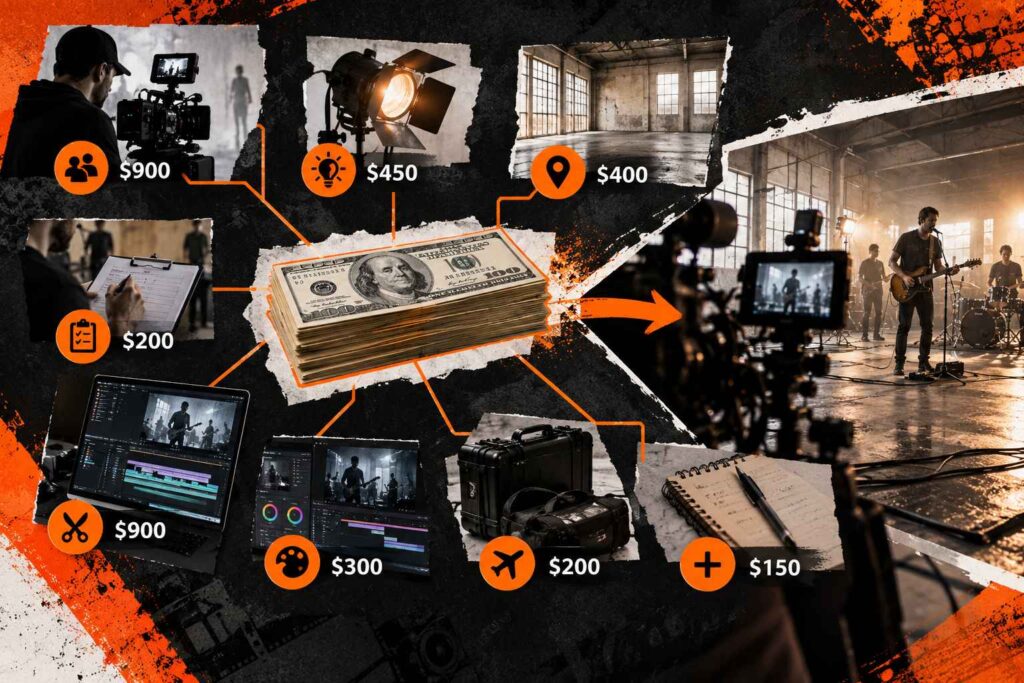
Imagine you are releasing a single and want a video featuring your band performing in an empty warehouse. You have a local filmmaker, access to the building for one day and no plans for expensive costumes or visual effects.
A budget of $3,500 could cover a small professional production if the crew, equipment and location are available at suitable rates.
| Production Expense | Example Budget |
| Director and camera operator | $900 |
| Lighting and equipment rental | $450 |
| Location rental | $400 |
| Production assistant | $200 |
| Editing | $900 |
| Color grading | $300 |
| Travel and miscellaneous expenses | $200 |
| Contingency | $150 |
| Total | $3,500 |
The figures are a hypothetical US production budget, not quoted market rates. Actual prices depend on crew availability, location, production requirements and local costs.
The example assumes the music track is already recorded and mastered, the performers provide their own clothing, and the video requires no additional actors or elaborate set construction.
A budget like this would be inadequate for a complicated narrative featuring several locations and a large cast. But a performance video filmed with careful lighting and strong editing could be achievable.
How to Spend $1,000 Without Making the Video Look Cheap
If you have $1,000, concentrate the money on the parts of the production that people will actually see.
Choose one interesting location and develop the video around it. A rooftop, rehearsal room or empty industrial interior can provide enough visual character without requiring multiple sets.
Keep the number of performers manageable. Every extra person creates scheduling problems and can increase the time needed for each scene.
Hiring one filmmaker who can shoot and edit may be more affordable than assembling a crew. Before making the decision, examine previous videos they have completed under similar conditions.
Finally, plan the shots before filming. Arriving with a clear sequence saves time and reduces the likelihood of needing another shooting day.
Can You Make a Music Video Without Filming Anything?
Animated music videos have existed for decades. Dire Straits used computer animation for Money for Nothing in 1985, while Gorillaz built much of their visual identity around animated characters.
Today, digital animation and generative AI have made certain types of visual production accessible to musicians who cannot afford traditional film crews.
For example, viddo text to video allows you to generate video clips from written descriptions, making it possible to experiment with visual ideas without renting a camera or location. You still need to edit the clips, synchronize them with your song and review the results for consistency and permitted commercial use.
AI-generated footage is particularly suited to abstract visuals, fictional settings and sequences that would be expensive or impossible to film physically. A dreamlike city, unusual landscape or surreal animated scene can form part of a music video without requiring a large production team.
However, AI does not remove the work involved in directing and editing a finished piece. Short generated clips need to be assembled into a coherent sequence, and keeping the same characters or visual style consistent across multiple scenes can be difficult.
Artists using AI-generated visuals should also check the licensing conditions of the service and avoid generating recognizable people or copyrighted material without appropriate permission.
Is Spending $20,000 on a Music Video Worth It?
A music video can generate millions of views without producing enough direct income to recover its budget.
Unlike selling a concert ticket or a physical record, a video view does not guarantee a significant payment to the artist. Revenue depends on the platform, monetization eligibility, advertising conditions, rights agreements and audience location.
For a musician spending $20,000, the value of the video should therefore be considered alongside the promotional goals of the release.
A memorable music video may attract press coverage, introduce an artist to new fans or give existing followers something worth sharing. It can also supply short clips for social media promotion and visual material for live performances.
Those benefits are difficult to predict in advance.
Why Record Labels Once Paid So Much
During the MTV era, record labels treated music videos as promotional investments in album and single sales.
A popular video could receive repeated television exposure, making a song recognizable to audiences who had not yet purchased the album.
For a major artist selling millions of records, spending several hundred thousand dollars on a video could be justified if the exposure helped increase sales.
Television placement was also limited. MTV had a finite number of broadcasting hours, and videos competed for attention from programmers and audiences.
Today, an artist can publish a video on YouTube without that television barrier. However, uploading a video does not guarantee an audience, and reaching potential fans may involve separate advertising and promotion expenses.
Why a Smaller Budget Can Be a Better Decision
Consider an independent artist with $20,000 available for a new release.
Spending the entire amount on one elaborate music video leaves nothing for advertising, photography, additional content or live promotion.
Using $5,000 for the video and reserving the rest for other release expenses may provide more flexibility. The right allocation depends on the audience, the music and the opportunities already available to the artist.
It is also worth remembering that expensive videos can disappoint. A large crew and elaborate effects do not guarantee that the final result will attract attention.
One memorable performance, a compelling visual idea or an unusual location may provide more entertainment than a collection of expensive scenes with little connection to the song.
Music Videos Are Cheaper to Make, but Getting Attention Is Harder
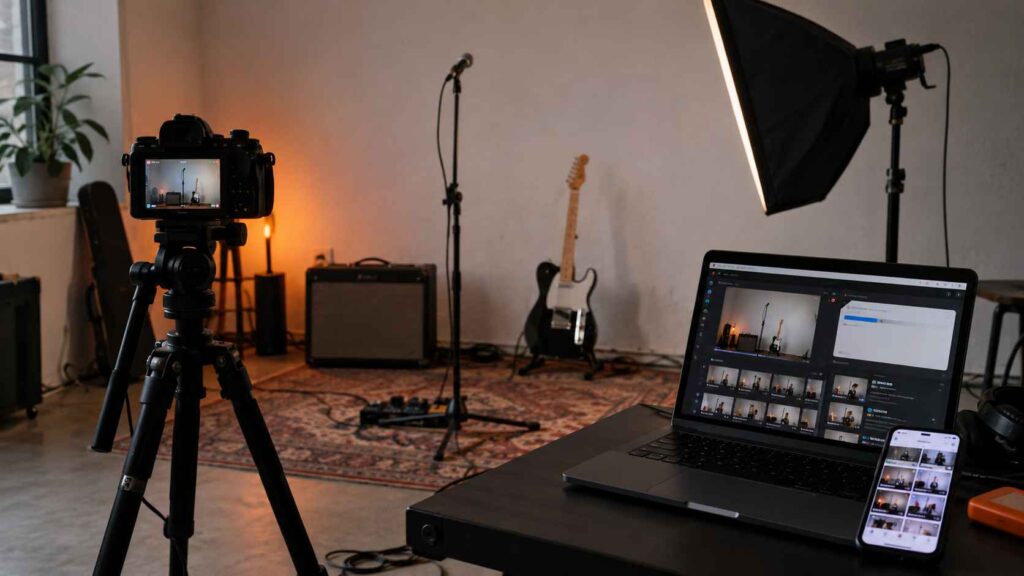
Michael Jackson needed a television network, a major record label and an experienced production team to bring Thriller to audiences around the world. A musician in 2026 can record a song at home, film a video on a phone and upload it to YouTube the same day.
The financial barrier is considerably lower, but that accessibility has created intense competition. Artists now release videos alongside enormous quantities of short-form content, live performances, lyric videos and fan-made edits.
Spending more money does not guarantee that anyone will watch.
Some songs benefit from expensive storytelling and elaborate choreography. Others are better served by a stripped-down performance or an idea that gives the audience something memorable to watch.
The next music video people remember for twenty years could cost $500 or $5 million. In 1995, Michael and Janet Jackson needed seven sound stages to create Scream. In 2006, OK Go needed eight treadmills, a dance studio and seventeen takes.
The expensive video looked like the future. The inexpensive one helped show where music videos were going next.