
Stay with us and find out where the next one takes us.
- How to Choose Wedding Songs That Keep Guests of All Ages on the Dance Floor - November 24, 2026
- Rosalía Net Worth 2026, Her Music Earnings, World Tours and Major Brand Deals - November 23, 2026
- Paris Jackson Net Worth 2026, How Rich Is Michael Jackson’s Daughter Today? - November 20, 2026
A wedding dance floor brings together people who might never attend the same party otherwise. Your college friends know every word of the latest pop hits, your parents remember the disco era, and your grandparents might still have a soft spot for Motown.
Finding music everyone enjoys can feel surprisingly difficult.
The best wedding playlists combine familiar classics, contemporary hits, different musical styles, and a thoughtful sequence that keeps guests engaged throughout the reception.
Songs with recognisable melodies, strong rhythms, and memorable choruses tend to work particularly well across generations.
A little planning helps, although the real magic often happens when the DJ notices an unexpected connection. Sometimes, the song that gets three generations dancing together is older than half the people in the room.
Start With Your Guests, Not Their Age Groups
Age offers useful clues about musical preferences, but individual taste matters considerably more.
A 65-year-old might love Bruno Mars, while someone in their twenties could know every lyric to ABBA’s greatest hits. Family traditions, cultural backgrounds, and shared memories can be stronger influences than birth years.
Start by thinking about the people attending your wedding.
Consider which songs regularly appear at family celebrations, what your friends enjoy when they go out, and which artists have special meaning within your family.
Familiarity can make a difference. A 2020 study published in Scientific Reports found that familiarity with music was associated with greater feelings of social closeness during group movement.
Although the research did not specifically examine weddings, it offers an interesting explanation for the appeal of well-known songs.
When the chorus of “Dancing Queen” begins, guests already know what comes next. Nobody needs to learn the rhythm or concentrate on unfamiliar lyrics.
That shared recognition can help turn hesitant listeners into enthusiastic dancers.
Choose Songs That Have Already Proven Their Appeal
Some wedding songs remain popular for decades because people genuinely enjoy hearing them together.
According to DJ Event Planner’s 2025 request rankings, compiled from more than two million song requests across weddings and other events, ABBA’s “Dancing Queen” ranked first overall.
- “I Wanna Dance with Somebody” by Whitney Houston
- “September” by Earth, Wind & Fire
- “Mr. Brightside” by The Killers
- “Uptown Funk” by Mark Ronson featuring Bruno Mars
- “Shut Up and Dance” by Walk the Moon
The variety is revealing. A disco classic from the 1970s can compete with songs released several decades later.
For wedding planning, popular request charts provide a useful starting point. They reveal which tracks people actively ask to hear at celebrations, although popularity alone cannot guarantee that a particular song will suit your guests.
Personal favourites still deserve a place in the evening.
For more inspiration, browse our selection of modern wedding songs that can help you build a playlist for different moments of the celebration.
Mix Different Decades Without Separating Generations
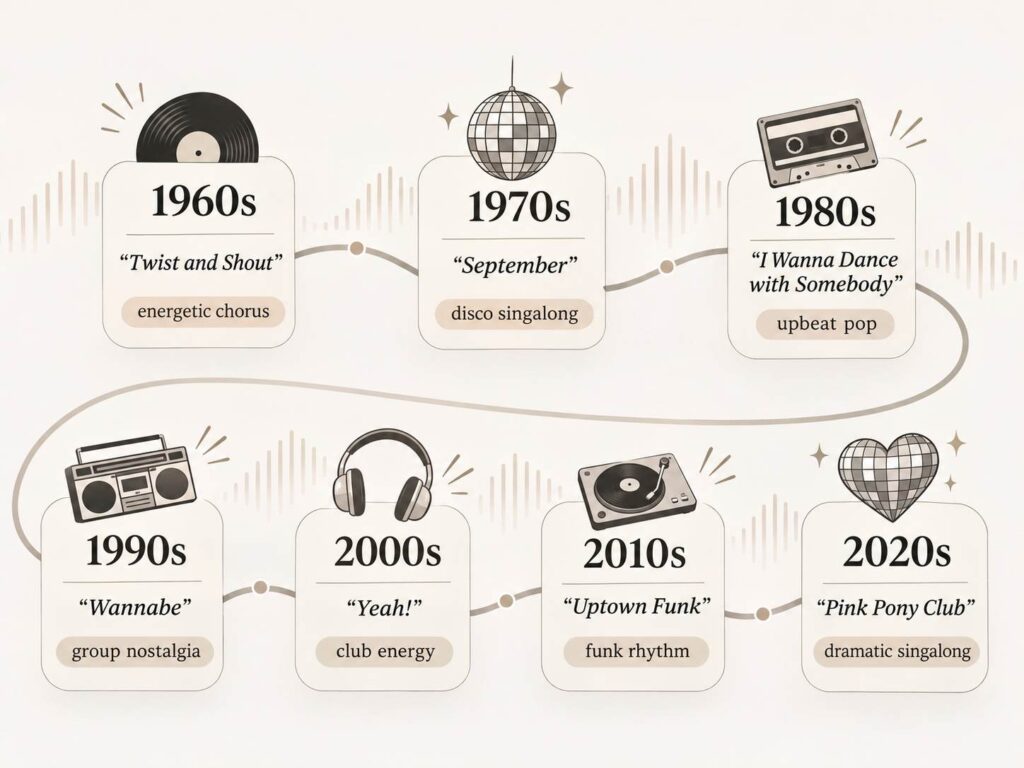
One straightforward approach is to include recognisable songs from several decades, reflecting how music genres have evolved over the years, then arrange them according to mood and energy.
Avoid creating rigid musical blocks where older songs play first and contemporary music takes over later. Interweaving familiar tracks encourages different generations to remain involved.
The following examples offer a starting point for a varied reception playlist.
| Era | Wedding song examples | Musical appeal |
| 1960s | “Twist and Shout” by The Beatles | Energetic rock and roll with an instantly recognisable chorus |
| 1970s | “September” by Earth, Wind & Fire | Disco rhythm and broad singalong appeal |
| 1980s | “I Wanna Dance with Somebody” by Whitney Houston | Upbeat pop with a powerful chorus |
| 1990s | “Wannabe” by Spice Girls | Playful nostalgia and group participation |
| 2000s | “Yeah!” by Usher | Familiar club energy |
| 2010s | “Uptown Funk” by Mark Ronson featuring Bruno Mars | Funk-inspired rhythm with contemporary production |
| 2020s | “Pink Pony Club” by Chappell Roan | Contemporary pop with a dramatic singalong chorus |
A playlist containing several decades of music feels especially natural when songs share a similar level of energy.
Moving from “September” to “Uptown Funk,” for example, creates a connection through their danceable funk rhythms despite the decades separating their releases.
Pay Attention to the Order of Songs
Even an excellent selection can lose its impact when songs appear at the wrong moments.
Wedding guests usually need some encouragement before the dance floor becomes busy. After dinner and speeches, people may still be talking, finishing drinks, or waiting for someone else to make the first move.
Start with accessible music that creates an inviting atmosphere.
A familiar song such as “Signed, Sealed, Delivered (I’m Yours)” by Stevie Wonder can help establish an upbeat mood. As more guests join, the DJ can introduce stronger dance tracks.
The National Association of Disc Jockeys recommends planning around energy levels and allowing room for adjustments during the evening.
- Opening: Recognisable, upbeat songs that encourage early participation.
- Building momentum: Dance-pop, disco, Motown, and familiar party favourites.
- Peak dancing: Higher-energy tracks, contemporary hits, and major singalong songs.
- Later evening: Music reflecting the guests who remain, with opportunities for special requests.
- Final dance: A meaningful song that provides a memorable ending.
Transitions matter, too. Sudden changes in tempo can interrupt the atmosphere, particularly when the floor is already crowded.
An experienced DJ can use compatible rhythms or familiar musical connections to move between genres naturally.
Include Slow Songs Without Losing Momentum
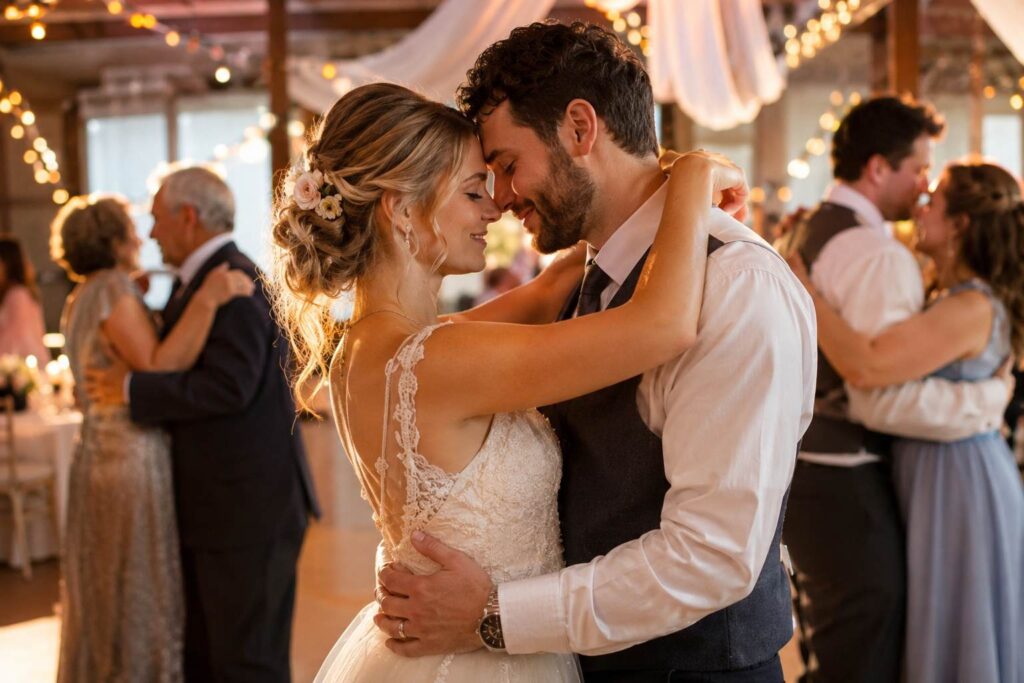
A wedding reception rarely benefits from several hours of uninterrupted high-energy music.
Slow songs give couples an opportunity to dance together and allow guests who prefer gentler music to participate.
Consider classics such as “At Last” by Etta James, “Wonderful Tonight” by Eric Clapton, or “Thinking Out Loud” by Ed Sheeran.
Couples looking for more romantic selections can also consider songs that set the mood when planning the quieter moments of their reception.
The timing deserves attention.
Playing a slow song immediately after the dance floor reaches its busiest point might encourage people to leave. A romantic selection can work beautifully after a long energetic sequence, particularly when guests appear ready for a change.
One or two slower songs may be enough before returning to livelier music.
Special dances, including the newlyweds’ first dance and parent dances, can also provide natural opportunities for slower selections.
Let Guests Suggest Songs Before the Wedding
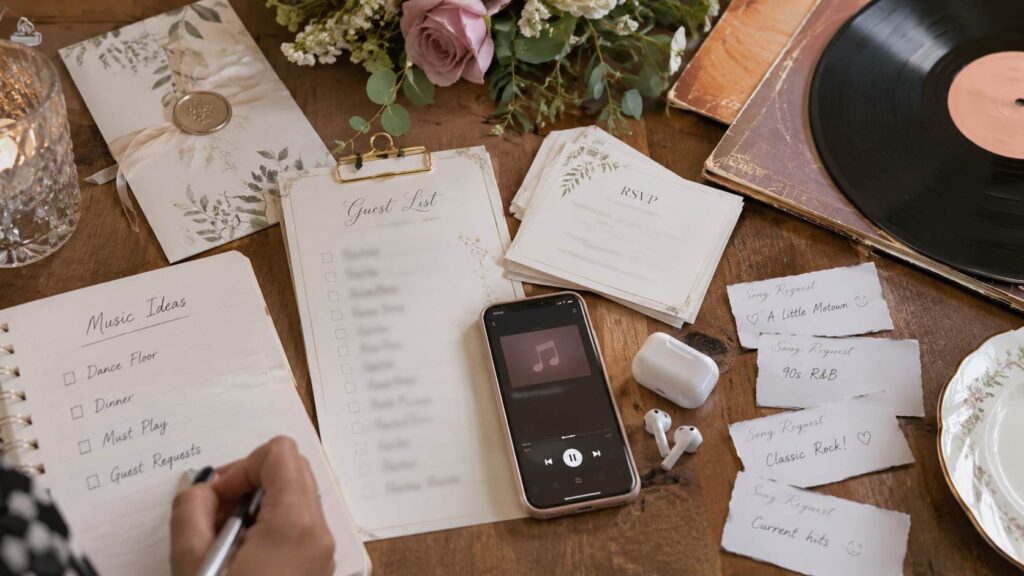
Your guests can be an excellent source of ideas, particularly when you’re planning music for a large family with different cultural backgrounds.
Add a simple question to your RSVP form:
What song would get you onto the dance floor?
Asking for one favourite encourages thoughtful suggestions without creating an overwhelming collection of requests.
The Knot also recommends collecting wedding song requests through invitations or wedding websites, allowing couples to review suggestions before the reception.
Some responses might surprise you. Your grandmother could request a contemporary pop song, while your younger cousin chooses an old family favourite.
Share the suggestions with your DJ alongside three clear categories: essential songs, optional favourites, and songs to avoid.
A do-not-play list is particularly useful when certain tracks contain inappropriate lyrics, bring up uncomfortable memories, or clash with the atmosphere you want.
Remember that suggestions are helpful guidance. Playing every request can make the evening feel disconnected.
Give Your DJ Enough Freedom to Read the Room
A carefully planned playlist is valuable, but the atmosphere of a live wedding can change quickly.
Perhaps a song you expected to be popular receives little reaction. Another track might unexpectedly bring nearly everyone onto the dance floor.
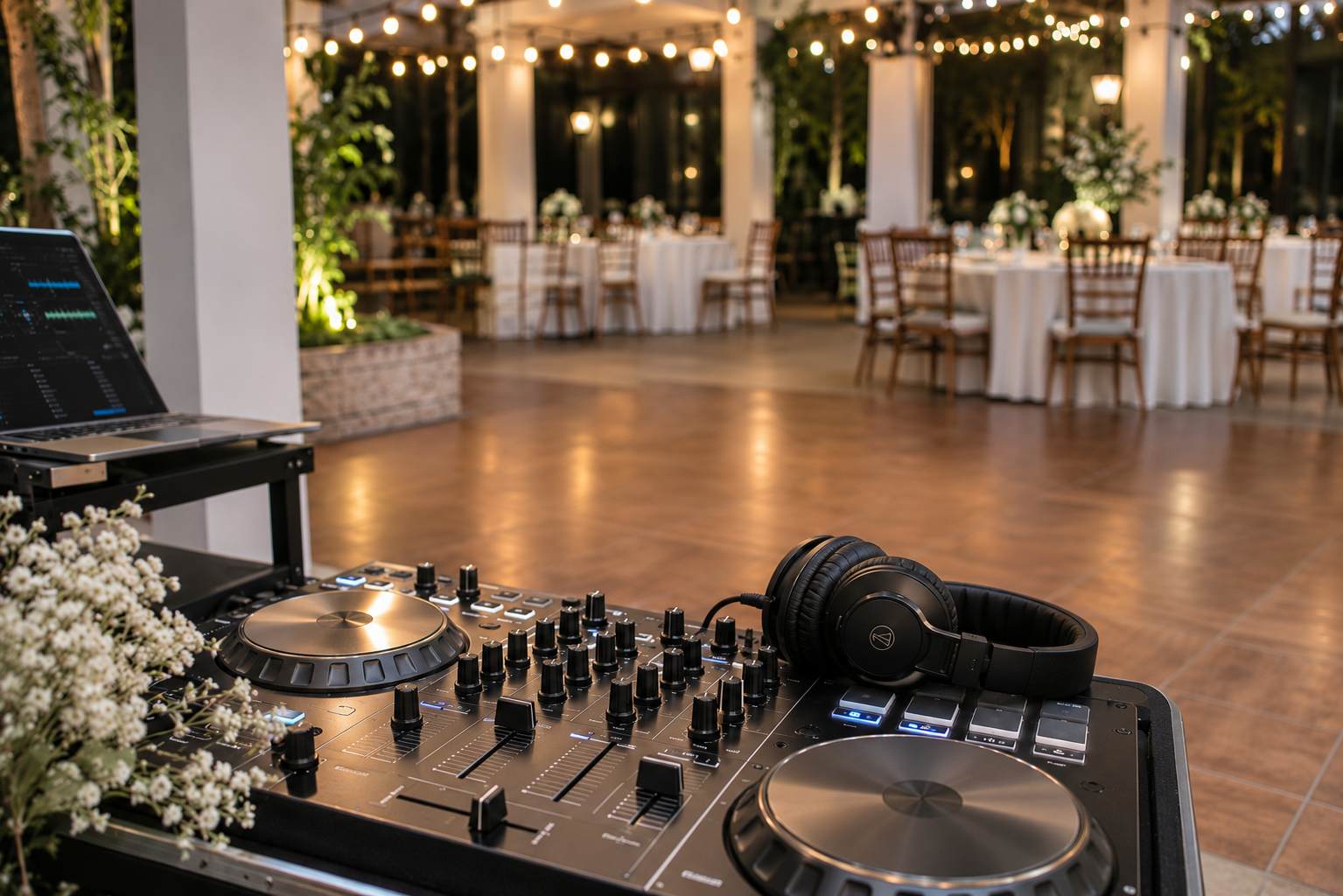
Your DJ should have enough flexibility to respond. For couples searching for the best Seattle wedding DJ, the ability to read a crowd and adjust music throughout the reception should be high on the list of priorities.
A professional can shorten a song that is losing momentum, extend a successful musical sequence, or save a popular request until the right moment.
Discuss expectations beforehand, including the balance of musical genres, preferred energy levels, and how to handle spontaneous guest requests.
Also consider practical details. A dance floor positioned far from the main reception area can discourage participation, while excessively loud music may make guests uncomfortable.
Keeping nearby seating available allows people to rest and return whenever they feel ready.
The goal is an enjoyable celebration where participation feels inviting.
Make Room for Cultural and Family Traditions
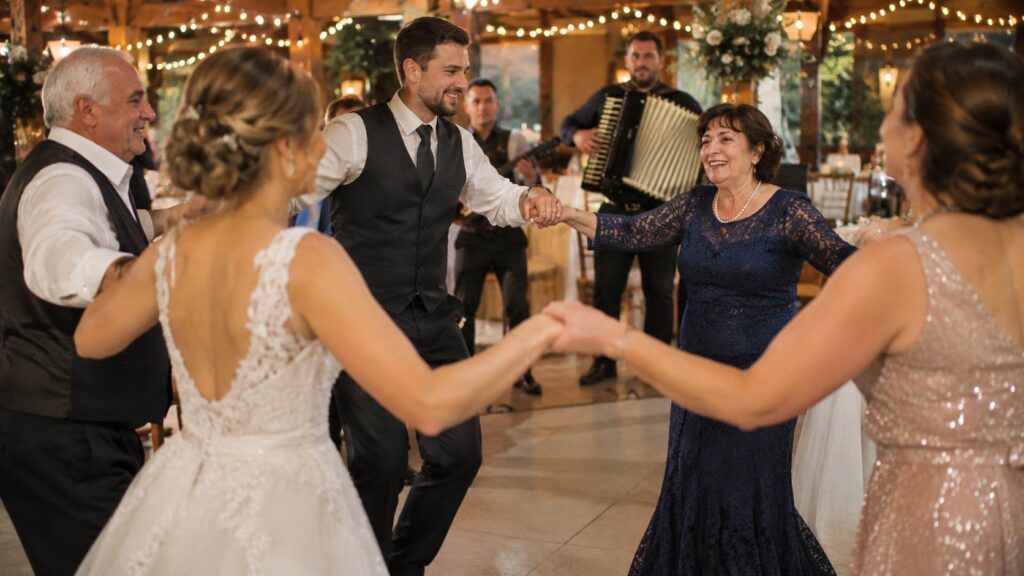
Music often carries a special significance at weddings where families come from different cultural backgrounds, reflecting the broader connection between music, culture, and relationships.
A traditional folk dance, a regional wedding song, or a familiar celebration anthem can create one of the most memorable moments of the reception.
For example, an American wedding with Latin American family connections might include salsa, merengue, or cumbia. A wedding involving Balkan families might feature a traditional kolo.
Such selections often work best when the people familiar with the music help introduce everyone else to it.
Ask relatives which songs are associated with family celebrations, and check whether particular traditions require a specific recording or sequence.
Give your DJ the correct song versions and pronunciation of unfamiliar artist names.
A short introduction can encourage curious guests to participate, especially when an experienced family member leads the dance.
The Best Wedding Playlist Leaves Room for Surprises
Wedding music becomes memorable when it brings people together.
A thoughtfully chosen mix of old favourites, contemporary hits, romantic songs, and family traditions gives guests plenty of opportunities to participate.
Start with songs that have broad appeal, include music that reflects your relationship, and use guest requests to discover unexpected favourites.
Then allow the evening to develop naturally.
Years later, people might forget the exact order of the playlist. They’ll probably remember the moment their grandfather joined their friends on the dance floor and somehow knew every word.