

Stay with us and find out where the next one takes us.
- YouTube Is Finally Making AI-Generated Music Easier to Spot, but Can We Trust the Labels? - October 15, 2026
- Why So Many Americans Are Moving to North Carolina Right Now? - October 15, 2026
- The Biggest Myths About How Famous Rock Bands Were Discovered - October 13, 2026
North Carolina is now attracting more Americans from other states than Texas or Florida. Between July 2024 and July 2025, it gained 84,000 more residents through domestic migration than it lost, according to state population figures. That is a lot of people packing up their homes and deciding to start somewhere new.
For someone tired of paying New York prices for a small apartment, the prospect of buying a three-bedroom house with a garden can be tempting. Add milder winters, growing cities, beautiful mountains, and Atlantic beaches, and North Carolina starts looking like a serious alternative.
Of course, not everyone is arriving for the same reason. Some are following job opportunities in Raleigh or Charlotte. Others want a quieter place to raise children, and retirees are interested in spending their later years somewhere with less severe winters.
Housing has become more expensive in popular neighborhoods, and life here comes with expenses that newcomers do not always anticipate. Still, the number of people relocating suggests North Carolina has become one of the most desirable places to settle in America.
North Carolina Is Attracting More New Residents Than Texas And Florida
The North Carolina Office of State Budget and Management reported that the state gained 84,000 residents through net domestic migration between July 2024 and July 2025. Texas gained around 67,000 during the same period, while South Carolina gained 66,000.
North Carolina has gained 477,000 residents through migration from other states since the 2020 Census. Its total population reached 11.2 million in July 2025, making it the ninth most populous state in the country.
Many people are arriving from states where housing costs consume a large share of household income. Someone selling a property in New York, New Jersey, or California may find a house in North Carolina that offers more space without requiring an equally large mortgage.
Employment is another reason. Charlotte has a major financial services industry, while Raleigh and the surrounding Research Triangle have attracted employers in technology, healthcare, pharmaceuticals, and research.
North Carolina also gives people several choices about where to settle. A family can buy a suburban home outside Raleigh, a retiree can choose a smaller town near the mountains, and someone who loves the ocean can look for property around Wilmington.
Unfortunately, the growing population is putting pressure on some of the same things that attract newcomers. Traffic has increased in developing suburbs, popular neighborhoods have become expensive, and some once-small communities have changed considerably.
Raleigh And Charlotte Are Two Of The Biggest Reasons People Move Here

Raleigh and Charlotte are roughly two and a half hours apart by car, but they offer very different experiences.
Raleigh Has Jobs, Universities, And Family Neighborhoods
Raleigh is particularly popular with people who work in technology, research, education, and healthcare. North Carolina State University is located in the city, with Duke University in nearby Durham and the University of North Carolina at Chapel Hill completing the famous Research Triangle.
Research Triangle Park has been an important employment center for decades. Companies involved in software, biotechnology, pharmaceutical research, and engineering have offices and facilities in the region.
Families also appreciate having access to parks, shopping centers, restaurants, and suburban neighborhoods. Cary, Apex, and Holly Springs are among the communities that people consider when they want to live near Raleigh without staying in the city center.
However, housing prices in desirable parts of Wake County are substantially higher than the North Carolina average. A family expecting to buy a large house for very little money may need to consider smaller towns farther from major employment centers.
Charlotte Has Big-City Entertainment And Career Opportunities
Charlotte appeals to people who want a busy urban environment but are not interested in the housing costs associated with New York or San Francisco.
Bank of America is headquartered here, and financial services remain an important part of the local economy. The city also has professional sports teams, concert venues, breweries, and a growing restaurant scene.
Residents can attend Carolina Panthers games, watch the Charlotte Hornets, or explore the restaurants and bars in neighborhoods such as South End and NoDa.
Charlotte is also closely connected to NASCAR. Several racing teams and motorsport businesses operate in the surrounding area, especially around Mooresville and Concord.
For music fans, Charlotte attracts touring artists and hosts concerts at venues such as the PNC Music Pavilion and Spectrum Center. Living near a major concert market is an advantage for people who previously had to travel to another city to see their favorite performers.
How Much Does A House Cost In North Carolina In 2026?
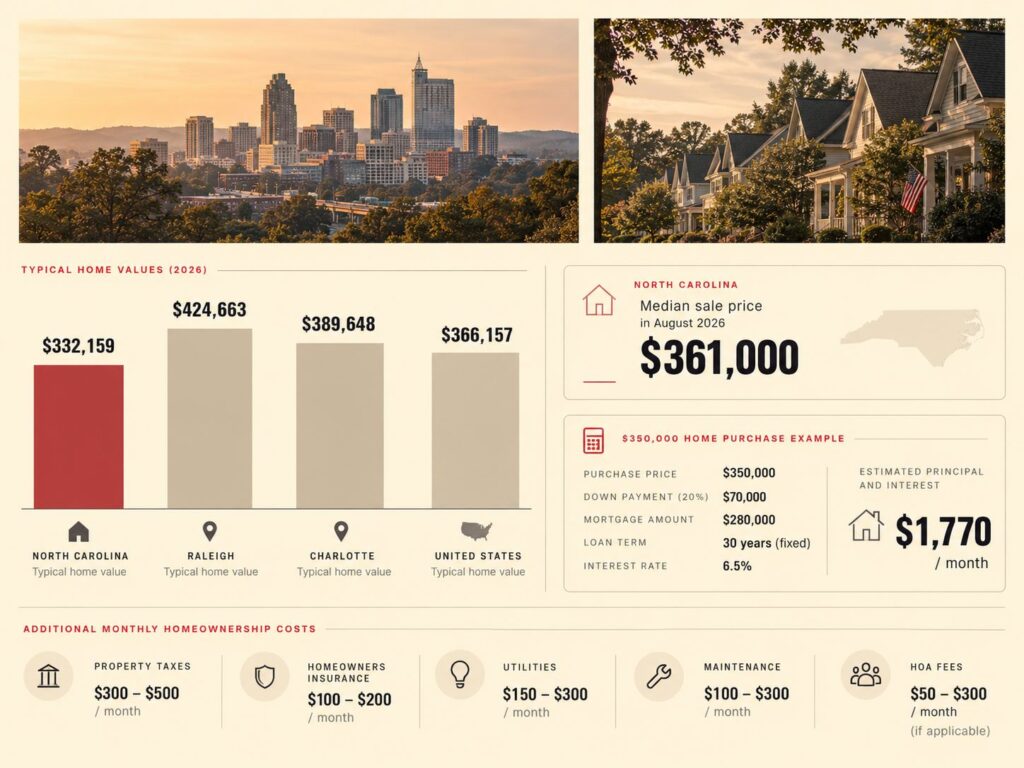
According to Zillow’s September 2026 housing figures, the typical North Carolina home value was $332,159. The median sale price in August was $361,000.
The statewide figure is below the national typical home value of $366,157, but prices rise considerably in popular cities and suburbs.
Raleigh had a typical home value of $424,663 in September 2026, while Charlotte stood at $389,648. Some established neighborhoods and desirable suburbs cost much more.
| Location | Typical Home Value In September 2026 |
| North Carolina | $332,159 |
| Raleigh | $424,663 |
| Charlotte | $389,648 |
| United States | $366,157 |
A buyer with $350,000 to spend may have plenty of choices in a smaller inland city but a much shorter list in a popular Raleigh suburb.
Housing prices also depend on the type of property. A townhouse with a small outdoor area may cost substantially less than a detached house with four bedrooms, a garage, and a large backyard.
What A $350,000 Home Could Cost Each Month
Suppose you buy a house for $350,000 and make a 20% down payment. You would pay $70,000 upfront and take out a mortgage for the remaining $280,000.
With a hypothetical 30-year fixed mortgage at 6.5% interest, principal and interest would cost about $1,770 per month.
Property taxes, homeowners insurance, utilities, and maintenance would come on top of that payment. Some developments also charge homeowners association fees for shared facilities and neighborhood services.
Buying a larger home for less money than your previous property sounds attractive, but the final monthly expenses are what determine how much you actually save.
North Carolina Has Beaches, Mountains, And Plenty To Do Outdoors
View this post on Instagram
One weekend you could be walking through the Blue Ridge Mountains, and another you could be spending the afternoon on an Atlantic beach. North Carolina has both, along with lakes, rivers, forests, and several attractive small towns.
Asheville And The Blue Ridge Mountains
Asheville is known for mountain scenery, independent restaurants, breweries, and a lively arts and music community.
The Blue Ridge Parkway provides access to scenic overlooks and hiking areas, while nearby towns such as Brevard and Black Mountain appeal to people who prefer smaller communities.
Autumn is particularly popular because the mountain forests turn shades of red, orange, and yellow. Residents who enjoy hiking, photography, and scenic drives have plenty of places to explore.
Mountain living has practical challenges, including winding roads, colder winters at higher elevations, and flood risks in certain valleys.

Wilmington And The Coast
Wilmington offers a combination of historic streets, waterfront restaurants, and nearby beaches.
Wrightsville Beach and Carolina Beach are popular destinations for swimming, fishing, boating, and spending time near the ocean. Further north, the Outer Banks offer long stretches of coastline and smaller beach communities.
Living near the coast is very different from spending a week there on vacation. Hurricanes, flooding, salt air, and insurance expenses all influence the cost of owning property.
Lake Norman And Other Waterfront Communities
Lake Norman, just north of Charlotte, is attractive to people who enjoy boating and waterfront recreation.
Mooresville, Cornelius, and Davidson have residential areas close to the lake, with restaurants and shopping within reach.
Waterfront properties can be expensive, especially homes with private docks. Even without direct water access, nearby residents can enjoy marinas, parks, and restaurants overlooking the lake.
Some Famous Musicians And Celebrities Have Called North Carolina Home
View this post on Instagram
North Carolina has produced some remarkable musicians, athletes, and entertainers. A few still live there, while others have strong connections through their childhood or careers.
Dale Earnhardt Jr. Lives In Mooresville
NASCAR star Dale Earnhardt Jr. is one of the best-known celebrities with a publicly confirmed home in North Carolina.
According to his official biography, Earnhardt lives in Mooresville with his wife, Amy, and their two daughters.
He won the Daytona 500 twice and became one of the most popular drivers in NASCAR history. Mooresville is a natural home for someone involved in motorsport, with racing teams and related businesses operating throughout the surrounding region.
J. Cole Has Never Forgotten Fayetteville
Rapper J. Cole grew up in Fayetteville, and his hometown has appeared repeatedly in his music.
His album 2014 Forest Hills Drive takes its name from his childhood address, making his North Carolina upbringing a central part of one of his most successful releases.
Cole has also maintained connections to the state through Dreamville projects and the Dreamville Festival in Raleigh. His present primary residence is not publicly confirmed, so his documented association is with his hometown and ongoing professional connections.
Luke Combs Grew Up In Asheville
Country singer Luke Combs grew up in Asheville and attended Appalachian State University in Boone before pursuing his music career.
His rise from North Carolina student to major country music star has kept his upbringing in the public eye.
Combs has also lived and worked in Tennessee, so North Carolina roots should not automatically be taken as proof of current residence.
James Taylor And The North Carolina Music Connection
James Taylor spent much of his childhood in Chapel Hill. His song “Carolina in My Mind” became one of the most recognizable musical tributes to the state.
Other major musicians associated with North Carolina include Nina Simone, who was born in Tryon, and John Coltrane, who grew up in High Point.
North Carolina has contributed to American music across jazz, soul, folk, country, and hip-hop. Its musical history is an attraction in its own right for people who enjoy visiting recording landmarks, museums, and live performances.
Living In A Larger House Can Be Wonderful, But Maintenance Costs Add Up
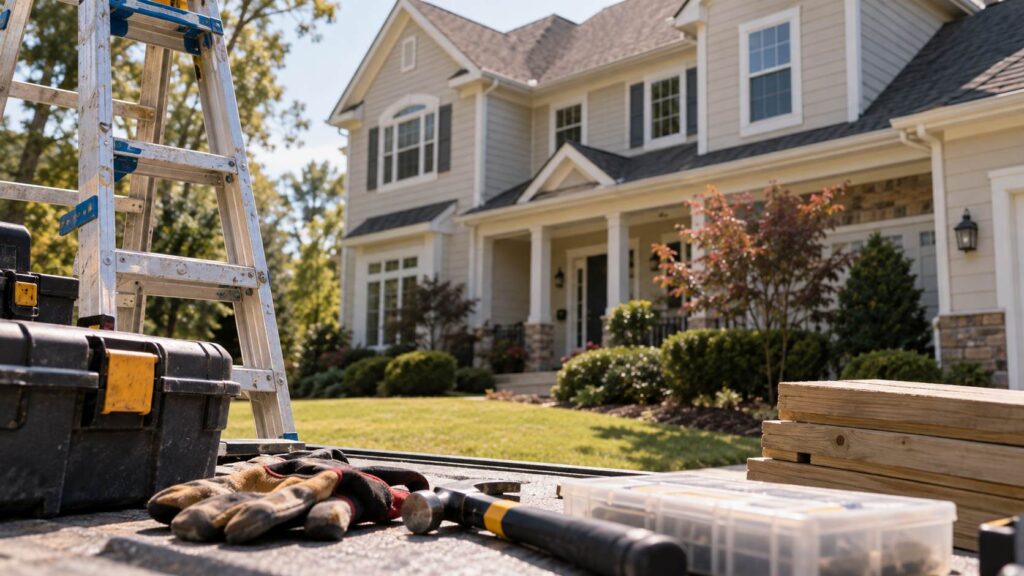
A bigger house means more cleaning, larger utility bills, and additional repairs. Anyone moving from an apartment to a detached home should consider the cost of maintaining the roof, heating and cooling equipment, driveway, and outdoor areas.
North Carolina summers can be hot and humid, which puts air conditioning systems to work for much of the season. Older equipment may need repairs or replacement, especially in houses that have not been maintained carefully.
Heavy rain can also expose drainage problems. Gutters need cleaning, water should drain away from the foundation, and trees close to the house may require professional trimming.
Before purchasing a home, ask about the age and condition of the roof, HVAC system, and water heater. A house that appears inexpensive can become costly if several major repairs are needed soon after moving in.
Make The Backyard A Place For Barbecues And Relaxing Evenings
One of the pleasures of having more outdoor space is being able to arrange it around the way you spend your free time.
A patio with a barbecue grill, outdoor table, and comfortable chairs is ideal for weekend meals with friends. Shade from a pergola or mature tree can make the space easier to use during hot summer afternoons.
Some homeowners add fire pits, small ponds, fountains, or outdoor kitchens. A pond can look beautiful among plants and stone pathways, although pumps, filters, and water quality need regular attention.
Outdoor lighting can also make a garden more inviting after sunset. Low-voltage path lights and carefully positioned fixtures help illuminate seating areas without flooding neighboring properties with unnecessary light.
Choose plants that suit North Carolina’s climate and the amount of sunlight in your yard. Native plants suited to the local soil and growing conditions can reduce watering and maintenance compared with more demanding ornamental species.
Larger gardens still need attention throughout the year. Grass grows quickly during warmer months, autumn leaves require cleanup, and shrubs need pruning to keep paths and seating areas accessible.
Wildlife Can Also Visit Your Garden
If you live in the Piedmont near Greensboro, Durham, or Chapel Hill, you might occasionally see white-tailed deer wandering through the yard. Watching them can be enjoyable, but they can also eat flowers, young shrubs, and vegetable plants.
Fencing and repellents can help protect expensive landscaping, while professional services such as Deer Control Piedmont Nc offer another option for homeowners dealing with repeated deer damage.
North Carolina Has Milder Winters, But Summers Can Get Very Hot
People arriving from northern states tend to appreciate North Carolina winters. Many areas have fewer days of freezing temperatures than cities in the Northeast or Upper Midwest.
However, summer weather can take some getting used to. Raleigh and Charlotte experience hot, humid conditions, particularly during July and August.
Residents with children or pets may prefer outdoor activities during the morning or evening when temperatures are lower. Gardens also need attention during dry spells, especially newly planted areas.
The weather varies considerably across the state. Higher elevations in the mountains are cooler and receive more winter snow, while the coastal region is exposed to hurricanes and tropical storms.
Before buying a property, investigate local flood risks, storm exposure, and insurance costs. Two houses in the same county can have very different exposure to water damage.
Taxes And Everyday Expenses Are Worth Comparing Before Moving
North Carolina’s individual income tax rate is 3.99% for 2026. Under legislation approved in July 2026, the rate is scheduled to fall to 3.49% in 2027, according to the North Carolina General Assembly.
However, income tax alone will not determine how expensive your life becomes after relocating.
Property taxes vary by county and municipality, and insurance premiums depend on the type of home and its location. Coastal properties may have additional insurance requirements because of storm exposure.
Transportation is another expense. People moving from cities with extensive public transit may discover that living in suburban North Carolina requires one or two cars.
Longer commutes mean additional spending on fuel, insurance, repairs, and vehicle replacement. A cheaper house located far from work can become less attractive after calculating the cost of driving every day.
Families should also compare childcare prices, healthcare access, and school enrollment arrangements before deciding where to settle.
Where In North Carolina Should You Consider Living?

Raleigh and Charlotte attract plenty of newcomers, but smaller cities are worth exploring if housing affordability is a priority.
| City | What Residents Enjoy | Potential Drawbacks |
| Raleigh | Technology jobs, universities, restaurants, family neighborhoods | Higher housing costs in popular areas |
| Charlotte | Corporate jobs, professional sports, concerts, nightlife | Traffic and long suburban commutes |
| Durham | Healthcare employment, Duke University, restaurants and arts | Expensive housing in desirable neighborhoods |
| Greensboro | More affordable housing and access to the Piedmont region | Smaller employment market than Raleigh or Charlotte |
| Winston-Salem | Arts, established neighborhoods, universities | Fewer major-city entertainment choices |
| Wilmington | Beaches, boating, waterfront restaurants | Storm exposure and coastal insurance expenses |
| Asheville | Mountains, breweries, music, outdoor recreation | Expensive housing and mountain weather risks |
Greensboro and Winston-Salem may appeal to buyers hoping to find more affordable houses while remaining within driving distance of larger cities.
Asheville is attractive to people who enjoy hiking and mountain scenery. Wilmington is a natural choice for those who want access to beaches and boating.
Spending a few days in a neighborhood before purchasing is useful. Visit local supermarkets, explore the streets after dark, and try driving to the places you would use regularly.
Real estate photographs rarely tell you how noisy a road becomes during rush hour or how long it takes to reach the nearest hospital.
Final Thoughts
North Carolina can still offer more living space for the money than many expensive parts of the United States. Someone selling a home in New Jersey or California may be able to buy a larger property and reduce monthly housing expenses.
However, Raleigh and Charlotte have become established destinations, and desirable neighborhoods are no longer inexpensive.
People who want to spend less should also consider smaller cities and towns. Lower purchase prices can make a significant difference, provided local employment, healthcare, and commuting arrangements suit the household.