
Stay with us and find out where the next one takes us.
- YouTube Is Finally Making AI-Generated Music Easier to Spot, but Can We Trust the Labels? - October 15, 2026
- Why So Many Americans Are Moving to North Carolina Right Now? - October 15, 2026
- The Biggest Myths About How Famous Rock Bands Were Discovered - October 13, 2026
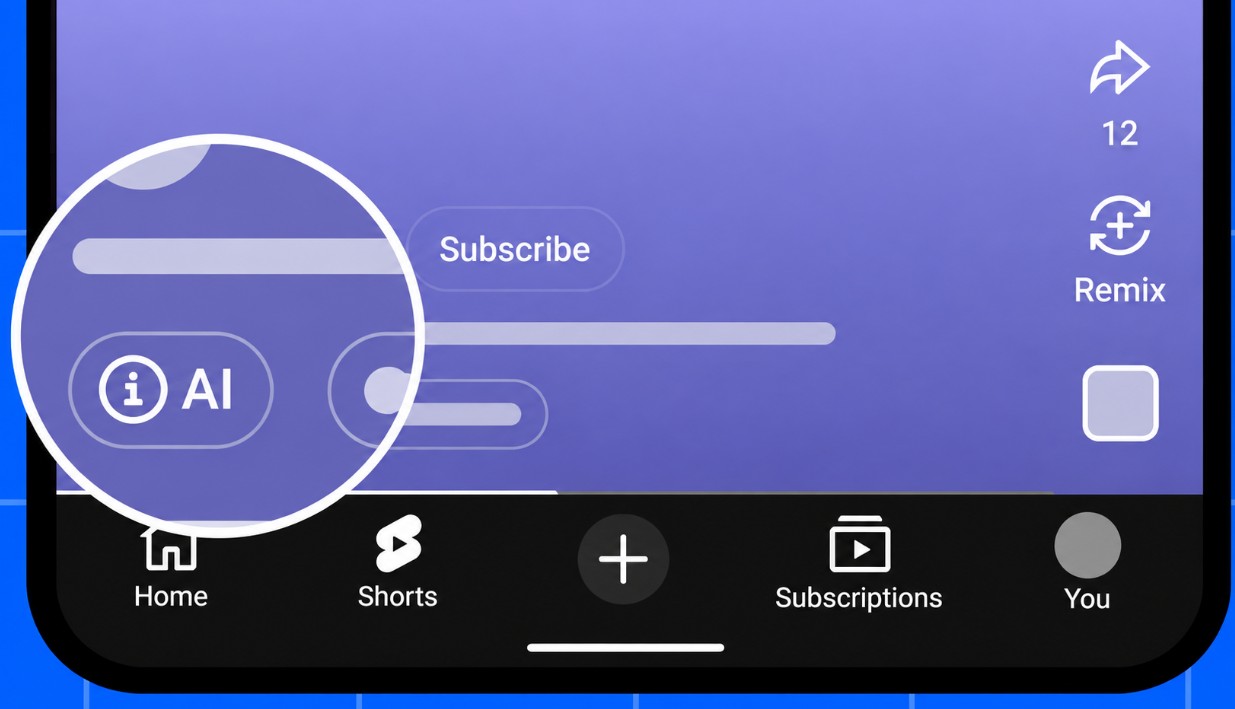
YouTube Music is adding a small AI badge beneath song titles so listeners can see when a recording was largely generated by artificial intelligence. It sounds like something the platform should have done ages ago, especially now that AI tools can produce complete songs with convincing vocals in minutes.
The change, announced on October 14, 2026, places the label directly on the music player. Tap it, and a panel explains that the recording was altered or generated using AI.
I like the idea, but I would not celebrate just yet. YouTube already had AI disclosure labels. They were small, easy to miss and heavily dependent on creators reporting their own use of the technology. The company has improved their visibility over time, but identifying AI music remains a much harder job than putting a badge on the screen.
According to the official YouTube announcement, the new labels target songs created primarily with generative AI, including recordings where software generated both the composition and vocals.
The rollout has started on YouTube Music, with plans to bring the same labels to the main YouTube app. The company has not provided an exact date for that expansion.
YouTube Already Had AI Labels, So What Is Actually New?
YouTube introduced its altered and synthetic content disclosure system in 2024. Creators uploading realistic AI-generated material were expected to identify it, and viewers could find the disclosure in the video description.
In May 2026, YouTube admitted that the labels needed to be easier to find. It moved them directly beneath regular videos and placed them over Shorts. The company also began introducing automatic detection for certain kinds of realistic AI content.
For music listeners, however, the experience remained rather limited. A disclosure attached to a video description is not particularly helpful when someone is simply listening to songs through a music player.
The latest update addresses that problem.
As 9to5Google reported, the new badge sits beneath the song title, near the artist information on the Now Playing screen. Selecting it opens a panel called “How this was made.”
The panel includes a “Made with AI” disclosure explaining that artificial intelligence was used to alter or generate the audio.
It is still a fairly small badge, so I would not call it impossible to miss. At least listeners no longer have to open a description to find the information during normal playback.
The Labels Still Depend on Information That Can Be Wrong
Here is the part I find less reassuring. YouTube says it will work with music partners and use its own detection systems to identify AI-generated recordings.
Music distributors can classify tracks using three categories.
- Fully Gen AI for recordings created entirely through generative AI.
- Partly Gen AI for recordings containing a combination of AI-generated material and human contributions.
- No Gen AI for recordings without generative AI involvement.
The categories were detailed in TechCrunch coverage of the announcement. Conventional pitch correction, including Auto-Tune, falls into the No Gen AI category.
That separation is sensible. A musician recording vocals and correcting a few notes has done something very different from generating an entire singer through a text prompt.
But the new system has an obvious weakness. If an uploader incorrectly declares that a recording contains no generative AI, YouTube must either identify the mistake itself or rely on someone else to raise the issue.
The company says it has detection tools, although it has not published an accuracy rate for identifying AI-generated music under the new system.
False positives are another concern. In August, YouTube updated its disclosure controls so creators could correct certain automatically applied labels through YouTube Studio. Some labels remain permanent, particularly when verified metadata or YouTube AI tools establish how the content was generated.
A badge therefore should not be treated as a perfect test of musical authenticity. It tells us how YouTube has classified a recording, not that the platform has independently verified every element of its production.
AI Music Has Already Become Harder to Recognize by Ear
A few years ago, many AI songs were amusing because the mistakes were so obvious. Voices broke apart, pronunciations sounded strange and instruments sometimes produced unnatural transitions.
Current systems are far more convincing. Someone can generate a polished country ballad, a metal track or a pop recording with synthetic vocals without ever entering a studio.
The result can sound convincing enough that listeners have no immediate reason to question the recording.
I previously explored some of the stranger examples in our article about popular songs created using AI. The collection includes synthetic performances that imitate recognizable singers and bands, showing how convincingly software can reproduce elements of an established musical style.
The concern is no longer limited to people making novelty covers for entertainment. AI-generated tracks are appearing on commercial streaming services alongside recordings made by working musicians.
And the scale is getting difficult to ignore.
Other Streaming Services Are Going Further Than YouTube
YouTube is not the only company trying to identify synthetic music. Spotify, Deezer, Tidal and Apple Music have been developing their own approaches.
Deezer reported receiving nearly 90,000 fully AI-generated tracks per day in July 2026. It has been labeling detected AI music and excluding fully generated tracks from algorithmic recommendations and editorial playlists.
Deezer has also announced plans to let listeners filter AI-generated music out of their experience.
YouTube is currently taking a less restrictive approach. It is providing disclosures without announcing a comparable option to remove AI music from recommendations.
That leaves listeners with a familiar problem. They may know a song was generated by AI, but they still have limited control over how much synthetic music appears in their feeds.
For someone interested in discovering new bands, a clear label is useful. A setting that allows them to exclude fully generated recordings would be considerably more useful.
Musicians Have Reasons to Welcome the Change and Question It
For independent musicians, accurate AI labels could help audiences identify recordings made by real performers. A guitarist recording at home should not have to compete for attention with thousands of automated tracks whose origins are hidden.
At the same time, treating every use of AI as equivalent would be unfair to artists who use the technology for specific creative tasks.
Grimes provides an interesting example. She has openly experimented with synthetic vocals and allowed other creators to work with AI-generated versions of her voice under licensing arrangements.
We previously examined her approach in our article about Grimes and AI-assisted music production, including her interest in combining human performances with digital processing.
Her work demonstrates why identifying a recording simply as AI-generated does not always explain how the music was actually made.
A song created entirely from prompts is one thing. A track written and performed by musicians, with a synthetic backing vocal added during production, is another.
YouTube has classifications for both situations, but the information displayed to listeners remains fairly basic. A more detailed explanation of the AI contribution would help people make their own judgments.
Listeners Still Cannot Assume an Unlabeled Song Was Made by Humans
The new YouTube Music labels are a welcome improvement, especially after two years of disclosures that were not always easy to find.
But the company has not demonstrated that its detection tools can catch every AI-generated recording, and the October announcement does not promise that every song involving generative AI will carry a visible badge.
The focus is on music made primarily using generative AI. Smaller AI contributions may fall under separate classifications without necessarily receiving the same prominent warning.
There is also no announced option for YouTube Music subscribers to block fully generated songs from their recommendations.
For now, the new labels provide information that should already have been readily available. I would rather see a clear disclosure than continue guessing how a recording was produced, but I would also like YouTube to show exactly what was generated and give listeners control over the music they are recommended.
The real test will come when listeners encounter suspicious tracks without badges, or when genuine musicians find their recordings incorrectly labeled. YouTube has made the disclosure easier to see. It still has to prove how accurately it can identify the music.