

Stay with us and find out where the next one takes us.
Leaving a concert at midnight, a driver checks the route home, changes the music and tries to get ahead of the traffic. None of those decisions seems particularly dangerous. Yet a few seconds of lost attention can be enough to cause a serious crash.
Across the United States, speeding, alcohol impairment and distracted driving remain major contributors to traffic fatalities. Bad weather, fatigue and mistakes at intersections add thousands of crashes to the total.
The latest federal figures show some improvement. An estimated 36,640 people died in U.S. traffic crashes in 2025, down 6.7% compared with 2024. Early estimates for 2026 suggest the decline is continuing.
However, the detailed statistics reveal something important. Many serious accidents involve several dangerous behaviors at once, and the circumstances that cause a minor collision are not necessarily the same ones that make a crash fatal.
What Do the Latest U.S. Car Accident Statistics Show?
The National Highway Traffic Safety Administration (NHTSA) recorded 39,254 traffic deaths in 2024. Its latest annual estimates put the 2025 total at 36,640, although that figure remains preliminary.
For the first three months of 2026, NHTSA estimated 7,770 deaths, a 4.3% decline compared with the same period in 2025.
Complete figures identifying the causes of crashes throughout 2026 are not yet available. The following table uses the latest finalized annual data for the major contributing factors.
| Crash Factor | 2024 Traffic Deaths | Share of Total Fatalities |
|---|---|---|
| Alcohol-impaired driving | 11,904 | 30% |
| Speeding | 11,288 | 29% |
| Distracted driving | 3,208 | About 8% |
| Drowsy driving | 644 | About 1.6% |
Source: NHTSA traffic fatality data for 2024. Categories overlap because a single crash can involve several contributing factors. The table measures deaths in crashes involving each factor, not the number of crashes caused exclusively by that factor.
A drunk driver might also be speeding. Another driver could run a red light because of distraction. The circumstances of each collision are therefore important when proving fault in a car accident, with police reports, photographs, witness accounts and other evidence helping establish what happened.
1. Speeding Was Involved in 29% of Traffic Deaths

Speeding is one of the most consistently recorded factors in fatal American crashes.
According to NHTSA speeding statistics, 11,288 people died in speed-related collisions in 2024. Another estimated 316,757 were injured.
The problem extends past drivers racing down highways. Traveling at the posted limit can still be dangerous if the road is wet, visibility is poor or traffic suddenly slows.
At 70 mph, a vehicle travels about 103 feet every second. A driver who takes three seconds to recognize a stopped car ahead has already covered more than 300 feet before beginning to brake.
Speed also increases the force of an impact. A collision that might cause vehicle damage at 25 mph can produce much more severe injuries at 60 mph.
Young drivers are particularly prominent in the statistics. Among male drivers aged 15 to 20 involved in fatal crashes during 2024, 39% were speeding.
2. Drunk Driving Killed Nearly 12,000 People
Alcohol remains one of the deadliest influences on American roads.
NHTSA recorded 11,904 alcohol-impaired driving deaths in 2024. That amounts to one death every 44 minutes.
Alcohol affects judgment, reaction time and coordination. A driver may misjudge a gap in traffic, fail to recognize a pedestrian or enter a curve too quickly.
The danger is particularly serious at night. NHTSA reports that fatal crashes involving alcohol-impaired drivers occurred at a rate three times higher at night than during the day.
Alcohol and speeding also overlap. In 2024, speeding passenger vehicle drivers involved in fatal crashes were more likely to have a blood alcohol concentration of 0.08 or higher than drivers who were not speeding.
Leaving a bar or concert after drinking presents a straightforward decision. Arrange a sober driver, use a taxi or choose another safe way home. Coffee and fresh air do not rapidly remove alcohol from the bloodstream.
3. Distracted Driving Caused Thousands of Fatalities
A driver does not need to be texting for distraction to become dangerous.
Changing a playlist, checking directions, eating or turning toward a passenger can all take attention away from traffic.
In 2024, 3,208 people died in crashes involving distracted drivers. More than 315,000 people were injured.
NHTSA warns that reading or sending a text can take a driver looking away for five seconds. At 55 mph, the vehicle travels about the length of a football field during that interval.
Distraction can be difficult to establish after a collision. Unless there is a witness, phone evidence or another clear indication, investigators may never determine that a driver was looking at a screen.
Consequently, the recorded number of distracted driving deaths may not capture every case.
4. Bad Weather Contributes to Hundreds of Thousands of Crashes

Rain may look harmless compared with a snowstorm, but wet roads are a major source of trouble.
The Federal Highway Administration estimates that adverse atmospheric weather conditions were present during an average of 744,911 crashes annually between 2019 and 2023. That represented about 12% of all crashes during the period.
Rain accounted for a large share of those incidents, with an annual average of 574,047 crashes occurring in rainy or misty conditions.
Wet pavement reduces tire grip and increases stopping distances. Standing water can also cause hydroplaning, particularly when tires are worn or vehicles are traveling too quickly.
Snow and ice create additional problems, but drivers should not underestimate ordinary rainfall.
The federal figures describe crashes occurring during adverse weather. They do not establish that the weather caused every collision. Drivers who fail to adjust their speed can turn an already difficult situation into a dangerous one.
5. Drowsy Driving Is Probably More Common Than the Official Numbers Suggest
A long drive after a late concert can become dangerous well before the driver actually falls asleep.
Fatigue slows reactions and affects concentration. Missing a turn, drifting toward the edge of a lane or repeatedly blinking can be signs that alertness is deteriorating.
NHTSA recorded 644 drowsy driving deaths in 2024.
However, the agency acknowledges that fatigue is difficult to identify during crash investigations. The actual number may be considerably higher.
Drowsy driving crashes are associated with late-night and early-morning travel, although fatigue can also affect drivers during the afternoon.
Rolling down the window or increasing the music volume does not replace sleep. When a driver is struggling to remain awake, stopping somewhere safe and resting is the appropriate response.
6. Failure to Yield and Dangerous Intersection Decisions
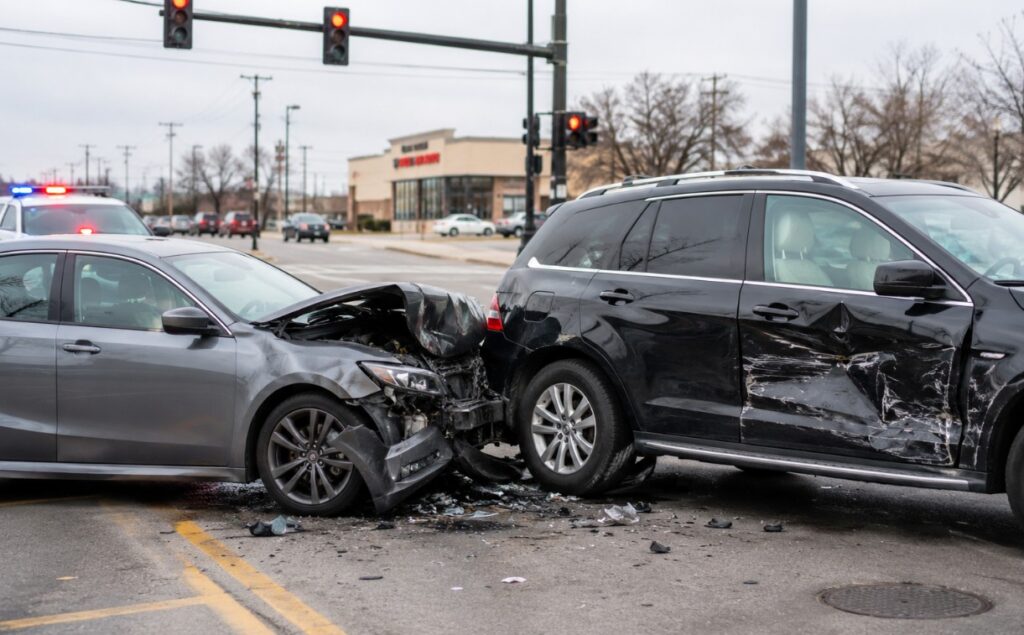
Many everyday collisions happen because drivers misjudge another vehicle or misunderstand who has the right of way.
Common situations include turning left across approaching traffic, entering an intersection after a signal changes or pulling onto a busy road without enough space.
Rear-end crashes can also result from following too closely or failing to notice traffic slowing ahead.
Unlike speeding and alcohol impairment, there is no single directly comparable national fatality figure covering every possible failure to yield, unsafe turn or following-distance mistake.
Still, these behaviors account for important types of police-reported collisions. NHTSA uses its Crash Report Sampling System to study a nationally representative sample of crashes involving injuries, deaths and property damage.
The important difference concerns consequences. A low-speed rear-end collision might leave two drivers with damaged bumpers. An incorrect left turn across a high-speed road can produce a severe side-impact crash.
7. Not Wearing a Seat Belt Makes Accidents More Dangerous
Failing to wear a seat belt does not normally cause a collision. However, it greatly increases the risk of serious injury or death when a crash occurs.
NHTSA reports that 48% of passenger vehicle occupants killed in 2024 crashes were unrestrained among cases with known seat belt use.
The percentage was even higher at night. Among passenger vehicle occupants killed in nighttime crashes, 56% were not wearing seat belts.
Seat belts help prevent occupants from striking the interior of a vehicle or being ejected during a collision.
Vehicle design can also influence injury outcomes. However, rankings of cars involved in fatal accidents measure crash involvement rather than proving that a particular model or its driver caused those collisions.
What Makes One Accident More Dangerous Than Another?
The same driving mistake can produce very different outcomes depending on speed, location and the vehicles involved.
A distracted driver who bumps another car in a parking lot may cause minor damage. A distracted driver who crosses the centerline at highway speed may cause a fatal head-on collision.
Police and safety researchers therefore distinguish between the factors contributing to a crash and the circumstances affecting its severity.
Several details deserve particular attention.
- Vehicle speed. Higher speeds increase stopping distance and impact forces.
- Collision direction. Side impacts and head-on collisions can expose occupants to severe forces.
- Seat belt use. Proper restraints substantially reduce the risk of fatal injury.
- Road conditions. Curves, slippery surfaces and roadside obstacles affect what happens when control is lost.
- Emergency treatment. Serious injuries may become more dangerous when medical assistance is delayed.
Are Car Accidents Becoming Less Common in 2026?
The latest available fatality estimates suggest improvement, although a complete 2026 annual total is not yet available.
NHTSA estimated 7,770 traffic deaths during the first quarter of 2026, compared with 8,120 during the corresponding period in 2025.
The estimated fatality rate also declined to 0.99 deaths per 100 million vehicle miles traveled.
Lower fatality figures are encouraging, but they do not automatically mean that minor collisions are becoming equally rare. Fatal crashes represent only a small portion of the millions of accidents reported to police each year.
The detailed figures continue to identify the same major dangers. Speeding and alcohol impairment are associated with nearly three in ten traffic deaths each, and distraction remains responsible for thousands of deaths and injuries.
For ordinary drivers, the evidence points toward several clear choices. Drive at a speed appropriate for the conditions, keep attention on the road, never drive impaired and stop when fatigue makes concentration difficult.
A few extra minutes getting home will rarely be remembered. A serious accident can change lives permanently.