

Stay with us and find out where the next one takes us.
- First Pressing vs Reissue – How to Tell Which Vinyl Record You Have? - November 3, 2026
- Aerosmith Reunite With Joey Kramer for the Hollywood Bowl – What to Know About “Aerosmith and Friends”? - October 30, 2026
- 10 Cars Involved in the Most Accidents in America, What the Statistics Reveal - October 30, 2026
An old copy of Pink Floyd’s The Dark Side of the Moon sold at a garage sale for $15 could be a perfectly ordinary record. Another copy, with seemingly identical artwork, might interest a collector willing to pay hundreds.
The difference could be a tiny blue triangle printed on the record label.
First pressings of classic albums have become increasingly attractive to collectors, especially when the original release was scarce or had unusual packaging. But the age of a record tells you surprisingly little about its value. Some reissues are nearly 50 years old themselves.
Before putting an old Led Zeppelin, David Bowie or Fleetwood Mac LP up for sale, there are several details worth checking. Most are easy to find once you know where to look.
First Pressing, Repress or Reissue?
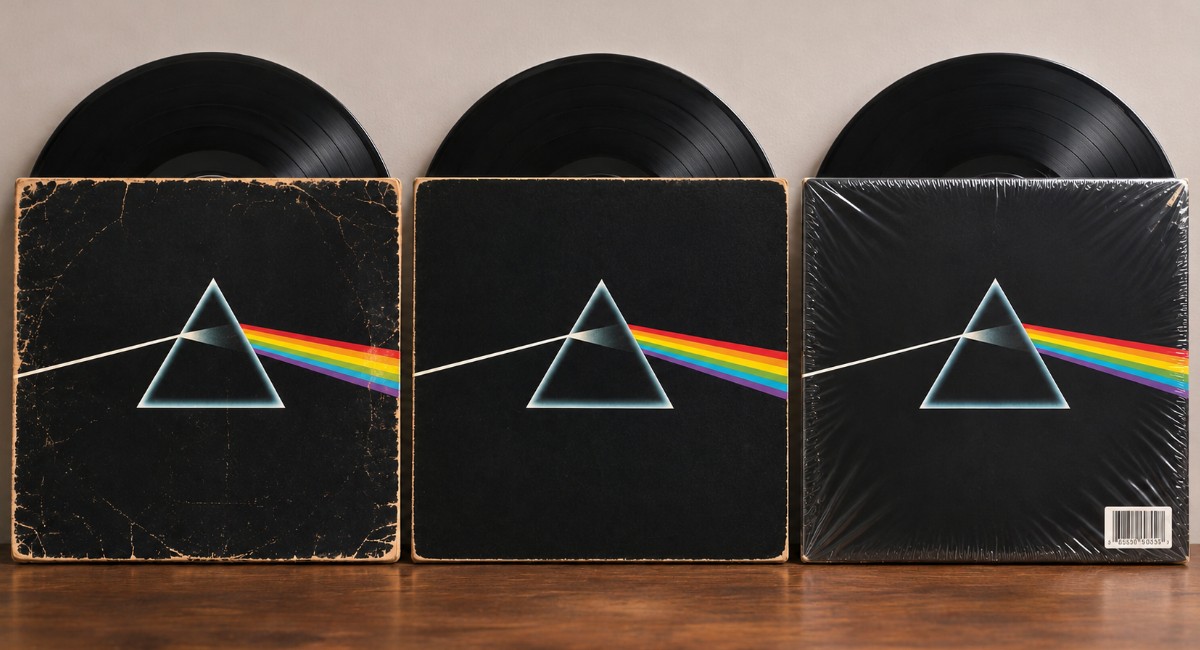
Record companies didn’t manufacture every copy of an album on release day. Popular records could remain in production for years, sometimes at several factories simultaneously.
A first pressing comes from the earliest production of a particular release. A repress belongs to another manufacturing run, often using existing production parts. A reissue is a later release, sometimes with new mastering, packaging or a different record label.
Country also counts. A British first pressing and an American first pressing of the same album may look different. Neither is automatically the earliest edition worldwide.
| First pressing | Original label design, early manufacturing codes and period packaging |
| Early repress | Similar artwork and possibly the same mastering as the first run |
| Later reissue | New label details, different mastering or updated packaging |
| Modern remaster | New mastering credits, manufacturing codes and often a barcode |
The Tiny Writing That Collectors Look for First
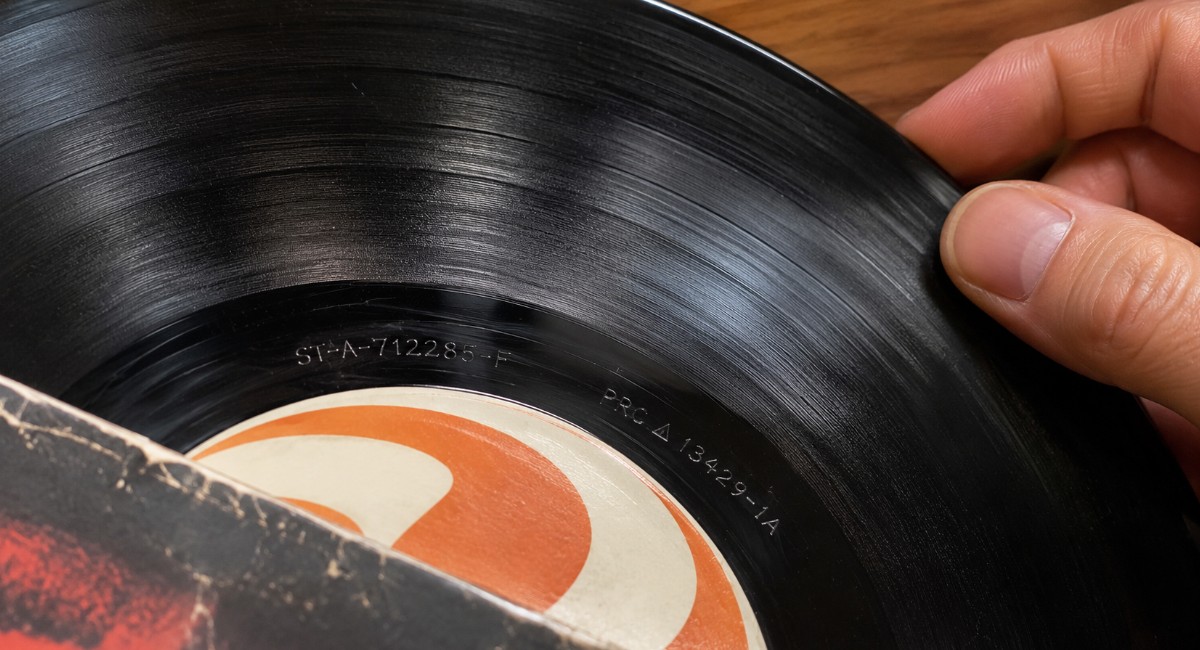
Take an LP out of its sleeve. Between the last song and the paper label is a smooth strip of vinyl with letters and numbers scratched or stamped into the surface.
It’s called the dead wax, and it often contains the most useful evidence about a pressing.
Those markings can identify the lacquer used to manufacture the record, the mastering engineer or the pressing plant. Some are handwritten. Others are stamped so faintly that you’ll need to tilt the record under a lamp to read them.
A code ending in A1 or B1 might indicate an early lacquer cut, depending on the manufacturer. It doesn’t automatically prove the record is a first pressing.
Some factories used their own numbering systems. Others reused metal parts for later production runs.
Copy the entire code on both sides, including initials and small symbols. The Discogs matrix identification rules describe how those details are recorded.
Pink Floyd’s Blue Triangle Is a Famous Example
View this post on Instagram
Few albums demonstrate the importance of pressing details better than The Dark Side of the Moon.
Early British copies were released on Harvest in 1973 with catalog number SHVL 804. The earliest UK pressing has a solid blue triangle on the center label. Later versions feature an outlined triangle.
Collectors also check the A2/B2 matrix numbers in the dead wax.
Original packaging included two posters, two stickers and a black inner sleeve. A complete, clean early copy can command a premium over a worn example missing its inserts.
But finding SHVL 804 on the cover isn’t enough. The catalog number appeared on multiple editions, so the label and runout markings need to agree.
A Familiar Cover Can Hide a Different Record
Record sleeves sometimes stayed almost unchanged through several decades of production.
Fleetwood Mac’s Rumours is a good example. Millions of copies were sold, and the familiar cover appeared on numerous editions. A copy looking suitably old isn’t necessarily an original 1977 pressing.
The center label offers better clues. Record companies changed their logos, manufacturing credits, addresses and text layouts over time.
Look at the company name, publishing information and the position of the song titles. Compare photographs of confirmed editions rather than relying on memory.
Then check the catalog number printed on the label and sleeve. A mismatch could mean somebody replaced the original cover.
Five Clues That Could Save You an Expensive Mistake
1. A Barcode on a Supposed 1970s Original
Barcodes became common on record sleeves during the 1980s. A barcode on an album first released in 1972 is a good reason to investigate further.
Some later editions have no barcode, however, so its absence proves very little.
2. The Copyright Date
A record manufactured in 2024 may still display a 1975 copyright date because the original recording and artwork retain their earlier copyright information.
Look for separate manufacturing dates or remastering credits instead.
3. Missing Posters and Inserts
Original records sometimes came with lyric sheets, posters, stickers or specially printed inner sleeves.
Collectors may pay less for incomplete copies. An original LP with missing inserts remains an original, but it may be less desirable.
4. A Record Label That Looks Wrong
Small changes in a logo or label color can reveal another production period. Early Vertigo, Harvest and Island releases are particularly interesting because some label designs changed substantially over time.
5. An Unexpected Country of Manufacture
A German pressing of an album originally released in Britain might be a first German edition without being the first edition worldwide.
Check the country listed on the label, sleeve and release entry before comparing prices.
How to Find Your Exact Vinyl Pressing on Discogs
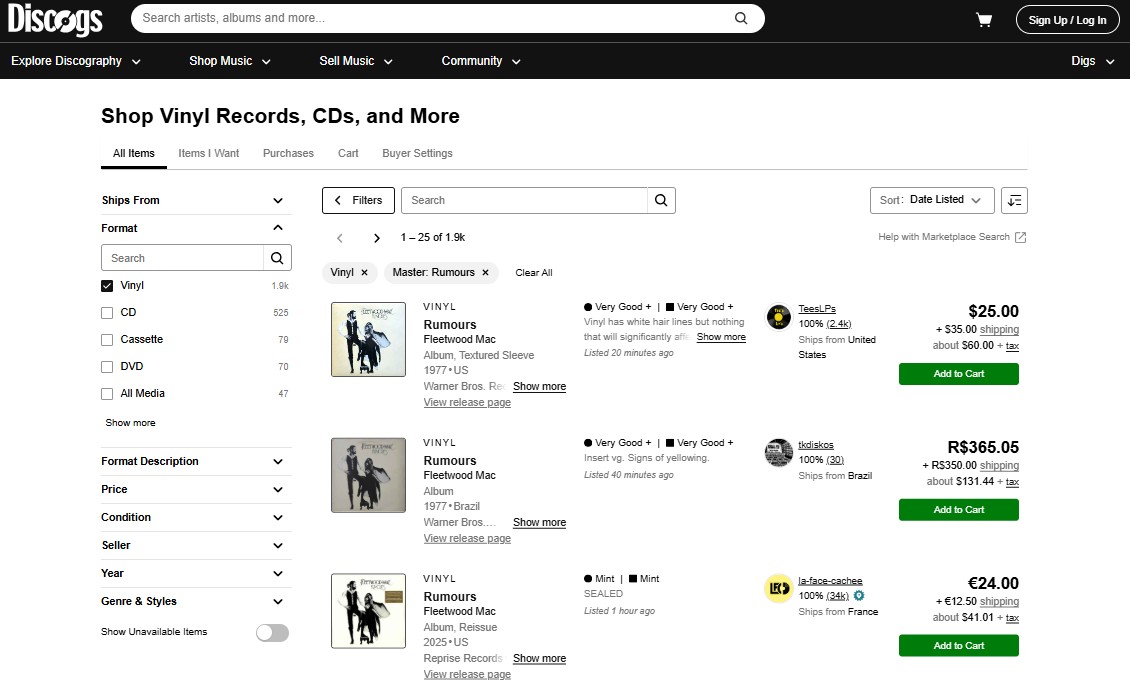
Searching for the album title alone can produce hundreds of results. The useful search begins with the catalog number.
Open the album on Discogs and look through its listed versions. Narrow the results by country, year and record label.
Compare your copy against the photographs and manufacturing details. The runout codes on both sides should match a documented variation, along with the label design and packaging.
If two releases look identical, check the smaller details. One might have different mastering initials or a separate pressing plant mark.
Not every variation has been documented. If the evidence doesn’t establish an exact edition, don’t assign an early pressing date simply because it would make the record more valuable.
Does a First Pressing Actually Sound Better?
Not necessarily. Some original pressings have excellent mastering, but a clean reissue can sound better than an original that has spent 40 years on badly adjusted turntables.
Groove wear, scratches and poor storage can damage playback quality. Mastering choices also affect the sound, even when the underlying recording is identical.
Some listeners actively prefer later editions because they were cut by respected mastering engineers or manufactured with quieter vinyl.
A first pressing can be attractive for its history, scarcity and original sound. None of those qualities guarantees the best listening experience.
How Much More Is a First Pressing Worth?
Sometimes thousands of dollars. Sometimes nothing extra.
Consider the Sex Pistols single God Save the Queen. The withdrawn 1977 A&M pressing became valuable because relatively few copies survived after the label canceled the release. Ordinary later editions don’t share that scarcity.
Most classic rock albums had far larger production runs. Finding an original copy of a hugely successful album doesn’t automatically mean you’ve found a rare record.
Condition also changes the price dramatically. Collectors check scratches, warping, sleeve damage and signs of groove wear. The Goldmine record grading standard provides common terms for assessing condition.
Once you’ve identified the exact pressing, compare recent completed sales in similar condition. A seller asking $1,000 for an album hasn’t established that somebody will pay $1,000.
Before You Sell That Old Record
Start with the runout markings, then check the label, catalog number and sleeve. A match across all four gives you a much better basis for identifying the pressing.
Don’t clean a potentially valuable record with household products or attempt to repair a damaged cover before learning what you have. Some collectors prefer original packaging with ordinary signs of age over poorly restored copies.
And don’t dismiss an unfamiliar album simply because it never became famous. Small original pressings by obscure progressive rock, folk and punk bands can be scarcer than the biggest selling records of the decade.
The next time you come across an old box of LPs, spend a little longer looking at the records themselves. An ordinary cover might conceal a genuinely interesting pressing history.