
Stay with us and find out where the next one takes us.
- Vinyl vs CD vs Lossless Streaming – Which Format Preserves the Most Detail in Music? - October 16, 2026
- Everyone Seems to Be Moving to Texas – What Is Drawing So Many People There? - October 16, 2026
- YouTube Is Finally Making AI-Generated Music Easier to Spot, but Can We Trust the Labels? - October 15, 2026
Put on Pink Floyd’s “Time” and listen to those clocks ringing at the beginning. Each one occupies its own position in the recording, followed by percussion that gradually builds until the whole band comes crashing in. A decent audio system lets you hear the space between the instruments, the decay of the cymbals, and small details in the background.
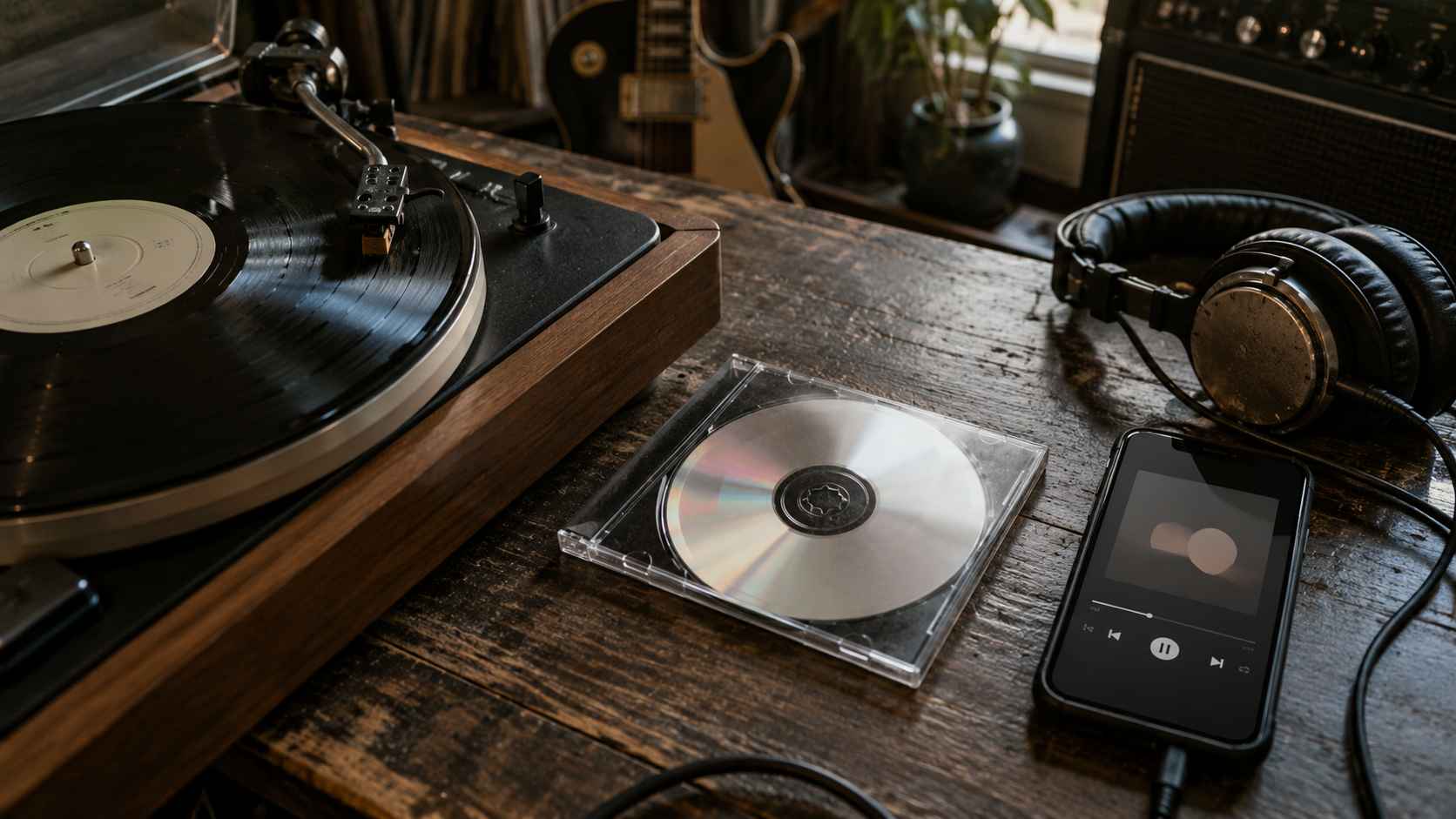
Now play the same song on vinyl, CD, and a lossless streaming service. You might hear some changes, particularly if the versions come from separate masters. But which format actually preserves more of the music?
The answer depends on more than the recording format itself. CDs and lossless streaming can reproduce digital recordings without losing information, while vinyl introduces some noise and distortion during playback.
Your listening environment matters, too: appropriate acoustic treatment can reduce unwanted reflections and improve clarity, helping you hear the differences between recordings more accurately. High-resolution streaming can store more audio data than a CD, but those extra numbers do not automatically reveal sounds that listeners can hear.
The recording itself, the mastering, and your playback equipment have a substantial influence on the final result. A $30 record is not guaranteed to sound better than a CD, and a 24-bit streaming file is not necessarily an improvement over the album you already own.
Vinyl Records And The Sound People Keep Coming Back To
Vinyl has survived the arrival of CDs, downloads, and streaming because people still enjoy listening to records. Some prefer the sound, others enjoy collecting physical albums, and plenty appreciate the whole experience of placing a record on a turntable.
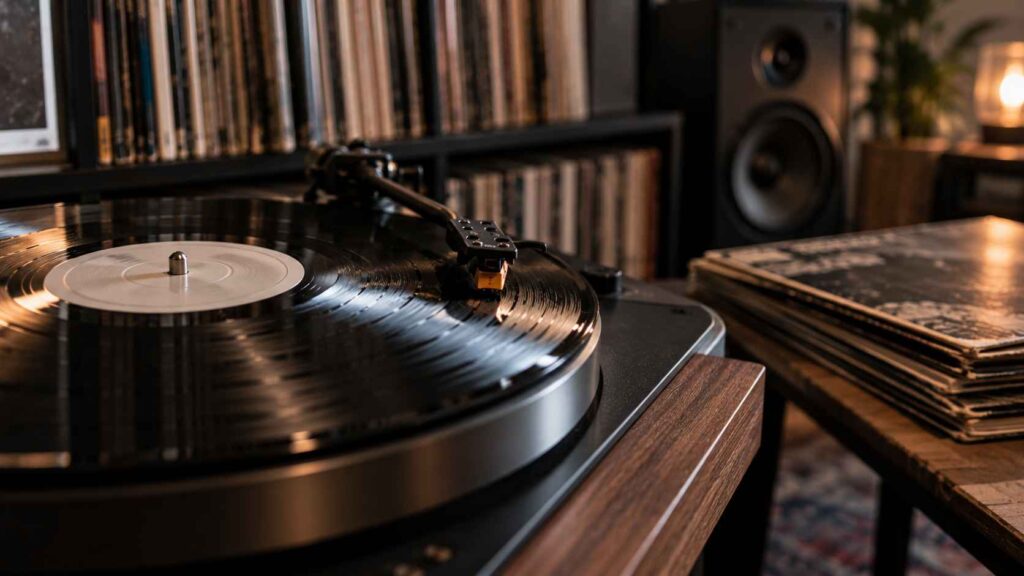
From an audio perspective, vinyl works through a surprisingly delicate mechanical process. A stylus follows the tiny variations cut into a record groove. The cartridge converts its movement into an electrical signal, which is amplified and sent to your speakers.
Every part of that process influences the sound. A poorly aligned cartridge can introduce distortion, a worn stylus may struggle to follow the groove, and dust can produce the clicks and crackles associated with older records.
Even a perfectly clean record has limitations. Vinyl cannot reproduce a recording with the same consistency as a properly functioning digital system because the mechanical playback process introduces its own noise and distortion.
Why Vinyl Can Sound Warmer Than Digital Music
Vinyl enthusiasts regularly describe records as warmer, fuller, or more natural. Those descriptions make sense as personal listening impressions, but warmth is not evidence that a record contains more musical information.
A cartridge can change the frequency balance of a recording. Certain kinds of distortion can also give instruments a richer character, particularly when compared with a very clean digital reproduction.
Mastering is another explanation. A vinyl pressing may have been prepared from a separate master with less aggressive compression or a different tonal balance. Consequently, the record might sound more open than the CD or streaming edition.
Take Fleetwood Mac’s Rumours. The layered vocals, acoustic instruments, and carefully arranged percussion make it particularly enjoyable on a capable turntable. A clean digital release can reproduce those musical elements just as accurately, however, and potentially with less background noise.
Vinyl Has Trouble Near The Center Of A Record
One problem that vinyl listeners may notice is inner-groove distortion. As the needle approaches the center of an LP, the groove passes beneath it at a lower linear speed.
The stylus must reproduce high-frequency information from increasingly compact groove variations. Depending on the cartridge, alignment, and recording, cymbals or vocals can begin to sound harsher toward the end of an album side.
Record cutting engineers account for physical limitations when preparing a release. Excessive bass, demanding high frequencies, or aggressive volume levels can make a record harder to track cleanly.
Consequently, mastering a vinyl release sometimes involves adjustments that would not be necessary for a CD. The process can produce a particularly enjoyable version of an album, but it does not mean the analog format preserves everything more accurately.
The Room Can Change The Sound More Than The Record
A carefully maintained turntable will still sound disappointing if the speakers are poorly positioned. Put a pair of speakers too close to certain walls, and some bass frequencies may become exaggerated. In a room filled with hard, reflective surfaces, vocals and instruments can lose their precise positions in the stereo image.
Listen to the opening of “Shine On You Crazy Diamond” from Pink Floyd’s Wish You Were Here. The slow introduction gives each sustained note room to develop. Excessive room reflections can make those sounds overlap in ways that were not present in the original recording.
Speaker placement and furnishings can help, but persistent problems with reflections or reverberation may benefit from dedicated acoustic treatment. Properly positioned absorbers and bass traps can improve clarity and reduce unwanted room effects, allowing instruments to sound more balanced at the listening position.
The same room problems affect CD players and streaming systems. Before spending hundreds of dollars on another cartridge or an expensive digital converter, it is worth hearing how much improvement comes from adjusting the speakers and listening environment.
CDs Still Deliver Remarkably Accurate Sound
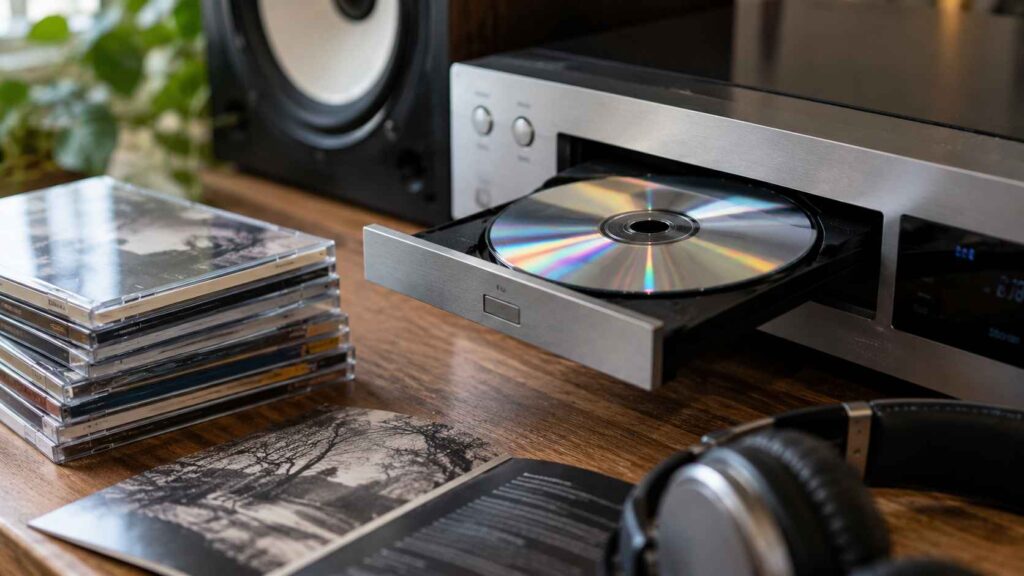
The compact disc arrived as a major improvement in convenience and playback consistency. Instead of relying on a stylus following physical grooves, it stores digital audio that a player reads and converts back into sound.
Standard audio CDs use 16-bit audio at a sampling rate of 44.1 kHz. In simple terms, the recording contains 44,100 samples per second for each audio channel, with each sample represented using 16 bits.
The sampling rate allows a properly designed system to reproduce frequencies below 22.05 kHz. Human hearing is generally described as extending up to 20 kHz in young listeners with healthy hearing, although many adults hear considerably less at the upper end.
Bit depth determines how precisely the digital system can represent signal levels and influences the available dynamic range. For standard 16-bit audio, the theoretical signal-to-quantization-noise ratio for a full-scale sine wave is about 98 dB.
That is enough to reproduce very quiet musical passages alongside loud ones without the surface noise of a vinyl groove.
What Happens To The Detail On A CD?
A CD does not automatically remove quiet guitar sounds, subtle vocal harmonies, or the decay of a drum recording. Provided those elements exist in the digital master, the format can reproduce them.
Unlike vinyl, a correctly functioning CD player does not gradually wear away the recording every time it plays. Digital error correction also helps the player recover data when minor reading errors occur, although severe disc damage can still interrupt playback.
Another advantage is consistency. A properly read disc produces the same digital audio samples during repeated playback. The final analog sound can still be influenced by the player and connected equipment, but the stored recording remains unchanged.
For music collectors, that reliability has lasting appeal. You can keep the same CD edition for decades without depending on a streaming service to retain it in its catalog.
Why An Older CD Might Sound Better Than A New Remaster
Consider two releases of the same rock album. One is an early CD edition with substantial dynamic range. The other is a later remaster prepared to sound louder and more aggressive.
The newer edition may sound impressive during the first few seconds, particularly if its volume is higher. After several songs, however, the reduced contrast between quiet and loud passages can make the music feel crowded.
A drum hit should have an initial attack followed by a natural decay. Heavy compression can reduce that contrast, making individual hits less prominent in a dense arrangement.
An early CD is not automatically superior. Some older digital transfers used inferior source tapes or production choices that later engineers successfully improved. The point is to judge the specific release rather than assuming the newest edition contains more useful musical detail.
Lossless Streaming Can Match A CD Exactly
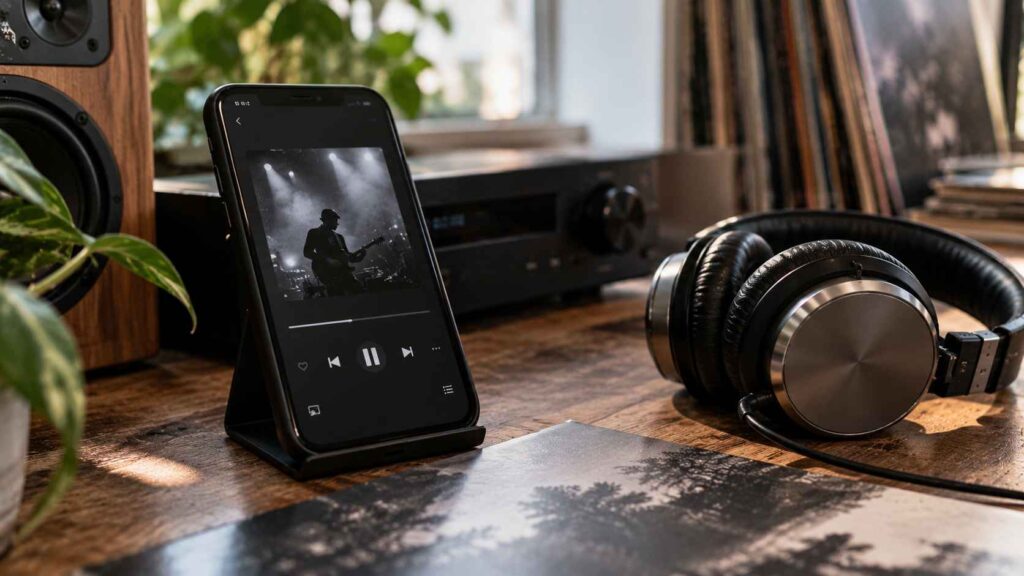
Lossless streaming gives listeners access to digital music without purchasing a physical disc. Services deliver audio files encoded in formats designed to preserve the original digital information.
FLAC and ALAC are two common examples. Both reduce the amount of storage required, but unlike MP3 compression, they allow the original digital samples to be reconstructed without losing data.
Imagine ripping a CD to FLAC using suitable software. When that file is decoded correctly, the digital audio samples can match the original disc exactly.
If a streaming service provides the same master at 16-bit and 44.1 kHz, a lossless stream can deliver identical digital audio. The internet connection does not make the music less accurate simply because it travels from a remote server.
Does 24-Bit Audio Reveal More Than CD Quality?
High-resolution streaming introduces another level of audio specifications. Instead of 16-bit, 44.1 kHz files, you may encounter recordings offered at 24-bit, 96 kHz or even 24-bit, 192 kHz.
Higher bit depth provides more numerical precision and a greater theoretical dynamic range. Increasing the sampling rate allows the digital system to represent frequencies above those covered by standard CDs.
During music production, those capabilities are valuable. Recording engineers benefit from the extra headroom and flexibility of 24-bit audio, and higher sampling rates can have uses in particular recording and processing workflows.
For someone listening to a finished album at home, the benefits are less obvious.
CD-quality audio already covers the conventional human hearing range and provides far more dynamic range than most home listening situations can use comfortably. Doubling or quadrupling the sampling rate does not make an ordinary vocal recording automatically sound clearer.
High-resolution files also need careful comparison because streaming services may supply a newer master than the original CD. A listener who prefers the 24-bit version might actually be hearing improvements made during mastering.
Bluetooth Can Change The Audio Before It Reaches Your Headphones
There is one detail many music listeners overlook. Selecting lossless quality in a streaming app does not guarantee that the original digital information reaches their headphones.
Many Bluetooth connections use lossy audio compression. The phone receives a lossless file, but the wireless connection converts the audio into another encoded format before sending it to the headphones.
Apple explains the supported connections and equipment in its guide to lossless audio playback. Wired headphones and compatible external digital-to-analog converters provide a more direct route for listening to lossless recordings.
Not every Bluetooth connection works identically, and some devices support specialized higher-quality wireless transmission. Compatibility between the source device and headphones determines what actually reaches the listener.
For a straightforward setup, wired headphones or a compatible network audio player connected to an amplifier avoid many of the additional conversions associated with ordinary Bluetooth playback.
Vinyl vs CD vs Lossless Streaming Compared
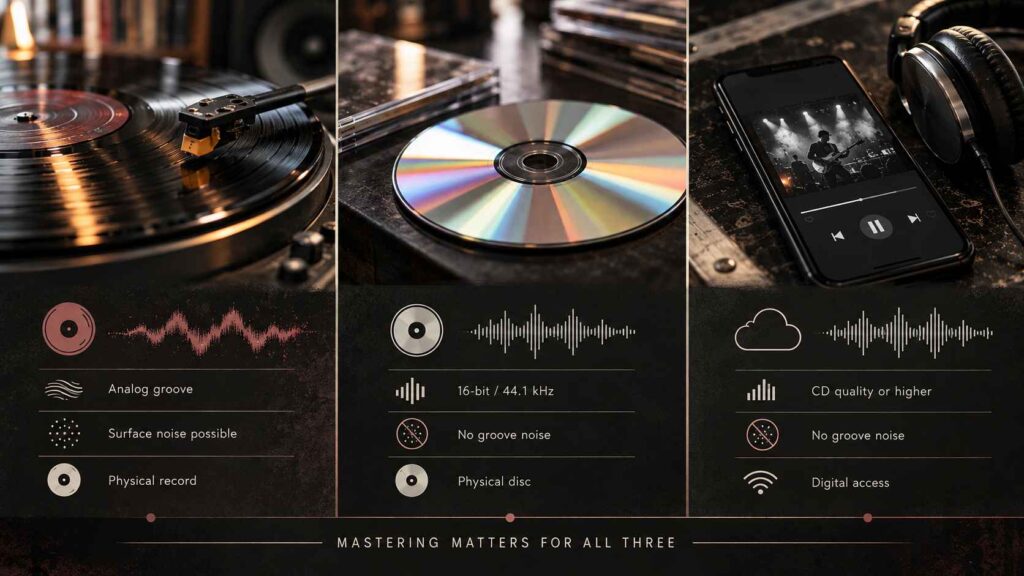
The main technical characteristics are easier to compare when separated from personal listening preferences.
| Feature | Vinyl | CD | Lossless Streaming |
| Recording medium | Physical analog groove | Digital audio on an optical disc | Digital audio delivered as files or streams |
| Audio resolution | No digital bit depth or sampling rate | 16-bit / 44.1 kHz | CD quality or higher, depending on the service |
| Background noise | Surface noise and mechanical noise are possible | No record surface noise | No record surface noise |
| Physical playback wear | Stylus and groove wear can occur | No contact wear during normal playback | None |
| Exact reproduction of digital samples | No | Yes, when read correctly | Yes, with an unaltered lossless playback path |
| Mastering affects sound | Yes | Yes | Yes |
| Internet required | No | No | Usually for streaming, not for downloaded files |
| Physical ownership | Yes | Yes | Generally no with subscription streaming |
| Main appeal | Analog playback and collecting records | Accurate digital playback and physical ownership | Large music libraries and convenient access |
The comparison gives digital playback a clear technical advantage in noise and consistency. CD and lossless streaming are capable of reproducing the same digital master without losing information.
Vinyl remains appealing because people enjoy its presentation and sometimes prefer the sound of a particular pressing. Personal enjoyment is a perfectly valid reason to choose a record, even when another format offers more accurate signal reproduction.
Why Mastering Can Be More Important Than Audio Resolution
Imagine hearing two versions of Led Zeppelin’s “When the Levee Breaks.” One comes from an early digital release, and the other from a later remaster.
The massive drum sound is central to the recording. Its weight comes from the performance, microphone placement, recording environment, and production decisions. A mastering engineer can change how prominent those drums sound by adjusting equalization and compression.
If one version retains more dynamic contrast, you may find the drums more convincing even if that version has a lower digital resolution.
Mastering engineers work with the finished recordings, making adjustments that influence their tonal balance and loudness. Separate releases of the same album may therefore sound noticeably different before the listener even considers the playback format.
The Loudness War Changed How Some Albums Sound
During the 1990s and 2000s, many commercial recordings became increasingly loud through the use of dynamic compression and limiting.
The intention was to make songs stand out on radio, in CD players, and alongside competing releases. The drawback was a reduction in the contrast between softer and louder moments.
Metallica’s Death Magnetic, released in 2008, became a widely discussed example. Listeners criticized the compressed sound of the commercial album and compared it with audio associated with Guitar Hero.
The controversy illustrated how production decisions can dominate the listening experience. A recording delivered through a technically accurate digital format can still sound harsh if its master has been pushed too far.
Streaming services now commonly apply loudness normalization, adjusting playback levels to reduce sudden jumps between recordings. Normalization cannot restore dynamics already removed from a master, but it can reduce the advantage of making every release excessively loud.
Four Rock Songs That Reveal How Well Your System Plays Music
You do not need specialized audio test recordings to hear problems with a music system. Songs with carefully arranged instruments and contrasting volumes provide plenty of opportunities to listen for distortion, unclear bass, or excessive room reflections.
1. Pink Floyd, Time
The clocks at the opening of “Time” are excellent for judging stereo placement. Each sound should occupy a recognizable position, with the following percussion remaining clear as the arrangement builds.
Listen to the cymbals when the drums enter. A bright or distorted playback system can make them sound unpleasantly sharp. Poor room acoustics may blur the separation between the individual sounds.
We have included “Time” and several equally interesting recordings in our selection of the best Pink Floyd songs.
2. Fleetwood Mac, Dreams
“Dreams” is a useful recording for listening to bass control and vocal clarity. Stevie Nicks sits prominently in the mix, supported by a relatively restrained arrangement.
The bass should sound full without obscuring the vocal. Cymbals and percussion should remain audible without drawing excessive attention away from the song.
Small changes in speaker placement can be particularly noticeable with a recording where the instruments have enough space to be heard individually.
3. Dire Straits, Private Investigations
“Private Investigations” moves from very quiet passages to sudden instrumental accents. The recording is useful for hearing background noise and assessing how comfortably a system handles changes in volume.
On vinyl, surface noise may become noticeable during the quieter sections. A clean CD or lossless digital release can reproduce the same moments without adding groove noise.
The abrupt changes in volume also expose recordings that have been heavily compressed. A suitable master preserves the impact of the louder sections without forcing the quiet passages toward the same level.
4. Steely Dan, Aja
The title track from Aja contains carefully arranged drums, keyboards, bass, and saxophone. The recording offers a useful way to hear how clearly your system separates instruments.
Pay attention to the bass and cymbals during the instrumental sections. The bass should remain controlled, and the cymbals should have a natural decay rather than a brittle edge.
A capable playback system allows the individual instruments to remain recognizable without making the recording sound artificially separated.
Which Format Preserves The Most Musical Detail?
For a digital master released at CD quality, a correctly played CD and an identical lossless stream preserve the same musical information. Neither format has an inherent advantage when the digital samples and playback conditions are equivalent.
High-resolution lossless files can contain additional numerical information through higher bit depth and sampling rates. Their technical specifications exceed those of standard CDs, but the extra information does not guarantee an audible improvement in finished music.
Vinyl has greater physical playback limitations. Surface noise, tracking distortion, cartridge response, and record condition can alter the sound. Even so, a carefully mastered pressing may be more enjoyable than a poorly mastered digital edition.
For collectors who enjoy physical albums, CDs offer accurate reproduction without the maintenance associated with a turntable. Vinyl provides the pleasure of handling records, exploring pressings, and experiencing music through an analog playback system.
Lossless streaming offers easy access to large music collections, including recordings that would be expensive or difficult to find on physical media. With compatible equipment, it can reproduce the same digital information stored on a CD.
If musical detail is your priority, spend some time finding the right edition of your favorite album. A carefully mastered recording, played through capable equipment in a suitable room, will do far more for your listening experience than choosing a format based on its reputation alone.
Clarify the main verdict earlierTrim repeated mastering explanations