

Stay with us and find out where the next one takes us.
- 12 Bachelorette Party Ideas That Will Make You Feel Like a Rock Star - November 10, 2026
- SoundCloud vs. YouTube for New Music Producers, Which Platform Is Better in 2026? - November 10, 2026
- 10 Music Videos That Were Banned From Television and the Stories Behind Them - November 10, 2026
Finishing your first original track feels like a major achievement. Then comes a surprisingly difficult question. Where should you upload it so people actually listen?
SoundCloud and YouTube are two popular options for independent music producers, but they serve different purposes. SoundCloud makes it easy to share tracks, connect with other musicians and collect feedback. YouTube offers opportunities to reach listeners through music videos, tutorials, recommendations and short clips.
Neither platform guarantees an audience. An excellent beat can attract almost no attention on either one, especially when the producer has no existing following.
For beginners in 2026, SoundCloud is generally better for sharing music and building connections with other producers, while YouTube offers more ways to reach new listeners and develop a recognizable artist identity. The right choice depends on what you want to achieve with your music.
SoundCloud vs. YouTube in 2026
The differences are easier to see when comparing how the platforms handle everyday activities.
| Feature | SoundCloud | YouTube |
| Uploading music | Upload audio files directly | Requires a video file for regular channel uploads |
| Discovering music | Music feeds, recommendations, reposts and playlists | Search, recommendations, Shorts and suggested videos |
| Feedback | Comments attached to specific moments in tracks | Comments on videos, Shorts and community interaction |
| Visual content | Limited emphasis on video | Music videos, visualizers, tutorials and performances |
| Free uploads | Two hours of audio on the Basic plan | Free channel uploads, subject to platform limits |
| Monetization | Artist subscriptions provide access to eligible music monetization | Advertising and other features depend on eligibility |
| Best Starting Point | Producers testing tracks and building music connections | Producers interested in growing an audience through content |
For someone making instrumental beats at home, SoundCloud offers a direct route between finishing a track and sharing it. YouTube requires more preparation, but the additional content can help listeners discover the person making the music.
SoundCloud Is Better for Sharing Music Without Making Videos
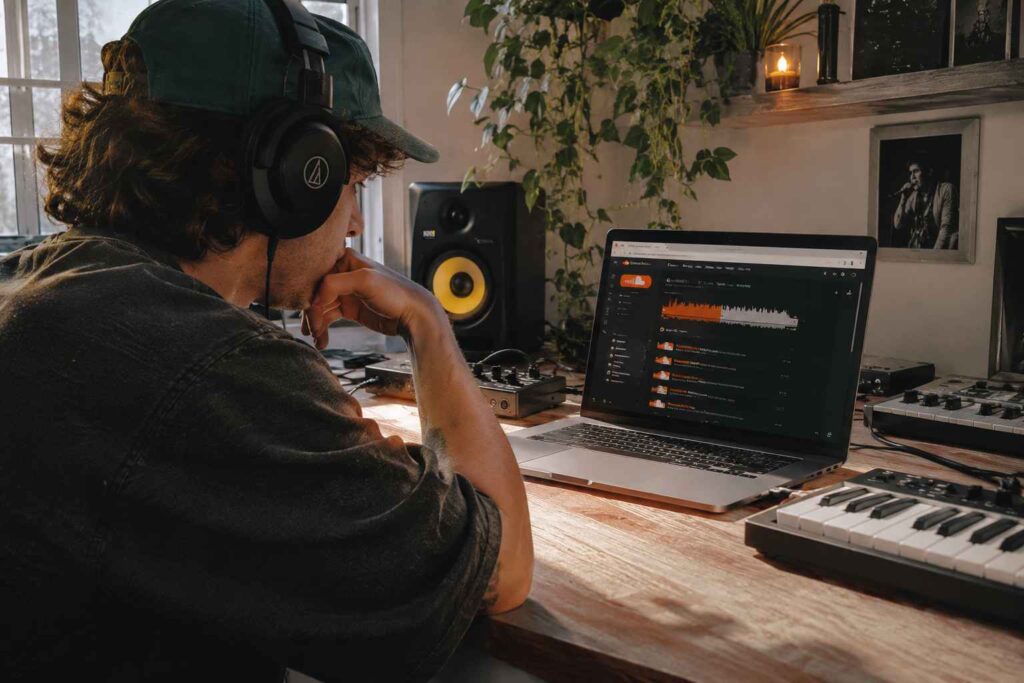
SoundCloud was built around audio. You can finish a track, prepare its artwork and upload the recording without creating accompanying footage.
The simplicity matters for producers who spend most of their free time making music. Someone working on several beats each week may prefer uploading each finished experiment rather than producing a separate video.
SoundCloud also attracts listeners who actively search for new electronic music, experimental sounds, remixes and independent artists.
Comments can appear at specific moments in a track. A listener might point out that the bass sounds too loud during the second verse or compliment a particular drum transition.
That kind of feedback can be useful when learning production.
However, uploading regularly does not guarantee that anyone will discover your work. Producers still need to engage with relevant communities, share their releases and give people a reason to return.
According to the official SoundCloud plan comparison, free accounts have a two-hour upload allowance. Paid Artist and Artist Pro plans provide additional upload capacity and tools.
For someone just beginning, the free allowance may be enough to test several original tracks before deciding if a subscription is worthwhile.
YouTube Gives Producers More Opportunities to Be Discovered
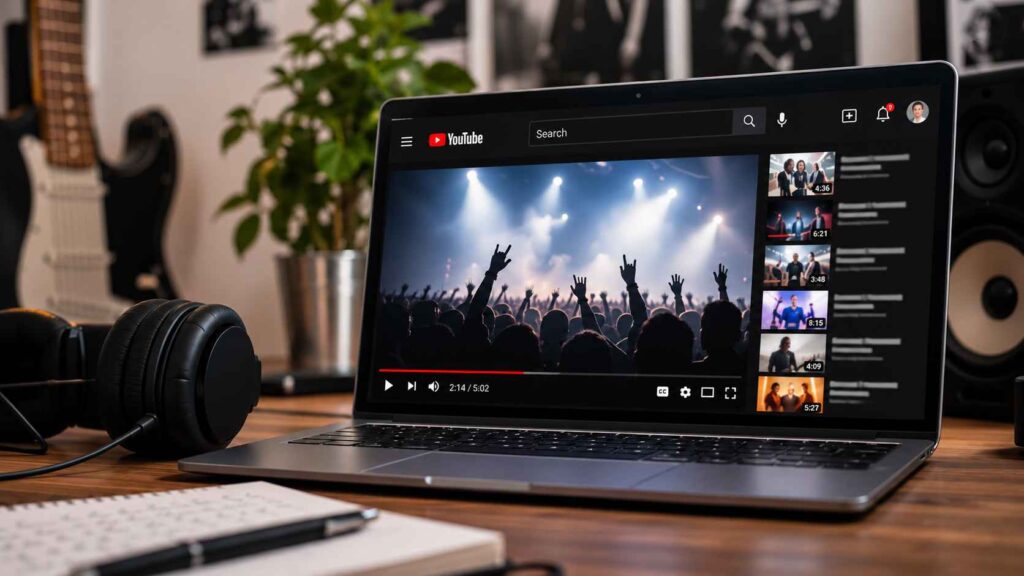
YouTube offers something SoundCloud cannot match in quite the same way. A producer can attract attention without requiring people to search for an unknown artist or song.
Consider a producer who makes dark electronic instrumentals. A listener might discover the music through a video about producing atmospheric synthesizer sounds, a short recording of a studio session or a visualizer recommended alongside similar music.
The audience may initially be interested in the production process rather than the finished track. However, a memorable sound can encourage people to visit the channel and listen to more music.
- Official track uploads. Full songs accompanied by cover artwork or a simple visualizer.
- Music videos. Original visuals that introduce the identity and style of the artist.
- Production tutorials. Explanations of techniques, instruments and recording methods.
- Studio sessions. Recordings that show how a beat or arrangement develops.
- Shorts. Brief clips highlighting a memorable section of a track or its production process.
YouTube itself recommends combining music videos, Shorts and additional release content through its release strategy for artists.
The drawback is time. Maintaining a YouTube channel can involve editing footage, preparing thumbnails and planning content. A producer who dislikes making videos may find those responsibilities distracting.
Making YouTube Videos Does Not Require an Expensive Camera
New producers sometimes avoid YouTube because they assume every upload needs a professionally filmed music video.
Fortunately, a simple visualizer, animated artwork or recording of a music production session can accompany a track. There is no requirement to spend thousands on elaborate visuals.
Even old studio footage can be useful. A producer might have recordings captured on an older phone that look blurry when enlarged for a modern video.
An hd video converter can help improve the resolution and apparent sharpness of suitable footage before it becomes part of a visualizer, studio montage or promotional clip. However, increasing resolution cannot reliably recover every detail missing from the original recording.
Remember that video enhancement does not improve the audio mix. The original music should still be exported and prepared separately at an appropriate quality.
For musicians considering a more ambitious production, the cost of making a music video can vary enormously depending on the concept, equipment and people involved.
A creative idea filmed well on a phone may be more interesting than expensive footage with no connection to the music.
Which Platform Is Better for Getting Feedback?
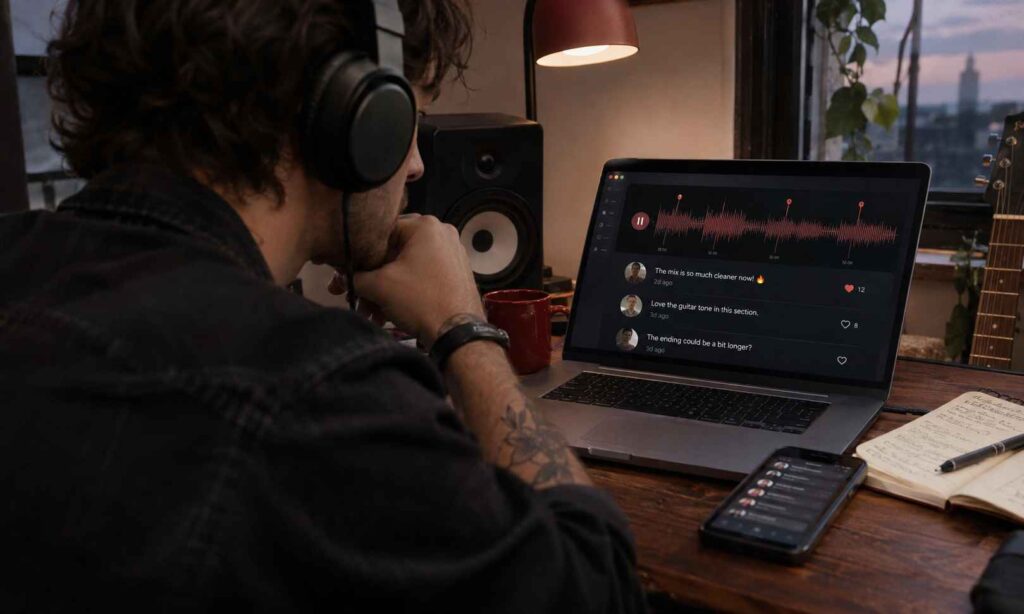
SoundCloud has an advantage when the goal is improving your music.
Its timed comments allow listeners to respond to particular sections. Producers can use that information to identify parts of a track that attract attention or need additional work.
YouTube comments can also be valuable, but the discussion may focus on the video, performance or personality of the producer rather than the mix.
A YouTube tutorial might attract questions about the equipment used. A studio video could generate requests for explanations of a particular technique.
Both kinds of interaction matter, but they serve different purposes.
Choose SoundCloud when you want feedback on your tracks. Choose YouTube when you also want to build interest in yourself as a producer.
Neither platform guarantees useful criticism. Ten enthusiastic comments from friends may feel encouraging, but one detailed response from an experienced musician could help you improve the next release.
Can New Producers Make Money on SoundCloud and YouTube?
Both platforms offer opportunities to earn money, although neither should be treated as a reliable source of income when starting.
Making Money on SoundCloud
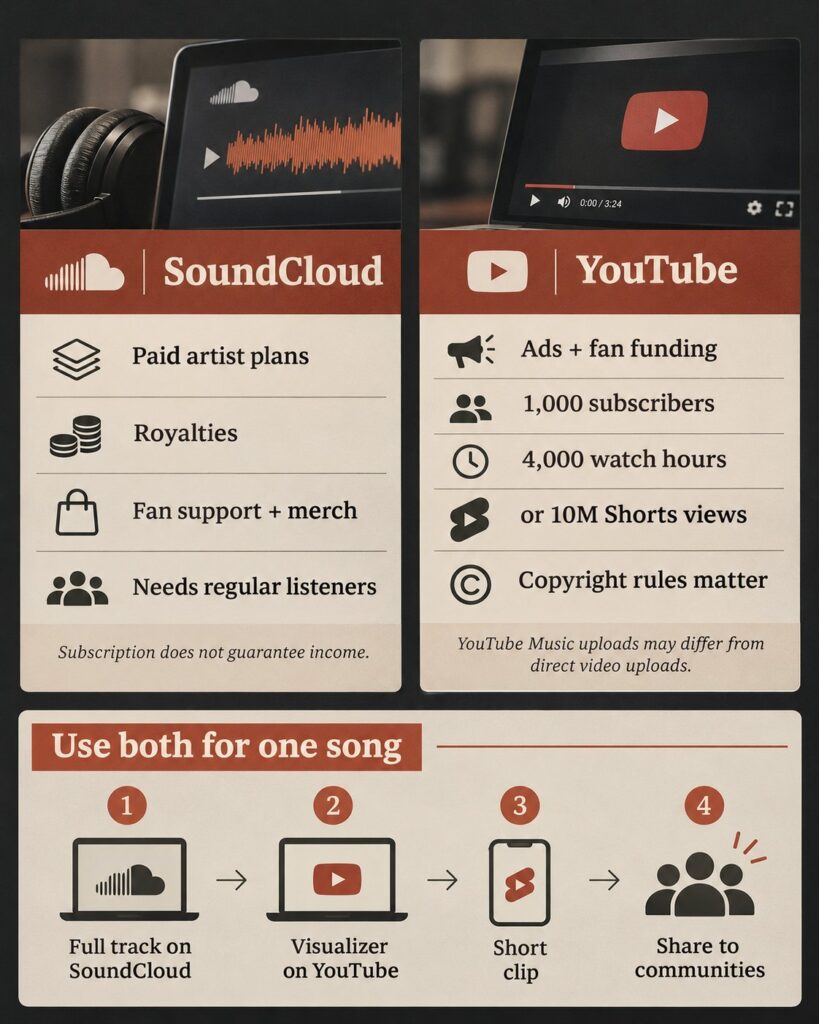
SoundCloud offers monetization and music distribution through its paid artist subscriptions.
The platform states that eligible artists can monetize their recordings and receive royalties through its artist payment system. Access and distribution allowances depend on the subscription and relevant eligibility requirements.
The service also supports opportunities to earn through fan contributions and merchandise links.
However, earning meaningful streaming revenue generally requires an audience that listens regularly. Purchasing a subscription does not guarantee income.
Making Money on YouTube
YouTube allows eligible creators to earn advertising revenue, receive fan contributions and access other monetization features.
Under the current YouTube monetization requirements, advertising revenue sharing generally requires at least 1,000 subscribers and either 4,000 qualifying public watch hours during the previous 12 months or 10 million qualifying Shorts views during the previous 90 days.
Some countries also offer earlier access to selected fan funding features at lower thresholds.
Music copyright arrangements can complicate payments. A producer distributing a song through a separate music service should check how rights management and YouTube Content ID affect the channel.
A video uploaded directly to YouTube is also different from an official audio release delivered to YouTube Music through a distributor.
For beginners, building an audience and developing an identifiable sound usually deserve more attention than predicting revenue per stream.
How to Promote One Song on Both Platforms
SoundCloud and YouTube can work together without requiring two completely different release campaigns.
Consider a producer releasing a four-minute instrumental. Instead of uploading it once and hoping for attention, the producer could prepare several pieces of content around the same track.
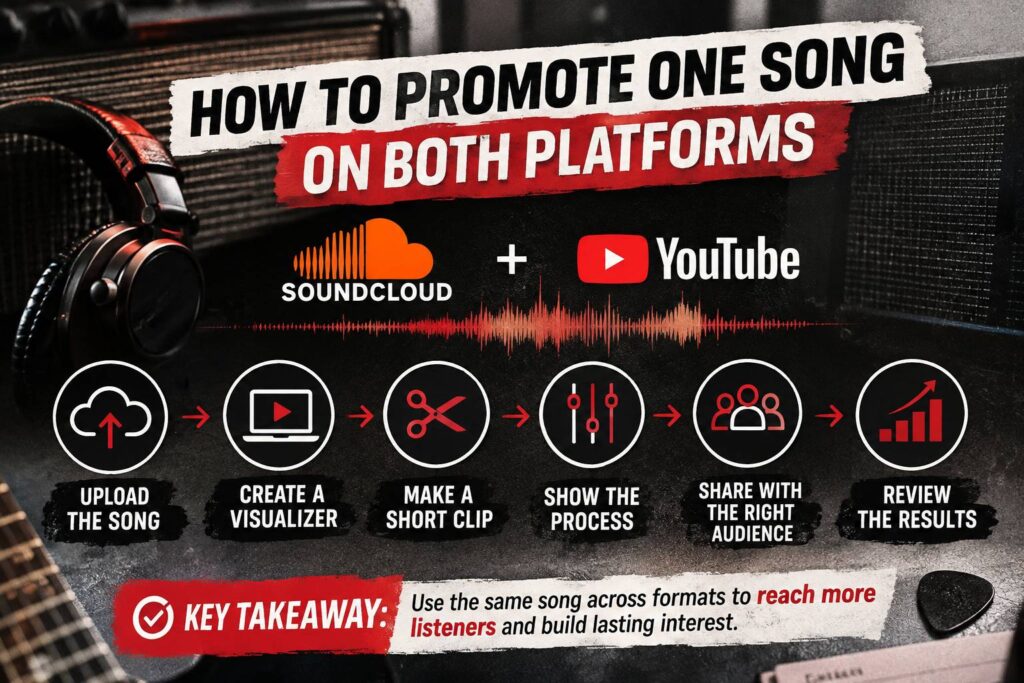
- Upload the complete song to SoundCloud. Add clear artwork, an accurate genre description and relevant information about the production.
- Create a YouTube visualizer. Use the same recording with suitable artwork or simple original animation.
- Choose the most interesting section. A memorable chorus, beat change or instrumental hook can provide material for a Short.
- Show how the track was made. A brief studio recording can interest viewers who enjoy music production.
- Share each release with relevant audiences. Participate in communities where people already discuss similar music.
- Review the response. Compare meaningful comments, repeat listeners, subscriber growth and the content that encourages further listening.
The song remains the main product. Short videos and production content simply give people additional opportunities to discover it.
A similar approach is useful for anyone facing the challenges discussed in building a music career independently. Making music has become more accessible, but attracting sustained attention still requires consistent effort.
SoundCloud or YouTube, Which One Would You Choose?
For a new producer whose main goal is sharing beats, experimenting with sounds and hearing opinions from other musicians, SoundCloud is the easier starting point.
You can upload audio directly, organize your tracks and spend more time producing music rather than editing promotional videos.
For a producer who enjoys teaching, recording studio sessions or creating visual content, YouTube offers more ways to build an audience. A useful tutorial can introduce viewers to your music even if they have never heard your artist name.
The most effective approach may be using both platforms for different purposes. Publish the full track on SoundCloud, then use YouTube to demonstrate your creative process and introduce the music to listeners who might otherwise never encounter it.
One additional point matters more than the platform choice. Releasing a track does not automatically create an audience. Spend time listening to other artists, responding to useful feedback and improving each new production.
A hundred people who genuinely enjoy your music and return for another release are more valuable to a developing career than thousands of views that never lead to another listen.