



For years, the iPod Shuffle looked like a perfect example of technology that had finished its job and disappeared. Phones swallowed the MP3 player, streaming swallowed the downloaded music library, and touchscreens replaced the little physical buttons people once used without even looking.
Then something strange happened. People started buying Shuffles again.
Not only collectors, either. Younger listeners who never owned an iPod during its original run have started picking them up second hand, clipping them to jackets, using them at the gym and filling them with deliberately small music libraries. In August 2026, ITV reported that refurbished-tech marketplace Back Market had recorded a 453% year-on-year increase in iPod Shuffle sales. eBay also reported a 31% rise in UK searches for classic iPods between January 2025 and January 2026.
A device introduced in 2005, with no touchscreen, no streaming apps and no access to an endless catalogue of songs, suddenly makes sense to a generation surrounded by all three.
A Tiny Music Player Has Become an Escape From the Phone
Second-hand audio has developed into a surprisingly active part of music culture, covering everything from preowned wireless headphones to old MP3 players and discontinued iPods. The Shuffle occupies an especially unusual place in that market because its limitations are now part of the attraction.
Streaming music on a phone is wonderfully convenient. It also means opening the same device that holds Instagram, TikTok, messages, email, news alerts and every other excuse not to listen to the song that is already playing.
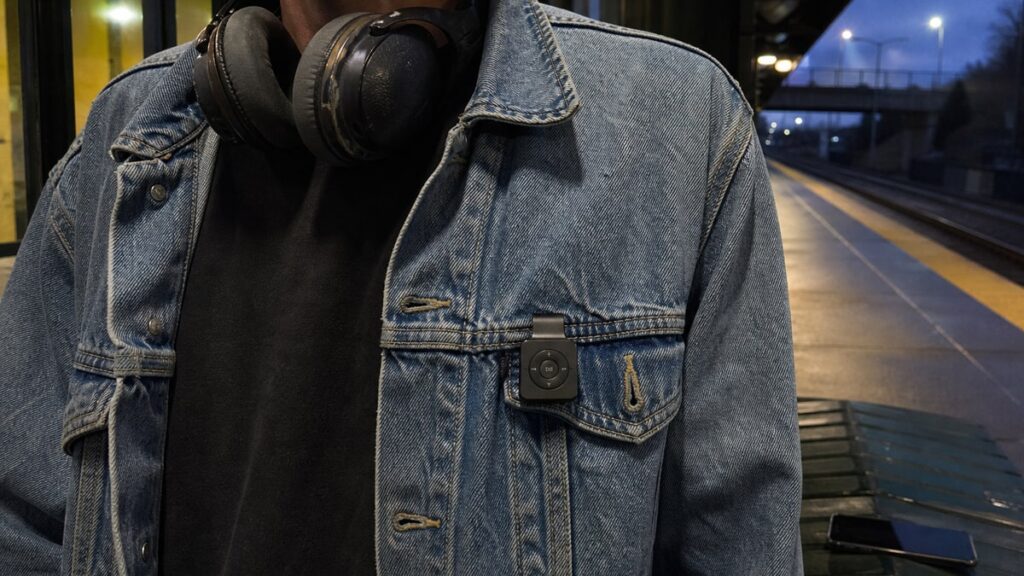
An iPod Shuffle removes all of that.
You press play and music comes out. There is no album artwork to stare at, no notification arriving halfway through a chorus and no recommendation carousel waiting beneath the track. On most Shuffle models, there is not even a screen.
Twenty years ago, that sounded like a compromise.
In 2026, it can feel almost luxurious.
The Numbers Suggest That the Comeback Is Real
The renewed interest is no longer limited to a few nostalgic TikTok videos.
ITV News reported that Back Market had seen iPod Shuffle unit sales rise 453% year on year. The same report cited eBay figures showing growing searches for several older iPod models.
Earlier in the year, Axios also reported increased demand for discontinued iPods, connecting the trend with younger buyers looking for both nostalgia and a break from smartphones.
The Shuffle is particularly suited to the moment. It is tiny, recognizable and cheap enough in many second-hand listings to be treated as an experiment rather than a major electronics purchase. Its brightly colored later models also happen to look far more interesting clipped to a shirt or bag than another anonymous black rectangle.
Some buyers are not even beginning with the music. The clip itself has turned old Shuffles into fashion accessories, with people attaching them to clothing and even wearing them in their hair.
A product originally designed around portability has accidentally become wearable vintage tech.
@phoebestrode I LOVED this when I was younger omg! #ipod #ipodshuffle ♬ 100 Dean blunt slowed – Doggz song
The iPod Shuffle Was Built Around a Very Different Idea of Music
Apple introduced the first iPod Shuffle in January 2005. Its original pitch now reads like a message from another technological universe.
There was no promise of having every song ever recorded available instantly. Apple instead promoted the idea of loading a limited collection from iTunes and letting the player rearrange it for you.
The name was literal.
You put music on the device, moved a switch to shuffle mode and surrendered some control over what played next.
Modern streaming services technically offer the same button, but the experience is completely different. Spotify, Apple Music and YouTube Music surround playback with search bars, playlists, lyrics and recommendations shaped by systems such as Spotify’s recommendation algorithm.
The Shuffle gives you whatever you remembered to put on it.
That restriction changes listening more than it might appear.
If there are only 200 songs available, skipping ten tracks does not lead to another catalogue containing 100 million alternatives. Eventually, you hear the songs you loaded. Forgotten tracks come back. Album cuts survive. A song that would have lost a five-second battle for attention on a streaming app gets another chance.
Owning 200 Songs Feels Different From Having Access to 100 Million

Streaming has made music abundance normal.
Almost any artist can be summoned within seconds, which is an extraordinary achievement. Yet unlimited access can also make individual songs feel strangely disposable. Another track is always one tap away.
A small MP3 player creates the opposite situation.
Someone has to choose what goes onto it. A computer is involved. Files need to exist somewhere. Storage has a ceiling. Adding a new batch of music may mean removing something else.
Suddenly, building a music library becomes an activity again.
Older listeners may remember spending an evening deciding which tracks deserved precious space on an MP3 player before a holiday or long bus journey. Younger Shuffle buyers are discovering the same ritual without necessarily carrying any nostalgia for it.
The result resembles making a mixtape for yourself. The limitation gives the collection a shape.
There Is Also Something Refreshing About Buttons
Physical controls have become oddly satisfying.
A fourth-generation iPod Shuffle has a circular control pad with dedicated buttons for play, pause, volume and skipping tracks. Once it is clipped to clothing, basic playback can be controlled by touch alone.
No unlocking. No swiping. No looking down.
Apple lists the fourth-generation model at just 12.5 grams, with a body measuring roughly 29 by 31.6 mm. It carried 2GB of storage and offered up to 15 hours of playback when new, according to Apple’s technical specifications.
Those numbers are modest by modern standards, but the physical design has aged unusually well. There is very little unnecessary hardware because there was never much hardware to begin with.
The entire object exists to play music.

Yes, Wired Earphones Are Part of the Appeal Too
The Shuffle revival overlaps with another small reversal in personal audio. Wired headphones are making a comeback, appearing in street fashion, photography and social feeds after years of being treated as something everyone would inevitably replace with Bluetooth.
Part of the attraction is aesthetic. A visible cable looks unmistakably different in a world filled with tiny wireless buds.
There is also a practical relationship with the Shuffle. Later models use a standard 3.5 mm headphone connection, so a pair of wired headphones plugs directly into the player without Bluetooth pairing, an app or another battery to monitor.
That simplicity gives the entire setup an appealing sense of finality. Plug in headphones, press play and leave the phone somewhere else.
No ecosystem needs to be managed.
The Shuffle Has Become Fashion in a Way Apple Never Planned

Few pieces of consumer electronics survive long enough to become visually interesting again.
The iPod Shuffle has managed it.
The small aluminum fourth-generation versions came in colors including silver, blue, pink, gold and space gray. Earlier generations had completely different shapes, giving collectors several very recognizable designs to hunt for.
The built-in clip matters just as much as the colors. Clipping a Shuffle onto a collar, waistband, bag strap or jacket turns it into something visible rather than another gadget buried in a pocket.
Gen Z has repeatedly found new uses for obsolete technology. Digital cameras returned partly because their imperfect photos looked different from computational smartphone photography. Flip phones acquired new cultural status. Old wired headphones became fashionable again.
The Shuffle fits neatly into the same movement, but it has one advantage over purely decorative retro technology.
It still does its original job extremely well.
Digital Burnout Has Given Old Technology a New Purpose
The most interesting part of the revival has little to do with Apple.
People are experimenting with devices that separate activities which smartphones spent years combining.
The trend extends beyond portable players. The renewed popularity of vinyl records reflects a similar interest in physical music formats and more intentional listening habits.
A camera for taking photos. An e-reader for books. A watch for telling the time. An MP3 player for music.
Using several devices sounds less efficient on paper. Efficiency is exactly what made the smartphone so dominant in the first place.
Attention works differently.
If listening to an album requires opening the same device that contains social media, work messages and breaking news, music has to compete against everything else on the phone. A dedicated player removes the competition before it begins.
TechCrunch recently described growing interest in so-called slow technology, connecting devices such as old iPods with attempts to regain control over attention and screen time.
The Shuffle might be one of the purest examples because it offers almost nothing to interact with once playback starts.
There is no feed hiding behind the music.
View this post on Instagram
Buying an Old Shuffle in 2026 Still Comes With Problems
Nostalgia cannot repair a twenty-year-old lithium-ion battery.
Anyone buying an original Shuffle now is dealing with ageing hardware. Battery condition can vary dramatically between units, replacement parts require some effort, and older models use cables or accessories that are no longer sitting in every electronics drawer.
Music management can also feel archaic beside modern streaming. Songs need to be stored locally and transferred to the player, which means understanding digital music formats such as MP3, FLAC and WAV becomes useful again. The Shuffle supports specific formats, rather than every audio file type.
Bluetooth is another obvious absence. A standard Shuffle was designed for wired headphones. Using modern wireless headphones requires additional hardware rather than direct pairing.
Those inconveniences explain why the Shuffle is unlikely to replace the smartphone as the primary music device for most listeners.
Replacement may not be the point.
A Shuffle can be the player used on a run, during a walk, at the gym or during an hour when carrying the entire internet around feels unnecessary.
The Funny Part Is That Apple Already Told Us What the Shuffle Was For
Looking back at Apple’s original 2005 announcement, the central idea was remarkably simple. Rather than constantly choosing songs, listeners could let their own music library surprise them.
At the time, Apple was trying to make digital music easier and more spontaneous.
Two decades later, the same design solves a completely different problem.
Music has become almost too accessible. Choosing something can involve browsing playlists, watching previews, checking recommendations, reading comments and skipping repeatedly before a full song gets a chance.
The Shuffle cuts through all of it with a button.
Play.