
Stay with us and find out where the next one takes us.
- Are Virtual Reality Concerts the Future of Live Music or Just Another Passing Trend? - November 4, 2026
- 5 Essential Techniques to Play Classic Rock Guitar Like the Legends - November 4, 2026
- First Pressing vs Reissue – How to Tell Which Vinyl Record You Have? - November 3, 2026
Imagine watching Metallica perform with Lars Ulrich playing the drums just a few feet away. You can look around the stage, see thousands of fans in the audience, and enjoy the concert without leaving your living room.
Virtual reality is making experiences like that possible. Major artists are experimenting with immersive concerts, technology companies are developing new ways to watch performances, and digital venues are giving musicians creative freedom that traditional stages cannot match.
But there is a question that expensive headsets and spectacular graphics cannot answer. Can a virtual concert recreate the excitement of actually being there?
VR concerts have a promising future, particularly for fans who cannot attend shows in person. Replacing traditional live music is a much less convincing prospect. The most interesting possibilities involve experiences that a physical concert could never offer.
What Does a Virtual Reality Concert Actually Look Like?
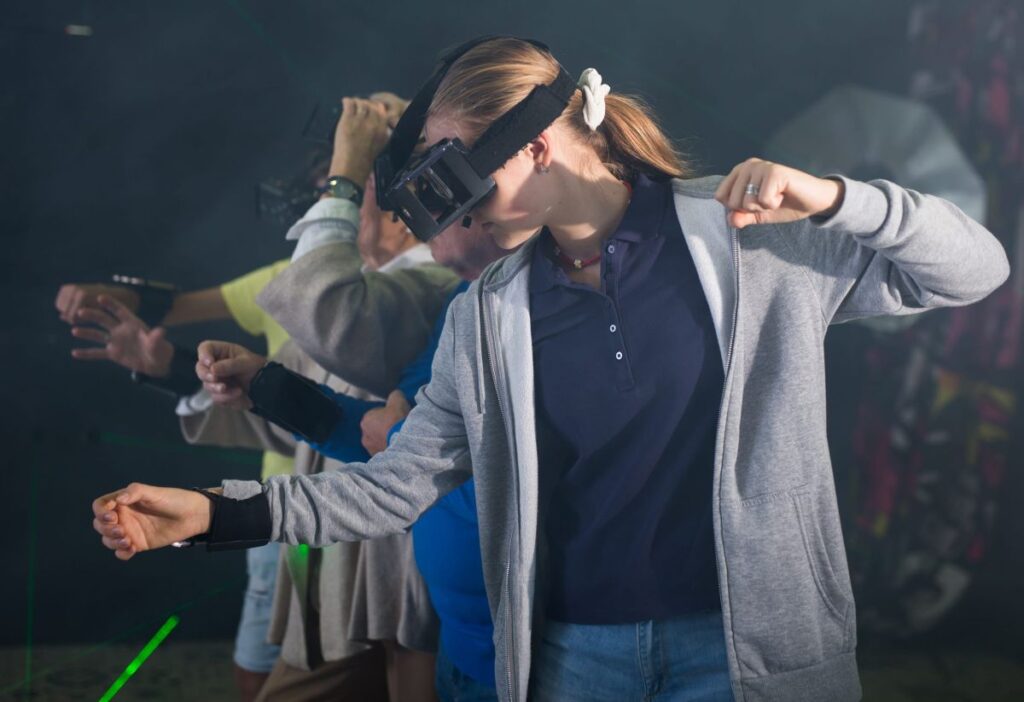
A VR concert places the viewer inside an immersive digital experience through a compatible headset. Depending on the technology, fans might watch footage of a real performance, move around an animated concert venue, or interact with other people attending remotely.
Unlike a regular livestream on a television or phone, VR can create the sensation of standing inside the performance. Turning your head changes what you see. Spatial audio can also make instruments and other sounds appear to come from different directions.
However, not every VR concert offers the same experience.
| Type of VR Concert | How It Works | What Fans Experience |
|---|---|---|
| Immersive concert recording | A real performance is filmed using specialized cameras. | Viewers can look around the recorded scene, often with unusually close views of the musicians. |
| Virtual concert world | Artists perform as digital characters or appear inside computer-generated environments. | Fans may explore the venue, move around and interact with other visitors. |
| Live concert broadcast in VR | A performance is transmitted into a virtual viewing space. | Fans watch the event remotely and may share the experience with other users. |
The differences matter. Watching a recorded performance through a headset is closer to an immersive concert film. Attending a real-time digital event with other fans introduces some of the social experience associated with live music.
Metallica, Coldplay and the Artists Already Experimenting With VR
Virtual concerts are no longer limited to small technology demonstrations. Major touring artists have already released immersive performances that give audiences an unusual perspective on their shows.
Metallica Brought Its Stadium Show to Apple Vision Pro
In March 2025, Metallica released an immersive concert experience for Apple Vision Pro. The recording featured three songs performed during the 2024 M72 World Tour in Mexico City, including Whiplash, One, and Enter Sandman.
Apple used 14 specialized cameras to capture the performance. According to the official Apple concert announcement, the production included 180-degree video and spatial audio, with camera positions around the stage.
The result gives viewers perspectives that would be difficult to experience with an ordinary concert ticket. A fan can see the musicians at close range without being part of the crowd.
Coldplay Turned Wembley Stadium Into an Immersive Experience
Coldplay followed another approach. In December 2025, the band announced an immersive version of its Music of the Spheres World Tour, featuring footage captured at Wembley Stadium earlier that year.
The experience launched through Meta Horizon and was available through Meta Quest headsets and the Horizon mobile app. A January 2026 update also announced an extended version of the VR show.
As detailed in the Coldplay concert announcement, the project allowed fans who missed the Wembley performances to experience the production through a different format.
Experience That Can’t Exist in Reality
There are platforms that take virtual music in a more imaginative direction. Instead of simply recreating an arena, there are digital worlds, such as those found on soundscape.com, where lighting, movement, and surreal environments become part of the musical experience.
A 2024 deadmau5 production demonstrated how animated performers, enormous virtual stages, and elaborate visual effects could work together in a concert setting.
Why Would Anyone Choose a VR Concert Over the Real Thing?
Concert tickets are only part of the expense of seeing a favorite artist. Transportation, accommodation, and other costs can turn a single evening into a considerable financial commitment.
For international fans, the problem can be even greater. A band might tour the United States and Europe without scheduling a single performance in South America or parts of Asia.
Virtual concerts offer several advantages in situations like those.
- Geographical access. Fans can watch an immersive performance without traveling to another city or country.
- Different viewing positions. Specialized recordings can offer close views of musicians that would be impossible to obtain with many traditional tickets.
- Greater creative freedom. Digital venues can feature enormous animated structures, changing environments, and visual effects that would be difficult to build physically.
- More ways to experience music. Some platforms allow fans to move around, interact with other visitors, and explore virtual environments during a performance.
- Additional access for some fans. People who face travel difficulties or cannot comfortably attend crowded venues may benefit from remote performances, provided the VR equipment is accessible to them.
However, immersive footage must be captured or produced for that purpose. An ordinary historical concert recording cannot automatically become a fully navigable three-dimensional performance.
https://www.pexels.com/photo/people-on-concert-1179581/
Can Virtual Concerts Become a Serious Business for Musicians?
For artists, VR offers another potential source of revenue. A performance could reach fans in countries excluded from a physical tour, and recorded immersive content could remain available after the original event.
Musicians could also use virtual spaces for album launches, special performances, or experimental shows that would be difficult to stage in a conventional venue.
However, there are production costs to consider.
Immersive filming requires specialized cameras, recording equipment, and editing. Fully digital performances may involve animation, motion capture, software development, and technical testing.
Many of the same production decisions already influence the cost of making music videos. Virtual concerts introduce additional technical work when audiences are expected to interact with the environment instead of simply watching a finished recording.
There is also the problem of audience size. A spectacular production becomes difficult to finance if only a small number of people have compatible equipment or are willing to pay for access.
What Would Make a VR Concert Worth Paying For?
A recorded performance already available on YouTube might be a difficult sell when the VR version offers little additional entertainment.
Fans are more likely to see value in a production that makes use of the format. Exclusive camera positions, interactive elements, animated environments, or opportunities to attend a shared virtual event could help justify a separate ticket.
Artists also need clear information about access and pricing. A ticket advertised as a VR concert should specify the required hardware, event duration, recording status, and any replay access.
Offering a standard video version alongside a VR edition could also expand the potential audience without requiring every fan to purchase a headset.
Live Concert Attendance Suggests Traditional Shows Are Not Going Anywhere
Predictions about the decline of traditional concerts have appeared alongside several generations of entertainment technology. Television broadcasts, music videos, streaming services, and online performances have all changed how audiences experience musicians.
Yet people continue paying to see artists perform in person.
Live Nation reported that 159 million fans attended concerts promoted by the company in 2025, an increase of 5% compared with 2024.
The trend continued in 2026. Its second-quarter financial results, published on July 30, showed concert attendance reaching about 49 million fans during the quarter, up 10% compared with the same period in 2025.
Those numbers represent one major concert promoter rather than the entire industry. Nevertheless, they provide clear evidence that physical performances continue to attract enormous audiences.
A concert is also a social event. Friends travel together, strangers sing the same chorus and the performance can change depending on the reaction of the audience.
Even the mistakes can become memorable. A singer forgetting a lyric, an unexpected guest appearing on stage or an entire arena taking over the vocals can turn an ordinary tour date into a story people discuss for years.
Recorded VR concerts cannot reproduce that unpredictability. Live virtual performances can introduce spontaneous moments, but the interaction still takes place through technology.
The Bottom Line
Virtual concerts have already moved past the stage of being purely experimental technology. Major artists have released immersive recordings, and dedicated platforms are developing performance spaces with features unavailable in physical venues.
However, mass adoption remains uncertain. Hardware costs, comfort, technical limitations, and the appeal of attending concerts in person all restrict the potential audience.
The most convincing future is one where VR becomes another way to enjoy live music, alongside concerts, recordings, and traditional video.
A fan might attend a favorite band at a local arena, watch an immersive recording of another artist performing overseas, and explore an entirely digital concert the following weekend.
Each experience offers something different. As long as musicians can give audiences a compelling reason to put on a headset, virtual concerts have a place in music.
The real test will come when fans start choosing VR concerts because the experiences are exciting in their own right, rather than simply because the technology is new.