
Stay with us and find out where the next one takes us.
- 12 Bachelorette Party Ideas That Will Make You Feel Like a Rock Star - November 10, 2026
- SoundCloud vs. YouTube for New Music Producers, Which Platform Is Better in 2026? - November 10, 2026
- 10 Music Videos That Were Banned From Television and the Stories Behind Them - November 10, 2026
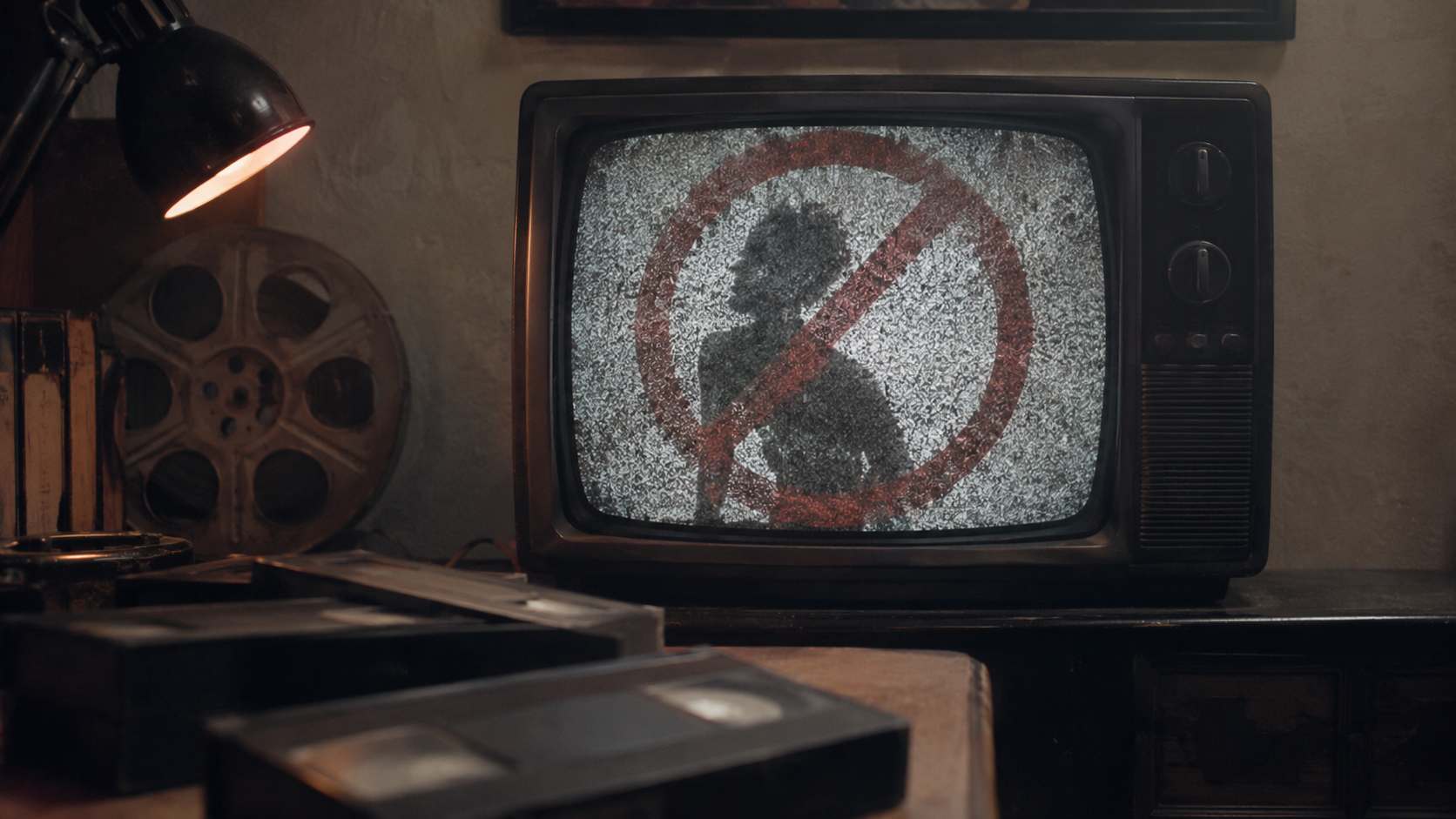
In 1982, Queen released a music video featuring Freddie Mercury in a steam room surrounded by people wearing very little clothing. MTV decided American viewers could not handle it. A few years later, the same network was happily broadcasting Michael Jackson dancing with a graveyard full of zombies.
Welcome to the wonderfully inconsistent history of music video censorship.
During the MTV era, television exposure could turn a song into a massive hit. Record labels invested heavily in promotional videos, and directors competed to create something audiences would remember. Unfortunately for some musicians, the people deciding what appeared on television had very different ideas about acceptable entertainment.
Sex, violence, religion and even animated puppets were enough to get videos rejected. Some were banned outright, others disappeared after a handful of broadcasts, and a few survived only through heavily edited versions.
Here are ten notorious examples, including the surprising stories behind their television bans.
1. Queen, Body Language (1982)
Queen had already given the world Bohemian Rhapsody, one of the most celebrated promotional videos in rock history. However, the band managed to upset television executives with something considerably simpler.
The video for Body Language takes place in a dimly lit steam room. Freddie Mercury performs among sweaty models wearing revealing clothing, with suggestive movements doing much of the storytelling.
Nothing particularly shocking happens by modern standards. There is no graphic violence, elaborate horror sequence or complicated storyline. Apparently, the combination of exposed skin and sexual suggestion was enough.
According to Guinness World Records, Body Language became the first music video banned by MTV in 1982.
The decision looks especially peculiar considering the increasingly provocative videos the channel would broadcast later in the decade.
Making ambitious music videos is considerably more accessible today. Independent artists can experiment with cinematic scenes using tools such as Higgsfield Seedance 2.0, which generates short video sequences using text prompts and visual references.
However, creating unusual imagery is one thing and getting it approved for distribution is another. Musicians still need to consider platform rules, copyright, permissions and restrictions involving sexual or violent content before releasing their work.
2. Duran Duran, Girls on Film (1981)
Duran Duran helped establish the music video as an essential part of pop music. Their stylish productions, expensive clothes and glamorous locations made the band particularly well suited to the television era.
Girls on Film was a rather different proposition.
Directed by Kevin Godley and Lol Creme, the extended video featured fashion models, provocative scenes and a memorable mud wrestling sequence. It was presented as a commentary on the exploitation of women in the fashion industry, although the imagery attracted considerably more attention than the intended message.
The BBC refused to broadcast the original version. MTV also rejected the uncut film, although an edited version eventually received television exposure.
The band’s official historical timeline confirms that the video was banned by both broadcasters because of its explicit content.
Simon Le Bon later expressed frustration that the controversy overshadowed the criticism of the fashion industry.
For a band trying to communicate a message about exploitation, discovering that audiences mainly remembered the mud wrestling must have been an interesting experience.
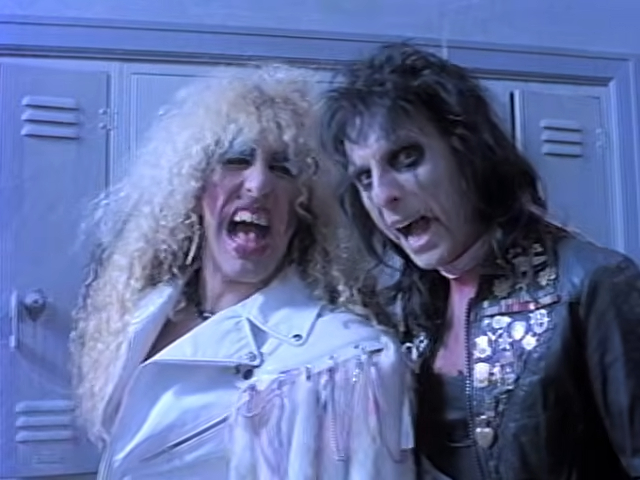
3. Twisted Sister, Be Chrool to Your Scuel (1985)
Twisted Sister had already established a talent for annoying authority figures. Their videos for We’re Not Gonna Take It and I Wanna Rock featured exaggerated schoolroom rebellion and cartoon violence.
Then the band decided to make a zombie movie.
Be Chrool to Your Scuel features a high school overrun by the undead. Horror effects specialist Tom Savini created the makeup, and Alice Cooper joined the chaos. Future Beverly Hills, 90210 actor Luke Perry also appeared in the production.
The result was a gloriously ridiculous horror comedy with decomposing students, grotesque makeup and enough fake gore to upset MTV.
According to an account of the banned video, the network refused to air it.
Frontman Dee Snider was particularly annoyed because Michael Jackson’s Thriller had already established zombies as acceptable television entertainment.
Of course, Jackson had considerably greater commercial influence. Twisted Sister had become a target of campaigners concerned about heavy metal, and the timing hardly helped.
A school full of zombies was apparently entertaining when Michael Jackson did it. When Twisted Sister tried something similar, MTV wanted no part of the joke.
4. Madonna, Justify My Love (1990)
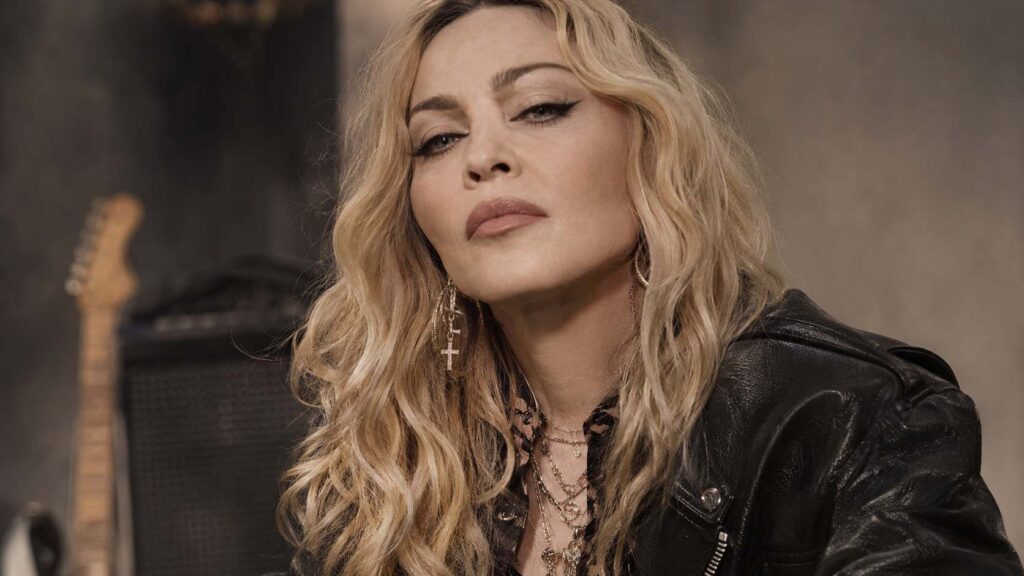
Madonna understood the publicity value of controversy better than almost anyone in popular music. However, the response to Justify My Love produced an unusually profitable outcome.
Directed by Jean-Baptiste Mondino, the black and white video follows Madonna through a hotel filled with suggestive encounters, intimate scenes and characters exploring sexual fantasies.
MTV refused to broadcast it.
According to Rhino Records, MTV rejected the overall tone of the video rather than identifying a particular scene that could be removed.
Madonna and Warner Bros. responded by releasing the video commercially on VHS.
The tape sold for $9.98 and reportedly passed one million copies sold. An attempted television ban had effectively created a new product for fans to purchase.
Instead of preventing audiences from seeing the clip, MTV had helped advertise it.
Madonna also raised an uncomfortable question about television standards. Why did broadcasters accept so many violent images but become alarmed by scenes involving sexuality?
There was no universally accepted answer, and the debate continued throughout the following decade.
5. Soundgarden, Jesus Christ Pose (1991)
Soundgarden did not need nudity or a shocking crime scene to get into trouble with MTV. Religious imagery was enough.
Jesus Christ Pose, a furious track from Badmotorfinger, criticized people who adopted religious imagery for attention or personal advantage.
The accompanying video featured disturbing imagery, including crosses and scenes intended to provoke an emotional reaction.
MTV refused to broadcast it.
Guitarist Kim Thayil later discussed the decision in an interview with the Dallas Observer. He remembered the channel objecting to the crosses and questioned why similar religious imagery appeared in videos by commercially successful pop artists.
The incident demonstrated another complication of music television censorship. A religious symbol could be accepted in one context and rejected in another.
Soundgarden hardly needed MTV approval to establish its reputation, though. Badmotorfinger helped the band become one of the defining acts of the Seattle rock explosion.
6. Nine Inch Nails, Happiness in Slavery (1992)
Some music videos were designed to be disturbing. Happiness in Slavery belongs near the top of that particular category.
The Nine Inch Nails video features performance artist Bob Flanagan entering a mechanical device that subjects him to an increasingly graphic sequence of torture and bodily destruction.
The disturbing imagery matched the industrial brutality of Trent Reznor’s music, but it had little chance of appearing during normal television programming.
MTV refused to show the complete video.
Contemporary Los Angeles Times reporting explained that the channel might use short excerpts in news coverage but would not broadcast the complete production.
Interscope Records supported the video, and the Nine Inch Nails team declined to produce a more acceptable version.
The clip therefore circulated through alternative screenings and later home video releases.
Rather than trimming the disturbing scenes to secure television exposure, the band kept the original concept intact. For an artist such as Reznor, whose work explored control, suffering and the darker parts of human behavior, an ordinary promotional edit would have defeated much of the purpose.
7. Tool, Prison Sex (1993)
Tool managed to create one of the most unsettling music videos of the 1990s without relying on graphic nudity or conventional horror violence.
Prison Sex uses stop-motion animation to depict a disturbing relationship between humanoid figures. The imagery connects with the song’s subject, the psychological consequences of abuse and the possibility of trauma continuing across generations.
Guitarist Adam Jones directed the video, drawing on his experience with visual effects and sculpture.
The characters look like damaged dolls trapped inside a nightmare. Their movements are slow, awkward and deeply uncomfortable to watch.
MTV initially played the video but subsequently removed it because of its disturbing content.
The story behind Prison Sex is especially unusual because the channel later nominated the production for a video music award recognizing its visual effects.
In other words, MTV considered the animation impressive enough to celebrate but too unsettling to continue broadcasting.
That contradiction suited Tool rather well. Their videos were never designed to look like conventional pop promotions.
8. The Prodigy, Smack My Bitch Up (1997)
Imagine watching a music video entirely through the eyes of someone having the worst night out imaginable.
The camera staggers through bars, fights, drug use and increasingly reckless behavior. The viewer experiences everything from the perspective of the unseen main character.
Then comes the final scene.
A mirror reveals that the person whose perspective we have followed is a woman, overturning the assumptions many viewers made during the preceding minutes.
Directed by Jonas Åkerlund, Smack My Bitch Up became one of the most controversial music videos of the decade.
MTV initially broadcast it late at night with warnings and accompanying commentary. However, the channel subsequently stopped airing it.
Contemporary Associated Press reporting documented the withdrawal after objections to the video’s portrayal of violence and treatment of women.
The controversy did not stop the music industry from recognizing the production.
At the 1998 MTV Video Music Awards, Smack My Bitch Up won Best Dance Video and Breakthrough Video.
MTV had removed the video from regular broadcasting, then handed it two awards. Even by the inconsistent standards of music television, that was quite a turnaround.
9. Madonna, What It Feels Like for a Girl (2001)
Eleven years after Justify My Love, Madonna found herself facing television restrictions again. However, sexuality was no longer the main issue.
Directed by Guy Ritchie, the video follows Madonna and an elderly woman on a destructive journey through Los Angeles.
There are reckless driving scenes, violent encounters and a conclusion involving a major car crash.
The song explores the experiences and expectations placed on women. The accompanying film takes that theme in a much angrier direction.
MTV and VH1 decided that the video was too violent for regular rotation. Rather than refusing all exposure, the channels broadcast it once during a special news presentation.
According to ABC News coverage of the decision, the single broadcast was followed by a refusal to repeat the video.
Madonna had once again created something that television executives considered unsuitable for normal programming.
The unusual part was that the same artist had previously faced restrictions for being too sexually provocative. The standards had changed, but Madonna continued finding ways to challenge them.
10. Foo Fighters, Low (2003)
Dave Grohl and Jack Black together in a music video sounds like a recipe for comedy. Add a motel room, alcohol and a camera recording their increasingly ridiculous behavior, and things get considerably stranger.
The video for Low features Grohl and Black playing two men who check into a motel and proceed to destroy any chance of being welcomed back.
They drink heavily, behave outrageously and eventually dress in women’s clothing. Much of the footage resembles a chaotic private recording that nobody was supposed to see.
MTV in the United States rejected the video because of its sexual content.
According to the history of Foo Fighters videos, the network refused to broadcast Low, despite the band having already produced numerous successful and frequently comedic promotional clips.
Restrictions differed between countries. British MTV channels did broadcast the video, but late at night.
Director Jesse Peretz had previously worked with Foo Fighters on several videos, including the famous Mentos parody Big Me.
Low was considerably less suitable for daytime television, but the outrageous performances remain part of its appeal.
Apparently, two famous rock musicians behaving like complete idiots in a motel room were enough to make American television executives nervous.
Music Television Lost Its Gatekeepers, but Censorship Never Disappeared
MTV once had enormous influence over the commercial success of a music video. A rejection could prevent millions of potential viewers from seeing a production during the period when record labels depended heavily on television exposure.
However, the stories above reveal that censorship did not always have the intended result.
Madonna sold her rejected video directly to fans. The Prodigy won MTV awards after the channel withdrew its video. Tool received recognition for visual effects that the same broadcaster considered too disturbing to show.
The arrival of online video platforms changed the situation. Artists gained opportunities to distribute their work without persuading a television programmer to approve it first.
As the cost of making music videos became more manageable for independent musicians, creative freedom also expanded. Artists no longer needed major television exposure to make an unusual visual idea available to fans.
However, online platforms still enforce policies involving nudity, violence, harassment, copyrighted material and other restricted content. Videos can be removed, age restricted or denied advertising revenue.
Modern musicians also face new questions involving AI-generated music and content labeling, particularly as synthetic audio and video become increasingly convincing.
The difference is that a television ban once threatened to make a music video practically invisible. Today, a rejected video may find an audience elsewhere, although distribution remains subject to the rules of each platform.
Looking back, some of the old decisions seem almost comical. Queen was banned for a steam room, Twisted Sister for zombies and Tool for frightening puppets. Meanwhile, MTV continued celebrating the same artists and visual styles it sometimes refused to broadcast.
Perhaps the greatest irony is that several videos became famous partly because television executives tried to keep people from watching them.