Treat your personal data as a high-value asset. In an era where automated data harvesting is the norm, information exposure acts as a roadmap for threat actors.
To maintain robust operational security (OPSEC) in 2026, you must strictly control any telemetry or identifiers that could facilitate synthetic identity creation, locate your physical person, or enable unauthorized account access.
This includes PII such as Social Security numbers, biometric identification, full birth dates, and residential addresses, as well as operational data like travel itineraries, financial credentials, and real-time location tracking.
The threat landscape has evolved beyond simple spam. FTC data for 2025 indicates that approximately 30% of reported financial fraud originated on social media platforms, with losses totaling $2.1 billion.
Furthermore, the FBI cybercrime report estimated the cost of cyber-enabled crimes at nearly $21 billion, as adversaries increasingly deploy sophisticated voice clones, deepfake media, and fraudulent documentation to bypass traditional verification.
The Basic Rule: Never Share Data That Identifies, Locates, Or Verifies You
Proactive defense begins with a rigorous evaluation of every data point: could this information be leveraged by a threat actor to impersonate you, establish a physical location, or compromise a secure perimeter?
| Data Category | Primary Vulnerability | Risk Mitigation |
| Full birth date | Facilitates account recovery abuse | Disclose birth month/day only |
| Residential address | Enables physical stalking and data enrichment | Utilize P.O. box for logistics |
| Mobile number | Vulnerable to SIM swapping and social engineering | Use VOIP or encrypted messaging aliases |
| Government Credentials | Core identifiers for synthetic identity creation | Submit only through end-to-end encrypted portals |
| Boarding passes/QR codes | Leaks PNR and sensitive booking telemetry | Redact all machine-readable codes entirely |
| Child’s school or routine | Creates safety and privacy risk | Share vague, delayed updates |
| Security hints | Enables brute-force or credential guessing | Use high-entropy, random salt values |
The FTC’s Consumer Sentinel Network aggregated 6.5 million consumer reports in 2024. It is critical to note that Sentinel data represents unverified consumer reporting, providing a significant cross-section of the visible threat landscape rather than an exhaustive audit of all national fraud activity.
Government IDs, Bank Data, And Official Documents
Maintaining zero-trust principles means never transmitting high-sensitivity documents, including Social Security numbers, passport scans, tax forms, student IDs, or medical records, via public social channels or unencrypted messaging platforms.
A digitized identification card provides threat actors with a template for identity duplication. Tax and financial documents contain dense clusters of PII (income, dependents, routing numbers) that can be leveraged for sophisticated phishing and account takeovers.
Use secure portals, company domains, written policies, and known phone numbers before uploading any document. Pressure is often the signal, not proof of urgency.
Passwords, One-Time Codes, And Security Answers
Strict confidentiality must be maintained for all passwords, passkey phrases, and authenticator tokens. NIST digital identity guidance explicitly mandates that subscribers are responsible for the protection of authentication secrets and prohibits their disclosure to third parties.
One-time passwords (OTPs) are frequent targets for social engineering. Adversaries frequently spoof trusted entities, banks, tech support, or corporate desks, to request OTPs. Under no circumstances should a legitimate support agent require your active authentication code.
Security-question answers also belong offline. Mother’s maiden name, first pet, first school, hometown, favorite teacher, and first car often appear in old posts, family comments, quizzes, or public records. Treat security answers like passwords: random, unique, and stored safely.
Birth Date, Phone Number, Address, And Location
Avoid the publication of full birth dates, mobile numbers, or specific location telemetry such as residence details and planned itineraries. CISA advises users to implement strict privacy settings, omit location-specific metadata, and disable active location tracking.
A quick check with VeePN can also show what your public IP address reveals about your connection, including location and ISP signals.
A full birth date can help match leaked data across old accounts, public records, breach dumps, and credit files. A phone number can act as a recovery key for banks, email, social media, delivery apps, and payment tools. Vacation posts and routine check-ins can also create predictable real-world patterns.
Regulatory protections do not eliminate risk. As of April 2026, 20 U.S. states had enacted comprehensive consumer privacy legislation, yet enforcement frameworks and data subject rights remain fragmented across jurisdictions.
Photos That Reveal More Than Planned
Photographic media often contains significant secondary data. Images can inadvertently capture workstation screens, financial receipts, hardware tokens, or reflections that provide actionable intel for an adversary.
Before posting, zoom in. Check corners, mirrors, windows, desk surfaces, fridge calendars, and background paperwork. Cover QR codes and barcodes completely, not with light scribbles. Cropping is safer than blurring when the hidden detail is sensitive.
Children’s Personal Information

Do not disclose a minor’s full legal name, school affiliation, or medical history. Children are particularly vulnerable to long-term digital footprint risks and social engineering through overshared family routines.
Children inherit a digital record they did not choose. A back-to-school photo can reveal a school crest, teacher name, grade, bus route, and birthday clues. Use nicknames, private albums, small audience settings, and delayed posting.
What Can You Share Safely?
Effective OPSEC relies on de-identifying data, implementing temporal delays in posting, and utilizing the principle of least privilege for audience access.
| Higher-Risk Post | Safer Version |
| Real-time location and duration telemetry | Delayed, non-specific status updates |
| Unsecured transmission of ID documentation | Verified, out-of-band identity confirmation |
| Visual identifiers of sensitive daily routines | Anonymized media with redacted identifiers |
| Financial documentation exposure | Verbal mention only; image suppression |
| Workstation/environment captures | Sanitized environment with clear desk policy |
The goal is not silence. The goal is control over who gets enough information to act against you.
A 10-Minute Privacy Check
Run a fast audit every few months:
- Enforce strict audience isolation on all social profiles.
- Purge all PII (phone, DOB, residence) from public-facing metadata.
- Disable active geospatial tagging across all application suites.
- Perform regular OSINT audits of personal identifiers via private sessions.
- Replace security answers with high-entropy strings managed via a password vault.
- Mandate hardware-based or app-based multi-factor authentication (MFA).
- Scrub historical data for legacy exposure points and archived routines.
The Identity Theft Resource Center reports over 25,200 U.S. data compromises since 2005, exposing approximately 79 billion records.
The 2025 data breach report underscores how oversharing provides the necessary context for adversaries to weaponize leaked data through cross-referencing and enrichment.
What To Do If You Already Shared Too Much
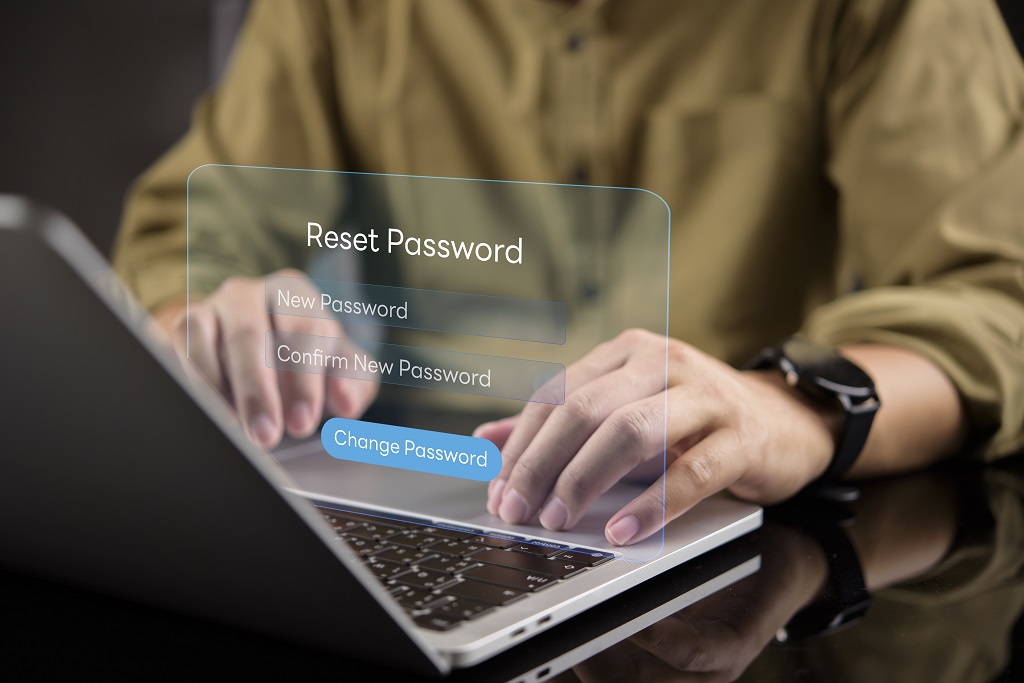
If sensitive information is already online, act quickly: delete the post, ask others to remove copies, change exposed passwords, revoke old app permissions, freeze or replace cards, and monitor account activity.
In the event of high-sensitivity data exposure (SSN, banking, or tax credentials), immediately execute a recovery plan. The FTC provides standardized identity protection steps to facilitate remediation through verified channels.
Implement credit freezes to mitigate the impact of identity compromise. CFPB guidance details how security freezes restrict access to credit reporting, preventing unauthorized account creation.
Summary of Defense Objectives
Mitigate the exposure of identifiers that facilitate identity theft, account compromise, or physical tracking. AI advancements and breach data markets have increased the utility of fragmented data.
A single identifier, a birth date, a badge photo, or a mobile number can serve as the pivot point for a targeted attack. Robust privacy now requires a strategy of high-friction data sharing: less detail, significant temporal delays, and strictly limited audience permissions.

- Best Universities for Music Production in 2026 - September 11, 2026
- Ethan Klein Biography 2026, Age, Career, Wife, Family and H3H3 - September 11, 2026
- There Is Much More to Steve Aoki Than Music and Flying Cakes - September 3, 2026