


Stay with us and find out where the next one takes us.
- 7 Famous Chefs Who Started Their Careers Washing Dishes - October 23, 2026
- What Is the Best Month to Visit Hawaii? Weather, Beaches and the Best Things to Do - October 22, 2026
- Alice Cooper and Sheryl Goddard, The Tour Romance That Became a Marriage of Nearly 50 Years - October 22, 2026
September is one of the best months to visit Hawaii. The ocean is warm, summer crowds have started to thin out, and there is still plenty of sunshine for beach days, snorkeling and exploring the islands. May comes very close, especially if you prefer slightly cooler weather and want to travel before the summer holiday rush.
But the month you choose can change your entire trip. Someone heading to Kauai for a boat tour along the Na Pali Coast has good reasons to visit during summer, when ocean conditions are generally calmer. A traveler hoping to see humpback whales should book between December and April instead.
Hawaii stays warm throughout the year, with average daytime temperatures near 85°F in summer and 78°F in winter. Rainfall and ocean conditions change with the seasons, and the weather can vary considerably between different parts of the same island.
September and May Are the Best Months for Most Visitors
View this post on Instagram
September offers an appealing combination of warm weather and fewer visitors than the busiest summer weeks. Schools have reopened across much of the United States, making it easier to enjoy popular beaches without the same summer holiday crowds.
The weather is still well suited to swimming and outdoor activities. September falls within Hawaii’s warmer, generally drier season, and the water has had the summer months to warm up.
There is also a financial advantage. Traveling after the summer rush can improve your chances of finding reasonably priced accommodation, particularly when dates are flexible.
The official fall travel guide identifies September through November as a period with fewer visitors and opportunities for lower travel costs.
May is another excellent choice. Winter rainfall has generally eased, temperatures are comfortable, and the large summer holiday crowds have not yet arrived.
Travelers who enjoy hiking may particularly appreciate May. The weather is generally pleasant for visiting Waimea Canyon on Kauai, exploring Maui’s scenic routes or walking through the volcanic areas of Hawaii Island.
September has a slight advantage for warmer ocean water, while May is attractive for travelers who prefer to avoid the hottest part of summer.
The Best Things to Do in Hawaii and When to Experience Them
Some Hawaiian experiences are available throughout the year, but several are considerably better during particular months. Ocean conditions are especially important for snorkeling, surfing and boat excursions.
Swimming and Snorkeling From May Through September
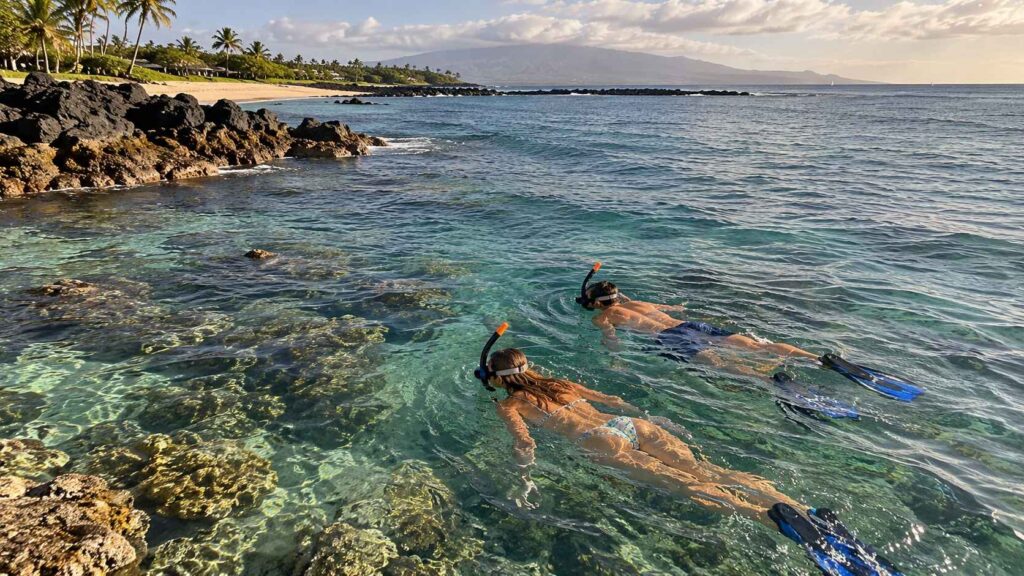
Summer brings calmer conditions to many north-facing beaches, making previously rough stretches of coastline more suitable for swimming and snorkeling.
Hanalei Bay on Kauai, for example, can experience powerful winter surf but becomes considerably calmer during many summer days. Oahu’s North Shore follows a similar seasonal cycle.
For snorkeling, visitors can explore places such as Hanauma Bay on Oahu or sheltered beaches along the western and southern coasts of Maui. Conditions still need checking before entering the ocean, as currents and unexpected swells occur throughout the year.
Whale Watching From December Through April
Humpback whales migrate to Hawaiian waters during winter to breed and give birth. January through March generally offers excellent viewing opportunities, although whales can arrive earlier and remain into spring.
Kauai is a beautiful island for watching whales from a boat, with departures offering views of the Na Pali coastline.
Visitors interested in such experience can explore Humpback Whale Watching Kauai during the winter migration season.
Whales can also be spotted from shore. On Kauai, Poipu Beach and Kilauea Lighthouse are established viewing locations, according to the island whale-watching information.
For boat trips, morning departures can offer calmer conditions than afternoon excursions, although winter swells may still affect sailing schedules. Whale sightings are never guaranteed.
Watching Big Waves on Oahu From November Through February

Winter changes the North Shore of Oahu into one of the world’s most famous surfing destinations.
Waimea Bay, Sunset Beach and Banzai Pipeline attract experienced surfers when large Pacific swells reach the coast. Even without entering the water, watching powerful waves from a safe viewing area can be memorable.
The same beaches may be unsuitable for swimming during those periods. Hawaii’s ocean safety guide explains that winter swells create dangerous conditions along many northern and western shores, while southern beaches generally experience smaller surf.
Exploring Volcanoes and Scenic Trails
Hawaii Island offers one of the most unusual outdoor experiences in the United States. Hawaii Volcanoes National Park contains volcanic craters, lava fields and walking trails through landscapes shaped by eruptions.
May and September are appealing months for exploring the park without the busiest holiday crowds. Visitors interested in seeing active volcanic activity should follow current park and geological updates, as eruptions cannot be scheduled around travel plans.
On Maui, sunrise at Haleakala is another popular experience. Anyone driving to the summit for sunrise must arrange a reservation in advance, with the National Park Service reservation system releasing tickets up to 60 days before the visit.
Hawaii Weather Month by Month
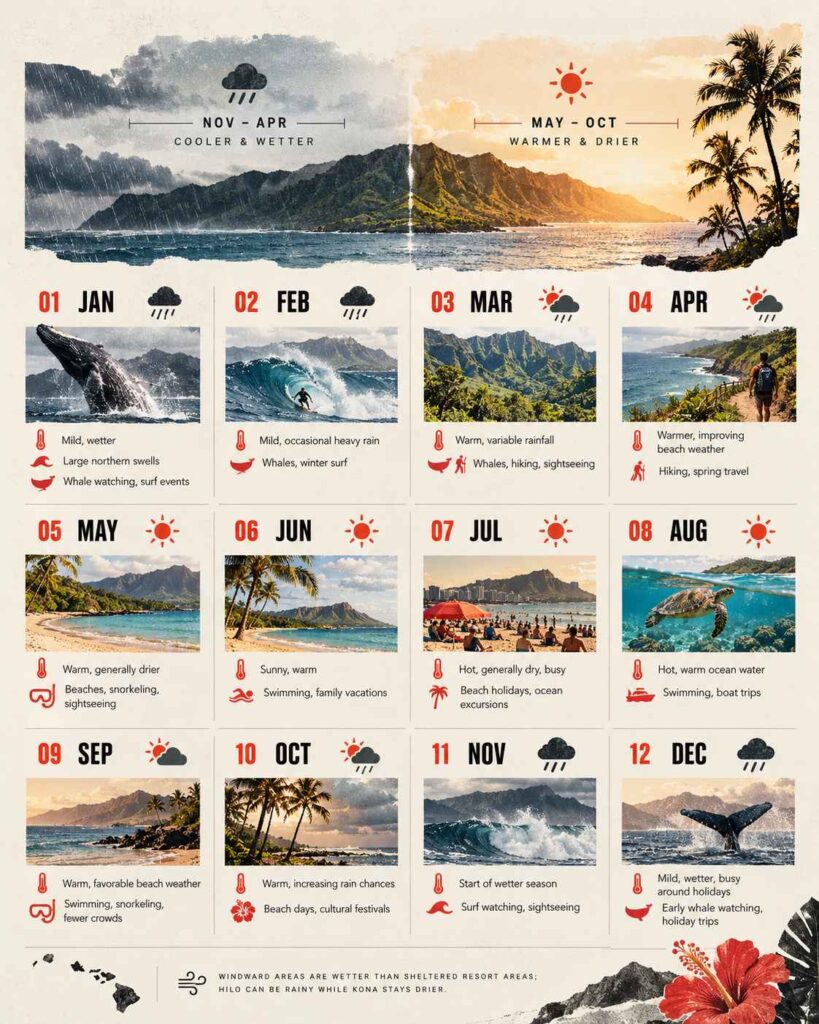
Hawaii has two main weather seasons. May through October is generally warmer and drier, while November through April brings cooler temperatures and more rainfall.
Here is how the year compares for planning a holiday.
| Month | Typical Conditions | Best Reasons to Visit |
| January | Mild, wetter, large northern swells | Whale watching and surfing events |
| February | Mild with occasional heavy rain | Whales and winter surf |
| March | Warm with variable rainfall | Whales, hiking and sightseeing |
| April | Warmer with improving beach weather | Hiking and spring travel |
| May | Warm and generally drier | Beaches, snorkeling and sightseeing |
| June | Sunny and warm | Swimming and family vacations |
| July | Hot, generally dry, busy | Beach holidays and ocean excursions |
| August | Hot with warm ocean water | Swimming and boat trips |
| September | Warm with generally favorable beach weather | Swimming, snorkeling and fewer crowds |
| October | Warm with increasing rain chances | Beach days and cultural festivals |
| November | Beginning of the wetter season | Surf watching and sightseeing |
| December | Mild, wetter, busy around holidays | Early whale watching and holiday trips |
Rainfall varies considerably by location. Windward areas facing the prevailing trade winds receive more rain than sheltered coastal resorts. A rainy morning near Hilo on Hawaii Island does not mean visitors staying around Kona will experience the same conditions.
Which Hawaiian Island Should You Visit?
Choosing the island can be just as important as choosing the month. Oahu offers city entertainment and famous beaches, while Kauai attracts visitors interested in dramatic coastal scenery and hiking.
Hawaii’s appeal extends beyond tourism. The islands also ranked first for overall happiness in a recent comparison of U.S. states by work-life balance and happiness, despite their high cost of living.
Oahu for Beaches, Restaurants and Nightlife
Oahu is an appealing choice for a first visit, particularly for travelers who want plenty to do without constantly changing hotels.
Waikiki has hotels, restaurants, shopping and live entertainment within walking distance of its beaches. Honolulu also has museums, historic attractions and a substantial restaurant scene.
May and September work particularly well for visitors hoping to spend time at Waikiki and explore the island. December through February is better for those interested in watching major surfing events on the North Shore.
Maui for Beach Resorts and Scenic Drives
Maui offers beaches around Wailea and Kaanapali, along with the mountainous scenery of Haleakala and the winding Road to Hana.
May is particularly appealing for a vacation combining beaches and outdoor exploration. September is also attractive for swimming and relaxing at coastal resorts.
For winter visitors, Maui is a major whale-watching destination, especially around the waters between Maui, Lanai and Molokai.
Kauai for Coastal Scenery and Boat Trips
Kauai has a quieter atmosphere than Honolulu, with dramatic mountains, rainforest scenery and the towering cliffs of the Na Pali Coast.
Summer is generally preferable for boat trips along the northern coastline because winter ocean swells can be severe. September is also worth considering, although sailing conditions depend on the weather.
Travelers primarily interested in whales should choose winter instead, accepting that some ocean excursions may face rougher water.
Hawaii Island for Volcanoes and Varied Scenery
The largest Hawaiian island offers black sand beaches, volcanic landscapes, coffee farms and substantial changes in climate between coastal and inland areas.
Kona and the Kohala Coast provide access to sunny beaches, while Hilo receives considerably more rainfall and has lush tropical scenery.
For travelers who want beaches and sightseeing without the busiest holiday periods, the official island travel information identifies January through May and September through November as appealing periods.
When Is Hawaii Less Expensive to Visit?
Traveling outside major school holidays generally improves your chances of finding lower hotel rates and more flexible flight choices.
May, September and portions of October are sensible periods to compare first. December holiday travel, spring break and the busiest summer weeks can bring heavier demand.
However, prices vary by island, resort and individual dates. A major festival, conference or sporting event can increase accommodation costs even during a quieter travel period.
Hawaii’s visitor numbers also change from month to month. For example, official visitor statistics recorded 690,858 arrivals in September 2025, down 2.5% from the same month the previous year.
Booking several months ahead gives travelers more opportunities to compare flights and hotels. If September prices are unusually high for the dates you want, compare nearby weeks in May or October rather than assuming one month always offers the lowest rates.
Rental cars deserve attention too, particularly on Kauai and Hawaii Island, where attractions can be widely separated. A cheaper hotel may not save money if reaching beaches and restaurants requires lengthy drives every day.
Is It Safe to Visit Hawaii During Hurricane Season?
The Central Pacific hurricane season runs from June 1 through November 30, with peak activity generally occurring between July and September.
Most visits during those months do not involve a hurricane, but tropical storms can disrupt flights, create dangerous surf and bring heavy rainfall. Travelers booking during hurricane season should consider flexible accommodation policies and suitable travel insurance.
The National Weather Service hurricane information identifies July through September as the peak period for Central Pacific tropical cyclone activity.
September remains an attractive month for a holiday, but the possibility of tropical weather is one reason to avoid making expensive, nonrefundable arrangements without checking the cancellation terms.
The Bottom Line
For most travelers, September gets the first recommendation. The beaches are inviting, the ocean is warm and the summer holiday rush has eased. May is nearly as appealing and suits people who prefer slightly cooler temperatures.
If your main goal is watching humpback whales, February is an excellent choice. For boat excursions along the Na Pali Coast or calmer summer conditions on Oahu’s North Shore, June through August generally offers a better opportunity.
Families limited to school holidays can still enjoy Hawaii during July or December. The key is to select beaches that suit the season and arrange popular activities before arriving.
Choose September for a warm beach vacation, May for a comfortable mix of sightseeing and swimming, or February for whales and big winter waves. Hawaii has something worthwhile to experience in every season, but matching the month to the activities you actually want will make the trip far more rewarding.