
Stay with us and find out where the next one takes us.
- YouTube Is Finally Making AI-Generated Music Easier to Spot, but Can We Trust the Labels? - October 15, 2026
- Why So Many Americans Are Moving to North Carolina Right Now? - October 15, 2026
- The Biggest Myths About How Famous Rock Bands Were Discovered - October 13, 2026
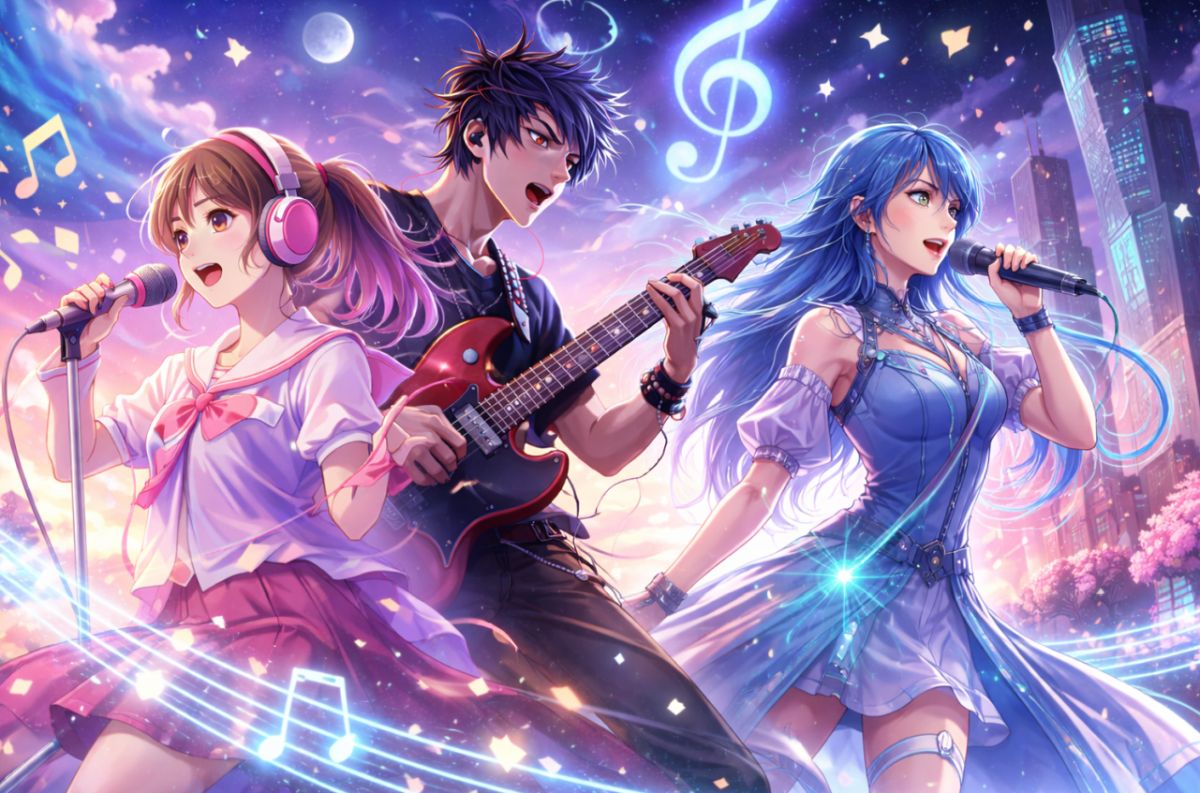
Animecore describes a sonic and aesthetic identity shaped by modern anime themes, marked by emotional intensity, bold genre shifts, and powerful fan attachment.
Music tied to anime has grown into a global cultural force, driven largely by streaming platforms and short-form video culture, with Gen Z at the center of its momentum.
Spotify reported a 395 percent increase in global anme music streams between 2021 and 2024, while 70 percent of anime music consumption comes from listeners under 29.
Songs connected to anime no longer function only as opening themes. Tracks operate as emotional anchors, personal symbols, and shared cultural signals that travel across languages and borders.
The Role of Anime Openings and Endings
Anime openings and endings serve as emotional gateways. Music paired with animation prepares viewers for narrative tone while building attachment to characters.
Openings often compress the emotional promise of an entire series into ninety seconds, shaping expectations before dialogue even begins.
Apolline describes this process as setting tone through carefully chosen images supported by a catchy musical background.
Long-running series demonstrate how powerful this connection can become.
“We Are!” associated with One Piece continues to resonate decades after its debut, functioning as a generational anthem. Endings shift energy in another direction.
Slower or reflective tracks help audiences decompress after intense episodes, offering space for emotional processing.
Visual and Auditory Synergy
Anime credits rely on close coordination between sound and image.
Fast-tempo J-Pop or J-Rock tracks pair with symbolic visuals that tease themes, character arcs, and emotional stakes.
Apolline notes that anime credits prioritize visual storytelling through energetic action sequences matched with upbeat musical rhythms.
Every cut, color choice, and musical accent works together to prepare viewers emotionally for what lies ahead or what has just passed.
Anisongs and the Gen Z Phenomenon
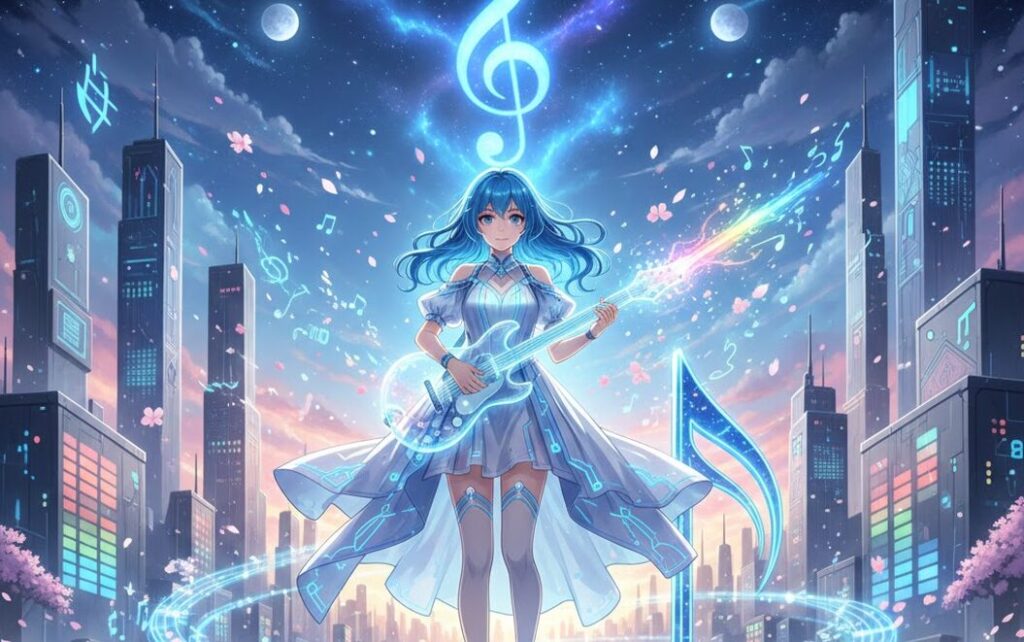
Anime music now operates as a cultural connector for younger audiences.
Streaming platforms and social media transformed anisongs into shared emotional language across global communities.
Emotional Resonance and Fandom
Anime songs often become personal identity markers. “Gurenge” gained viral traction as listeners connected with a protagonist defined by perseverance.
LiSA explained that writing involved placing herself inside the mindset of characters who continue forward despite hardship. Live performances intensify this connection.
Fans shout choruses together, remix tracks online, and create anime music videos that extend emotional bonds far outside the screen.
For many, diving deeper into the language behind their favorite lyrics is a natural next step, prompting interest in an Japanese lesson online to better connect with anime culture.
Streaming Boom and Cultural Integration
Popularity among Gen Z rivals mainstream pop icons. A Crunchyroll and NRG study compares anisongs to artists like Beyoncé.
Viral momentum thrives on platforms driven by short-form emotion and repetition.
Measurable engagement reflects this surge:
- Over 7.2 million anime music playlists created by fans
- Widespread circulation across TikTok, YouTube, and Spotify
- Renewed popularity of older songs resurfacing decades later
An Anime & Chill founder described anime music as the heartbeat of each work.
Musical Characteristics of Anime Themes
Musical identity within anime relies on heightened emotion and constant motion.
Songs connected to animated stories are written to move quickly between moods, matching shifting character psychology and narrative stakes.
Structure, harmony, and genre choices work together to keep listeners emotionally engaged even outside a visual context.
Genre Foundations: J-Pop and J-Rock
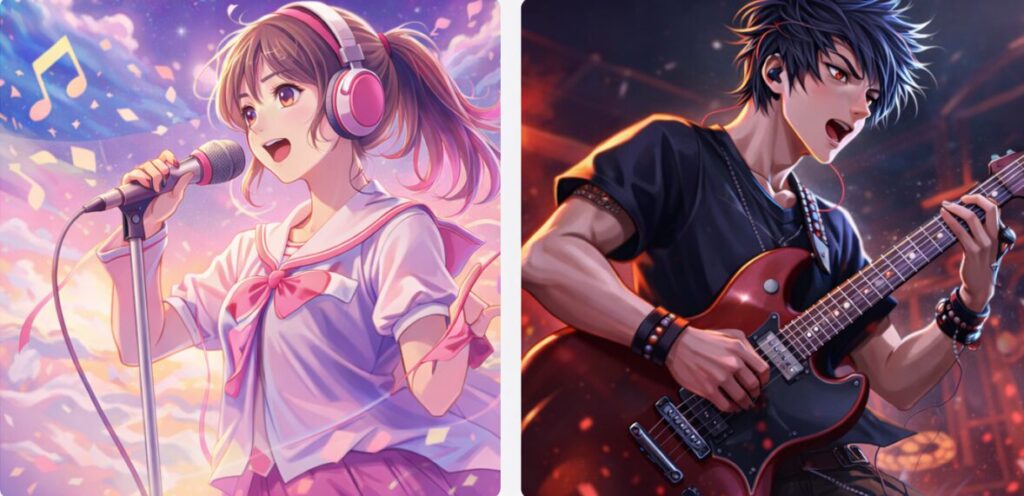
J-Pop and J-Rock provide the primary musical framework for many anime themes.
J-Pop favors melodic immediacy and emotional openness, often centered on love, friendship, resilience, or daily life struggles.
J-Rock introduces sharper edges through heavier instrumentation, rhythmic intensity, and dramatic dynamic swings. Both styles reject static songwriting in favor of momentum.
Songwriting techniques common in anime music differ noticeably from Western pop conventions. Emotional peaks are pushed higher through harmonic movement, while abrupt changes prevent predictability.
Apolline points to distant modulations that surprise the ear and amplify emotional payoff.
Key musical traits appear repeatedly across successful themes:
- Frequent key changes that reset emotional intensity mid-song
- Sudden shifts in tempo or instrumentation that mirror narrative tension
- Chorus sections designed for communal singing and emotional release
Structure and Experimentation
Creative freedom defines anime songwriting.
Tracks rarely stay within a single stylistic frame. Musical identity often shifts as characters grow or conflict escalates. Rock opera drama appears in Ado’s “Kura Kura” for Spy x Family.
Jazz-inflected grooves and electronic polish shape YOASOBI’s “Idol.” Emotional power ballad writing drives LiSA’s “Gurenge.”
Song structures reflect storytelling logic rather than radio convention. Verses, bridges, and climaxes change shape as emotional stakes rise.
One track may move across three or four stylistic directions, allowing tension and release to mirror plot progression.
Experimentation keeps anime music dramatic, unpredictable, and emotionally direct.
Sound Design and Production in Anime
Sound inside anime operates as narrative support rather than background decoration.
Every sonic choice influences how characters are perceived and how scenes are felt.
Production teams treat sound as part of the storytelling structure.
Core Components of Sound
Anime sound relies on three closely connected elements that shape immersion and emotional clarity.
Voice acting defines character presence. Tone, pacing, and emotional consistency determine credibility. Veteran seiyuu often continue voicing teenage characters across long-running series to preserve continuity.
Karice explains that a voice that feels wrong can disrupt viewer immersion immediately.
Background music functions as emotional architecture. Producers and directors design detailed music menus that map emotional needs across episodes.
Sound! Euphonium used specific musical ideas to convey the shining presence of its characters.
Composers sometimes read original manga or scripts to align music with narrative intent.
Sound effects create physical space and atmosphere.
Everyday noises mixed with imaginative textures ground fantasy in sensory detail. Karice described how the Gauna sound emerged by rubbing an eraser against a damp plastic bottle.
Many effects are produced by a single sound editor, supported by assistants recording environments like cafes, trains, or kitchens.
Effective sound design often disappears into the experience, yet absence would feel immediately disorienting.
Dubbing and Final Mix
Final mixing unifies dialogue, background music, and sound effects into a coherent emotional signal.
Sound mixers control volume balance and contrast to guide attention. Karice stresses restraint, noting that overcrowding a track weakens clarity.
Careful balance directs emotional focus without overwhelming the viewer.
The Composers Behind the Magic
Certain composers shaped anime music into a globally recognized force. Yoko Kanno brought experimental jazz and genre-fluid compositions to Cowboy Bebop.
Hiroyuki Sawano built massive orchestral and rock hybrids for Attack on Titan and Gundam Unicorn.
Joe Hisaishi crafted orchestral scores that define emotional memory in films like Totoro and Spirited Away.
Kensuke Ushio focuses on hyper-detailed realism, recording ambient sounds in real spaces such as church halls for The Colours Within. Jonathan Clements of the BBC praised Ushio’s attention to detail and realism.
Anime Music in the Real World
Stage performances confirm the cultural weight of anime music. Artists such as Ado, YOASOBI, and Radwimps sell out arenas worldwide.
Ado’s London O2 Arena performance featured audiences shouting every chorus in unison.
View this post on Instagram
Film composers attract similar enthusiasm. Joe Hisaishi tours internationally with full orchestras, bringing anime scores into concert halls.
Anime aesthetics now shape Western pop expression.
Artists like Lil Uzi Vert, Billie Eilish, Megan Thee Stallion, and Shao Dow reference anime in visuals and lyrics.
Daft Punk’s Interstella 5555 released in 2003 paired electronic music with animated storytelling long before such concepts became mainstream.
Anime-inspired music videos and visual language now appear regularly across global pop culture.
The Bottom Line
Animecore music unites experimentation, emotional storytelling, and multimedia expression.
Songs linked to anime shape memory, identity, and community across generations.
Global fanbases continue to grow as streaming platforms amplify reach and visibility.
Anime music now functions as a defining voice of modern pop culture, resonating across screens, stages, and headphones worldwide.