Limp Bizkit’s current chapter carries two truths at once. A comeback had already been building before Sam Rivers died on October 18, 2025. After his death, though, the band’s return took on a different weight.
What had looked like a loud, improbable revival suddenly became a story about grief, legacy, survival, and the question every long-running band eventually faces: how do you keep moving when one of your essential people is gone?
For readers who only half-followed the group after the early 2000s, that shift matters. It explains why Limp Bizkit in 2026 feels different from the caricature many people carried for years.
Arena and festival crowds had already returned. New music had already been underway. Major bookings were already back on the table. Sam Rivers’ death did not create the comeback, but it changed the emotional center of it.
A Comeback Was Already In Motion
View this post on Instagram
Any honest account has to start there. Limp Bizkit were not a dormant legacy act that suddenly woke up after a tragedy. By late 2024, the band were already recording new material, with Fred Durst publicly sharing studio progress involving drummer John Otto.
By March 2025, major music coverage was already describing a real rehabilitation of the band’s image, pointing to large festival crowds and a warmer public reaction than many critics would have predicted a decade earlier.
That matters because Limp Bizkit’s revival did not come from one cause. Several things were happening at once:
- nostalgia for late 1990s and early 2000s heavy music
- younger listeners treating nu metal with fewer old critical grudges
- Fred Durst leaning into humor and self-awareness onstage
- strong live crowds that turned irony into genuine fandom
- fresh studio activity that signaled the band still wanted to make records, not only tour old hits
Louder’s 2025 feature on the band captured part of that mood well, describing a huge Lollapalooza Argentina crowd in March 2024 and framing the group’s public image as something closer to rehabilitation than nostalgia alone.
In practical terms, Limp Bizkit had moved from being a punchline in some corners of rock culture to being a festival weapon again, with a crowd dynamic that increasingly resembles organized fan culture.
Why Sam Rivers Mattered So Much
Sam Rivers was never the most media-facing member of Limp Bizkit. Fred Durst was the lightning rod. Wes Borland often drew visual attention. Yet Rivers was central to how the band felt.
When the group announced his death, they called him their “heartbeat” and described him as “the pulse beneath every song.”
Mourning language from bands can sometimes sound routine. In this case, coverage from Billboard, ABC, and other major outlets made clear that the remaining members were speaking about someone who anchored the group musically and personally.
Rivers had been part of the group from the beginning. Billboard’s reporting notes that he was one of the original 1994 formation members alongside Durst and Otto, before Borland and DJ Lethal joined later.
His playing also gave Limp Bizkit more groove than many outsiders admitted. For all the noise around the band, Rivers helped hold the songs in place.
That rhythm-section chemistry with John Otto made even the most chaotic material feel tight enough to hit hard in a big room.
People who dismissed Limp Bizkit as pure attitude often missed that part. Durst himself, in tribute remarks reported by Loudwire, said Rivers was the first critical piece when he was building the band because the rhythm section had to come first.
What Changed After His Death
The biggest change was emotional, not commercial.
Before October 2025, Limp Bizkit’s comeback could be read as a mix of cultural revision, crowd nostalgia, and savvy live presentation. After Rivers died, every show carried a memorial dimension.
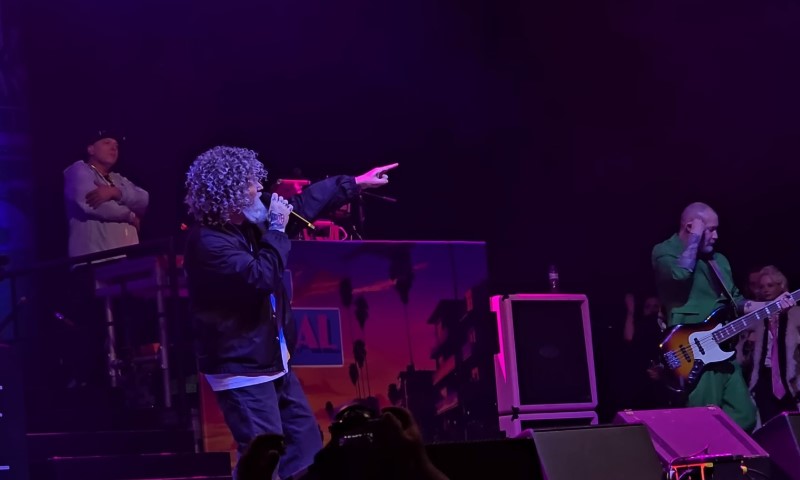
The band’s first concert after his death, in Mexico City on November 29, 2025, opened that new phase in public view. Coverage from People and Loudwire described the group watching a tribute video onstage, ending with messages reading “Sam Rivers, our brother forever” and “Sam Rivers, we love you forever.” Richie “Kid Not” Buxton played bass for that concert and the South American dates.
That scene told fans almost everything they needed to know. Limp Bizkit were continuing, but continuation did not mean normality. The old formula, loud entrance, crowd chaos, familiar hits, had been interrupted by absence.
From that point on, the band’s return could no longer be framed only as fun, irony, or even vindication. Legacy had entered the room in a much sharper way.
A second change involved public sympathy. Limp Bizkit spent years as one of rock’s easiest targets. After Rivers’ death, a lot of coverage treated the band with more seriousness and tenderness than they had often received during earlier periods.
That did not erase old criticism, but it did shift the tone. When a founding member dies at 48 and bandmates publicly grieve him, easy jokes tend to look smaller.
A third change was symbolic. “Break Stuff,” one of the band’s most famous songs, climbed to No. 1 on Billboard’s Hot Hard Rock Songs chart after Rivers’ death, driven by renewed listener attention to the catalog.
The Difference Between Revival And Reassessment
Comeback stories often get flattened into one sentence: a band came back, the crowds got bigger, the songs started charting again. Limp Bizkit’s case is more interesting because revival and reassessment happened at the same time.
Revival means live success, chart bumps, new recordings, and headline slots. Reassessment means part of the culture started looking at the band with fewer lazy assumptions. A group once treated as a shorthand for bad taste now appears on large festival bills with genuine drawing power.
Download Festival’s official 2026 site confirms the event’s June 10 to 14 dates at Donington Park, while multiple lineup reports identify Limp Bizkit as one of the headliners. A band does not land that kind of slot by surviving on old memes alone.
Part of that reassessment came from the live show. Review and feature coverage over the last two years kept returning to one fact: the concerts worked.
Crowds sang every word, younger fans showed up alongside older ones, and Fred Durst’s present-day stage persona came off looser and less combative than during the band’s most controversial years. Louder described a scene built around joy and mass recognition, not merely provocation.
Sam Rivers’ death intensified that reassessment because it redirected attention toward the musicianship and history behind the band.
People revisiting the catalog in grief were hearing more than the old tabloid image. They were hearing the rhythm section, the dynamics, the hook writing, and the chemistry that had long been overshadowed by Fred Durst’s celebrity profile.
Fred Durst’s Role In The Shift
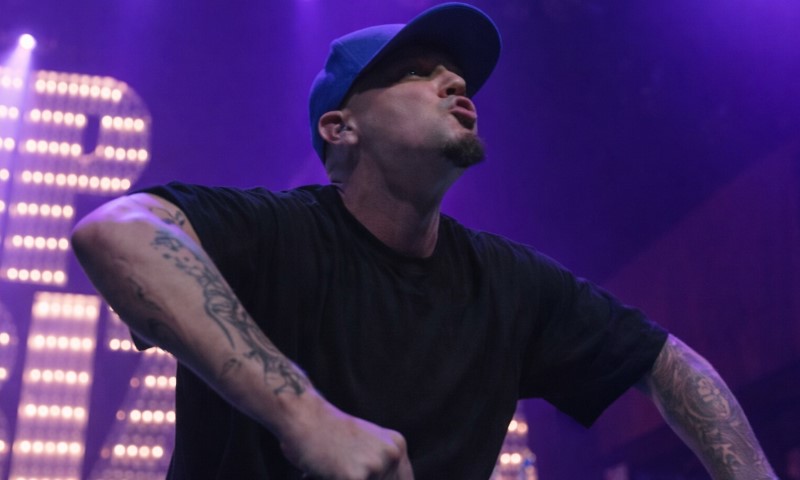
No Limp Bizkit comeback happens without Fred Durst adapting. He spent years being one of the most polarizing frontmen in rock.
For a long stretch, that reputation made serious reevaluation hard. Yet recent coverage suggests he has done something that many legacy frontmen never manage: he changed his relationship with the public without fully pretending to be a different person.
Recent live accounts and features point to a version of Durst who seems more amused, less defensive, and more willing to let the absurdity of Limp Bizkit’s survival become part of the show.
That shift gave old fans permission to enjoy the band again and gave younger listeners a cleaner entry point. A lot of revival acts fail because they either cling too hard to old swagger or apologize for everything. Limp Bizkit found a middle lane.
After Rivers’ death, Durst’s job became harder. He was no longer steering only a comeback. He was also carrying memory.
Reports on his tribute remarks show a frontman speaking less like a provocateur and more like someone plainly stunned by loss. For a band often associated with bravado, that vulnerability changed the picture.
The Band’s New Live Reality
A band can mourn and keep playing. Plenty do. Yet the live arrangement after Rivers’ death tells its own story.
Richie “Kid Not” Buxton stepped in on bass for the post-Rivers Mexico City show and subsequent South American dates, according to Loudwire and People. Coverage framed him as a respectful touring presence, not a dramatic permanent reinvention.
His own public remarks emphasized honoring Rivers rather than replacing him in spirit. That distinction matters. Some bands use tragedy to launch a whole new era. Limp Bizkit, at least so far, appear to be treating live continuation more like stewardship.
That makes upcoming shows significant for a different reason than before. Fans are no longer simply asking whether Limp Bizkit can still tear through “Break Stuff” or “My Way.”
They are watching how a band preserves chemistry after losing one of its foundational players. For legacy acts, that question often determines whether a return lasts or starts to feel hollow.
A More Mature Public Story
Another major change after Rivers’ death is the way the band’s story is now told. For years, Limp Bizkit coverage often circled back to the same old talking points: Woodstock 1999, backlash, Fred Durst as culture-war magnet, nu metal excess, and public ridicule.
None of that history vanished. Yet recent reporting and features are broader. More room now exists for talking about loyalty, musicianship, crowd connection, and how weirdly durable the songs turned out to be.
In that sense, Rivers’ death sharpened the difference between reputation and reality. Reputation said Limp Bizkit were an artifact people laughed at.
Reality, by 2025 and 2026, shows a band with major crowds, a reactivated studio life, revived chart presence, and enough relevance to headline one of rock’s major festivals. Grief did not create that reality, but it stripped away some of the cheap cynicism around it.
Summary
Limp Bizkit’s present-day return began before Sam Rivers died, through touring success, renewed public interest, and active recording.
His death changed the story from a curious revival into something more serious and more human. The band still has momentum, but every step forward now carries Rivers’ imprint.

- Best Universities for Music Production in 2026 - September 11, 2026
- Ethan Klein Biography 2026, Age, Career, Wife, Family and H3H3 - September 11, 2026
- There Is Much More to Steve Aoki Than Music and Flying Cakes - September 3, 2026