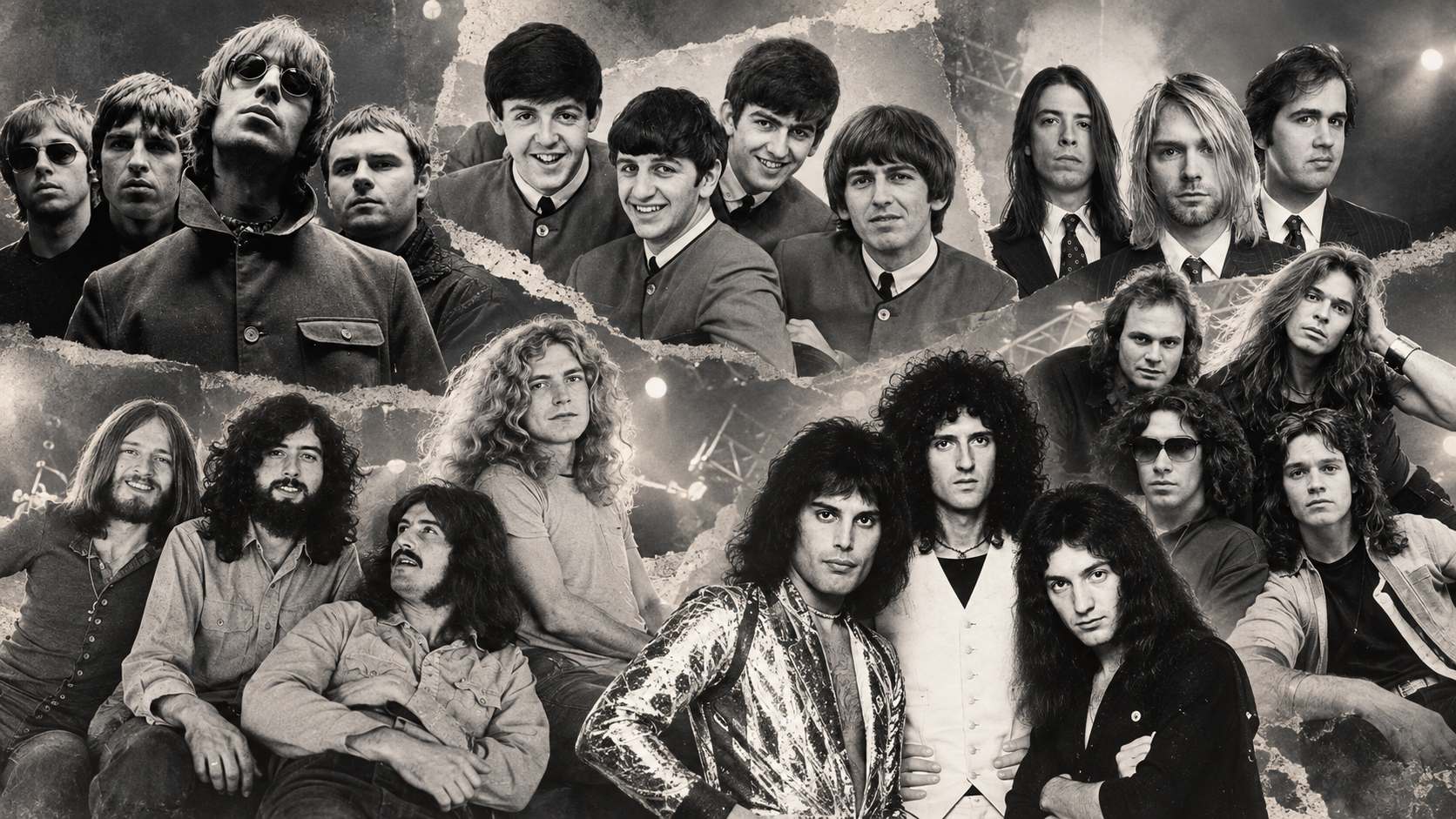
Gene Simmons heard Van Halen play, loved what he heard, and helped them record a demo. Nobody wanted to sign them. A few years later, Eddie Van Halen was being hailed as one of the greatest guitarists of his generation.
Oasis had to argue their way onto the stage at a Glasgow club before a record label boss offered them a deal. The Beatles were rejected by Decca Records. Nirvana had already released an album before most people outside the Seattle music scene knew who Kurt Cobain was.
Rock history is full of stories about bands being discovered at exactly the right moment. Some are true. Others have been repeated so many times that the details have become hopelessly mixed up.
And a few are even stranger once you find out what actually happened.
1. The Beatles Were Unknown Until Brian Epstein Saw Them at the Cavern Club
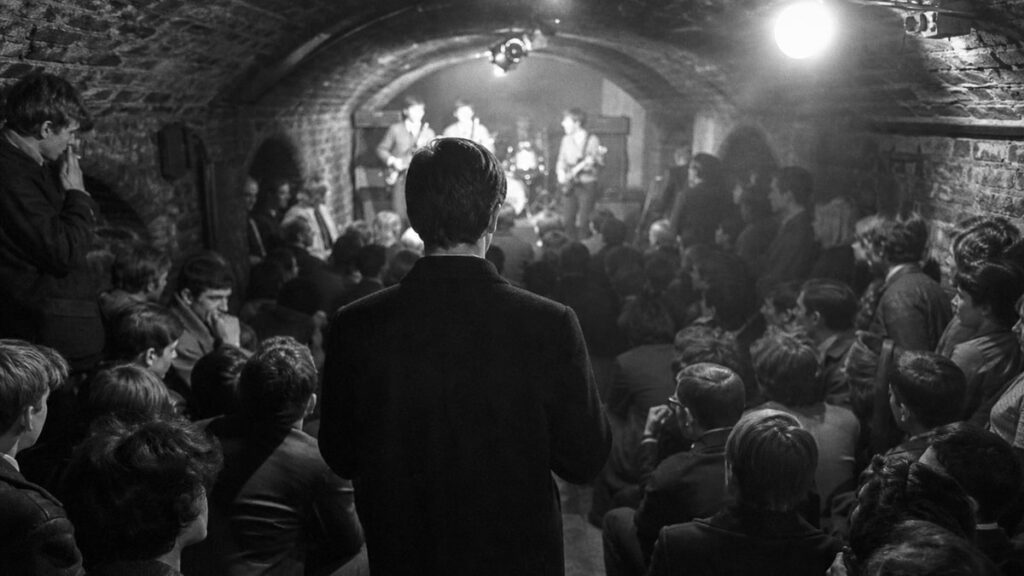
Brian Epstein first saw The Beatles perform at Liverpool’s Cavern Club on November 9, 1961. He was impressed, became their manager, and helped them secure the record deal that changed popular music.
So far, the famous story checks out. The part that gets exaggerated is how unknown the band supposedly was.
John Lennon, Paul McCartney, George Harrison and Pete Best had already spent considerable time performing in Hamburg. Back in Liverpool, they were drawing audiences at the Cavern and attracting attention from local music fans.
Epstein was entering a scene where The Beatles had already made a name for themselves. According to the official Beatles timeline, the group eventually performed 292 times at the Cavern between 1961 and 1963.
Epstein recognized their commercial potential and knew they needed professional representation. He helped improve their presentation, organized meetings with record companies, and continued pursuing a deal after the first attempts failed.
One particularly entertaining detail is about Paul McCartney. He missed the band’s first meeting with Epstein because he decided to take a bath.
Imagine skipping a meeting with the man who would help turn your band into the biggest musical act in the world because you had something else planned for the bathroom.
And Then Decca Records Turned Them Down
On January 1, 1962, The Beatles auditioned for Decca Records in London. The company eventually passed on them and signed Brian Poole and the Tremeloes instead.
Decca has been mocked for that decision ever since.
But the musicians who auditioned were not quite the group that would record Please Please Me the following year. Pete Best was still playing drums, and George Martin had not yet begun producing their records.
Decca missed an extraordinary opportunity. It is also worth remembering that record executives in January 1962 had no way of knowing how many extraordinary songs Lennon and McCartney would write over the next several years.
Epstein kept trying. The Beatles eventually signed with EMI’s Parlophone label, and George Martin became their producer.
Had Decca signed them first, rock history might have looked very different. Or perhaps Decca would have made a mess of the whole thing. Nobody can answer that one.
2. Oasis Were Discovered by Complete Accident at a Glasgow Pub
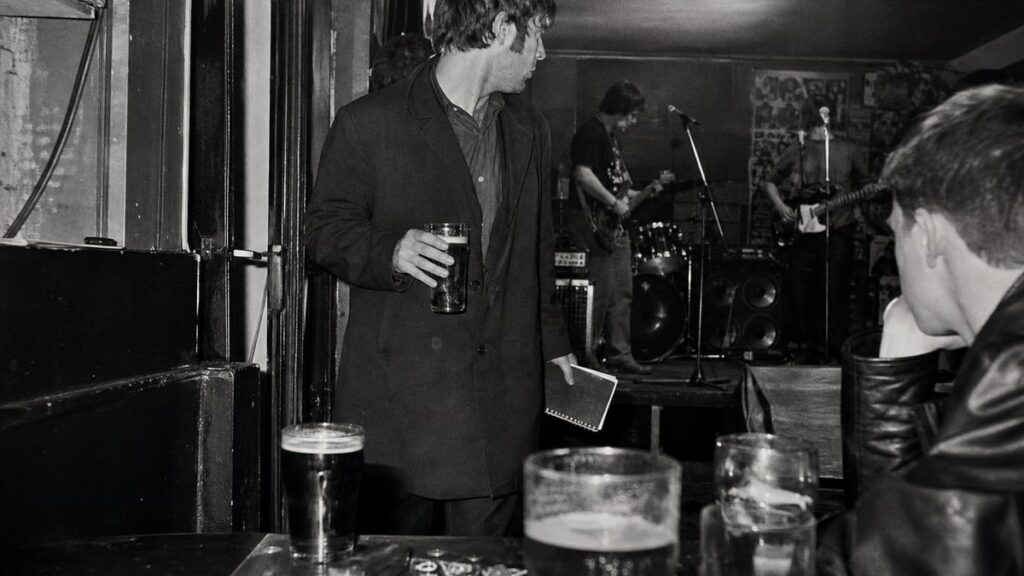
Of all the stories about famous bands being discovered, the Oasis story is one of the few that sounds ridiculous but is largely true.
On May 31, 1993, Alan McGee of Creation Records visited King Tut’s Wah Wah Hut in Glasgow. He had not traveled there specifically to see Oasis.
The Manchester band had made the journey north hoping to play, but they were not originally on the bill. After some disagreement with the venue, they eventually got their chance.
McGee heard them, liked what he heard, and pursued a record deal.
Creation Records’ account of the meeting confirms the date and describes the unlikely circumstances that brought McGee and Oasis together.
It is a terrific story, especially because Oasis were hardly known for politely waiting their turn.
Noel Gallagher Had Already Done His Homework
The idea that McGee discovered five random lads who suddenly became brilliant musicians misses the work Oasis had already put in.
Noel Gallagher joined the band in 1991 and brought his songwriting with him. By the time Oasis played King Tut’s, they had material, a clear musical direction, and ambitions that extended well outside Manchester.
McGee gave them an opportunity that changed their career. He still needed to hear a band worth signing.
There is another reason to question the tidy versions of famous discovery stories. People who worked as agents, managers and promoters sometimes remember events very differently from the musicians. Former music executive Ira Blacker addresses exactly that problem in his music industry story, discussing how firsthand accounts can get lost as rock legends are repeated over the years.
As for Oasis, they released Definitely Maybe in August 1994. The album reached number one in the UK, and the argument over getting onto a Glasgow stage became one of the great stories of British rock.
3. Gene Simmons Discovered Van Halen and Made Them Famous
Gene Simmons really did discover Van Halen in the sense that he saw them before they were famous and recognized their potential.
He was impressed enough to help finance a demo recording. Given how successful Kiss already was, that must have seemed like a tremendous opportunity for a struggling Los Angeles rock band.
Unfortunately, the recordings did not lead to a contract.
Simmons introduced the music to people in the business, but the response was disappointing. Van Halen went back to playing concerts around Los Angeles.
In a 1978 interview with Eddie Van Halen, the guitarist discussed their early attempts to attract record-company interest and the difficulties they encountered before finally signing.
Gene Simmons deserves credit for recognizing the band. He just was not the person who ultimately secured their recording contract.
View this post on Instagram
Warner Bros. Finally Came Calling
Producer Ted Templeman and Warner Bros. executive Mo Ostin eventually saw Van Halen perform at the Starwood in Hollywood in 1977.
Unlike the executives who had passed on the earlier demos, they were sufficiently impressed to pursue the group.
The resulting contract led to the band’s self-titled debut album in February 1978.
It contained “Runnin’ with the Devil,” “Ain’t Talkin’ ’bout Love” and “Eruption,” the instrumental that introduced countless listeners to Eddie Van Halen’s extraordinary guitar technique.
Looking back, the earlier rejection seems almost absurd. But Eddie and his bandmates had spent years playing clubs and building an audience, so they had plenty of experience by the time Warner Bros. arrived.
Simmons later spoke about his involvement with obvious pride. And rightly so. He had recognized a remarkable guitarist before most of the world had heard him play.
He just could not convince a record label to do anything about it.
4. Nirvana Came Out of Nowhere When Smells Like Teen Spirit Became a Hit
When “Smells Like Teen Spirit” exploded in 1991, Nirvana seemed to arrive almost overnight.
MTV started playing the video, radio stations followed, and suddenly Kurt Cobain was being presented as the reluctant spokesman for an entire generation.
To anyone who had followed Seattle’s underground rock scene, however, Nirvana were hardly a new discovery.
The band had released its first single, a cover of Shocking Blue’s “Love Buzz,” through Sub Pop in 1988. Their debut album, Bleach, followed in 1989.
The official Nirvana timeline documents those recordings, the early performances, and the band’s progress before signing with a major label.
Bleach was recorded on a limited budget, but it established Nirvana as one of the groups attracting attention in the Pacific Northwest.
According to Sub Pop’s anniversary release notes, the album initially sold around 40,000 copies.
Forty thousand records are a long way from the millions Nirvana would eventually sell. Still, for an underground band on an independent label, that was real progress.
Even Some Early Nirvana Songs Have Strange Stories
“Blew,” the opening track from Bleach, is a particularly heavy recording, with a guitar sound that seems to drag itself along the floor.
Rocksoffmag’s selection of the best Nirvana songs includes the track and discusses an unusual recording mishap associated with its sound.
By the time Nevermind arrived in September 1991, Nirvana had already spent years writing songs, recording, and touring.
What happened next was extraordinary. The album became a huge commercial success, and “Smells Like Teen Spirit” helped bring alternative rock into the mainstream.
For millions of listeners, Nirvana were a discovery in 1991. For Sub Pop and their early fans, the discovery had happened years earlier.
5. Led Zeppelin Were Four Unknown Musicians Who Got Lucky
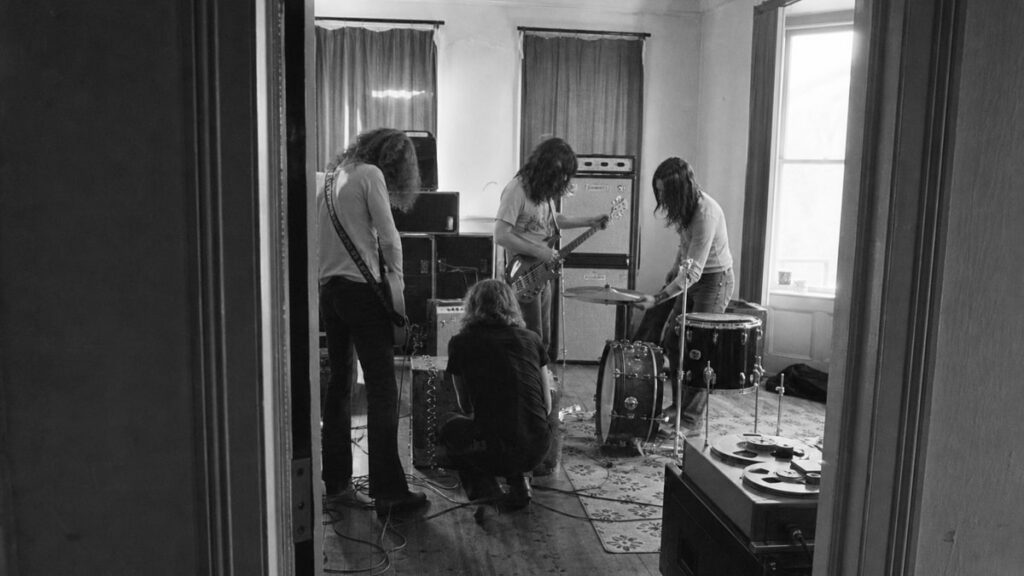
Led Zeppelin were never really a group of unknown musicians waiting for somebody to recognize their talent.
Jimmy Page was already a successful session guitarist and a member of the Yardbirds. John Paul Jones had worked as a session musician and arranger, and Robert Plant and John Bonham had experience playing in bands.
Page began assembling the group in 1968 as the Yardbirds were coming to an end.
Interestingly, the lineup he eventually created was not his original plan. He had other musicians in mind, including Terry Reid, who declined the opportunity to sing.
Reid suggested that Page contact Robert Plant. Plant subsequently recommended John Bonham, with John Paul Jones joining on bass.
The full account appears in Rocksoffmag’s history of Led Zeppelin, including the early lineup discussions and how Page eventually found the musicians who would become one of rock’s biggest bands.
Peter Grant Already Knew How the Business Worked
Led Zeppelin also had a manager who knew how to negotiate a recording contract.
Peter Grant had spent years working in the music business. Once the band recorded its debut album, he approached Atlantic Records.
Atlantic signed Led Zeppelin in 1968. The group released its first album in January 1969 and soon became a major concert attraction.
Their rise was fast, but Page had already spent years establishing himself as a musician. Grant knew the business, the band had recorded strong material, and the musicians could deliver impressive live performances.
The story sounds more like four experienced musicians assembling an exceptional rock band than a fairy tale about being spotted by a stranger.
There is also the famous Keith Moon story. According to the version repeated over the years, Moon joked that Page’s proposed group would go down like a lead balloon.
The name Led Zeppelin eventually emerged from that remark.
If the story is accurate, Moon accidentally supplied one of the most recognizable names in rock history while expressing serious doubts about the whole idea.
6. Queen Were Signed as Soon as Record Executives Saw Freddie Mercury Perform
View this post on Instagram
Freddie Mercury had an extraordinary ability to command an audience. After watching footage of Queen at Live Aid in 1985, it is easy to imagine record-company executives fighting to sign him from the first moment he stepped onto a stage.
Queen did not have an easy beginning.
Freddie joined Brian May and Roger Taylor in 1970, after their earlier band Smile had effectively come to an end. John Deacon joined in 1971, completing the lineup that would remain together throughout Queen’s recording career.
The group spent considerable time rehearsing, playing concerts and working on recordings before its first album appeared.
Trident Studios became involved in the band’s early development and helped arrange its business connections.
Queen performed a showcase at London’s Marquee Club on April 9, 1973, attended by invited music-industry figures. The Queen concert archive documents the performance and its place in the band’s early career.
Queen released its debut album in July 1973.
Commercial success was not immediate. The album reached number 24 on the UK chart, and the band continued working toward a larger audience.
Their breakthrough came with the next records, particularly Sheer Heart Attack in 1974 and A Night at the Opera in 1975.
By then, Freddie had developed much of the theatrical confidence that later made Queen concerts so memorable. But the band had also put years into writing, recording and learning how to perform together.
Even a singer as remarkable as Freddie Mercury did not simply walk into a club and leave with a guaranteed career.
7. A Record Label Rejection Means the Band Has No Future
The Beatles were rejected by Decca. Van Halen recorded demos that failed to secure a contract. Queen spent years trying to establish themselves.
Looking at those careers now, the people who passed on them seem spectacularly shortsighted.
But record labels have rejected an enormous number of bands over the years. Most never became famous, and the public rarely hears about them.
Successful bands have an obvious advantage when telling their early stories. They already know how the story ends.
Imagine an executive explaining to Eddie Van Halen in the mid-1970s that the music was not quite right for the label. At the time, it was another disappointing business meeting. A few years later, the same conversation became a wonderful example of somebody getting things terribly wrong.
There is also a tendency to forget how much bands change before their first big success.
The Beatles had a new drummer and the guidance of George Martin by the time they released their early hits. Nirvana worked with a new producer and a major label on Nevermind. Van Halen had years of performing experience before recording their debut.
The bands that became successful were not necessarily ready to make those famous records when they received their first rejection.
8. One Lucky Encounter Is Enough to Make a Band Famous
Alan McGee seeing Oasis at King Tut’s was an important event. Brian Epstein seeing The Beatles at the Cavern was another.
But neither meeting put a hit single straight into the charts.
Oasis still had to record Definitely Maybe, release singles, promote their music and perform around Britain. The Beatles needed a recording contract, a producer and songs that audiences wanted to hear.
Plenty of musicians have impressed important people without becoming successful. Gene Simmons was impressed by Van Halen, but even his reputation could not immediately secure them a contract.
Sometimes the record label executive was the last person to hear about a band everybody in the local scene already knew.
Other times, the people who first recognized a group were unable to help it commercially.
The stories we remember are the occasions when somebody recognized talent and eventually helped turn it into success. Those meetings are exciting, but the recordings, performances and decisions that followed were equally important.
Some of the Best Rock Stories Get Better When You Hear the Full Version
Alan McGee really did encounter Oasis under remarkable circumstances. Gene Simmons really did help Van Halen record a demo before the band became famous. And Decca Records really did reject The Beatles.
Those events are interesting enough without pretending the musicians involved had done nothing beforehand.
In some cases, the details that disappear from the popular version are the most entertaining. Paul McCartney missing an important meeting because he wanted a bath is a wonderful little piece of Beatles history. Oasis having to argue for a place on the bill at King Tut’s is exactly the sort of thing you would expect from Oasis.
As for Van Halen, the thought of Gene Simmons trying unsuccessfully to convince people to sign Eddie Van Halen is remarkable in hindsight.
Perhaps the greatest myth is the idea that rock stars were always obvious rock stars from the beginning.
Somebody still had to take a chance on them. And judging by these stories, quite a few people had the chance and let it pass.

- The Biggest Myths About How Famous Rock Bands Were Discovered - October 13, 2026
- Jack Doherty Net Worth 2026 – How the YouTuber Made His Millions and Why His Latest Deal Could Cost Him - October 12, 2026
- 18 Songs to Set the Mood for a Romantic Date at Home - October 12, 2026