Live concerts hit different. Sound shakes your chest, lights flash, and thousands of people move like one living thing.
Energy in those moments sticks in memory long after amps go silent. Rock history, of course, is not built only on riffs and vocals.
Flags waving, banners hanging, bold gestures on stage, all of it burns into people’s minds.
Music and imagery together create something bigger than a performance.
Cultural shifts, rebellion, and unity show up not just in lyrics but in what audiences see. Most unforgettable concerts have two factors: they sounded great, and they looked great.
Let us take a look at the most memorable banners and flags ever in rock concert history.
1. U2 at Red Rocks (1983) – The White Flag of Defiance
View this post on Instagram
Rain didn’t slow anything down at Red Rocks. Water soaked the stage, lights cut through fog, and U2 leaned into the chaos instead of backing off.
Bono stepped forward during “Sunday Bloody Sunday” and raised a white flag high above his head. Image hit instantly.
Meaning behind that moment lands hard when placed next to the political tension tied to the song:
- The song addresses violence in Northern Ireland, especially events tied to Bloody Sunday
- White flag signals peace, surrender, but also resistance without violence
- Gesture contrasts the aggression described in the lyrics
Bob Dylan and others had already used lyrics to challenge authority. Bono added a physical symbol that made the message impossible to miss.
Rain, music, and that flag combined into one unforgettable scene.
Footage later amplified the moment even more, turning it into a defining image tied to the band’s identity. One simple prop carried a weight far bigger than its size.
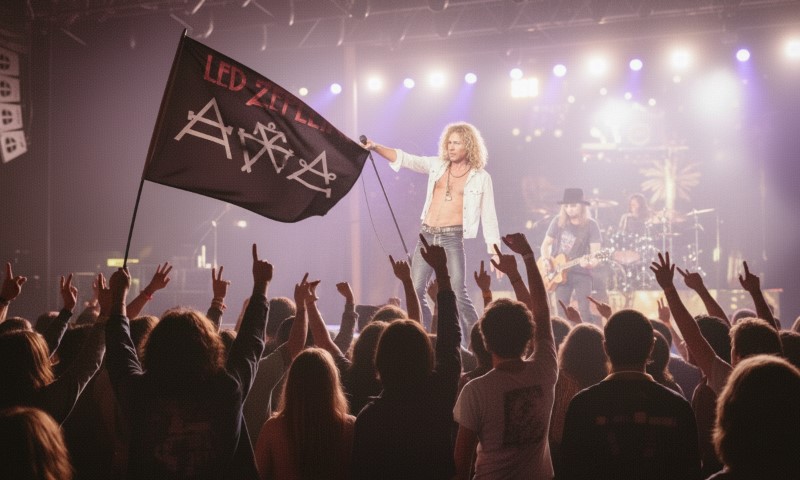
2. Led Zeppelin & Rock Iconography – Posters as Extended Banners
Concert visuals don’t end when the lights go out. Led Zeppelin built a strong identity through imagery that followed fans home.
Posters, album covers, and merchandise carried the band’s symbols into everyday life.
Certain visual elements became instantly tied to the group:
- Iconic symbols linked to each band member
- Mystical and cryptic imagery across the album art
- Consistent visual themes across merchandise
Fans lived with the imagery. Shirts, posters, and collectibles turned into reminders of concerts and albums.
Custom items like banners and pennants, such as those available at 4inlanyards, continue that tradition by letting organizers create their own visual symbols tied to music and events.
Seeing one of those visuals could instantly trigger memories tied to specific songs or shows.
Visual identity helped build the band’s myth in a way that extended far past the stage.
3. Pink Floyd – The Wall Tour (1980-81) – Conceptual Visual Barriers
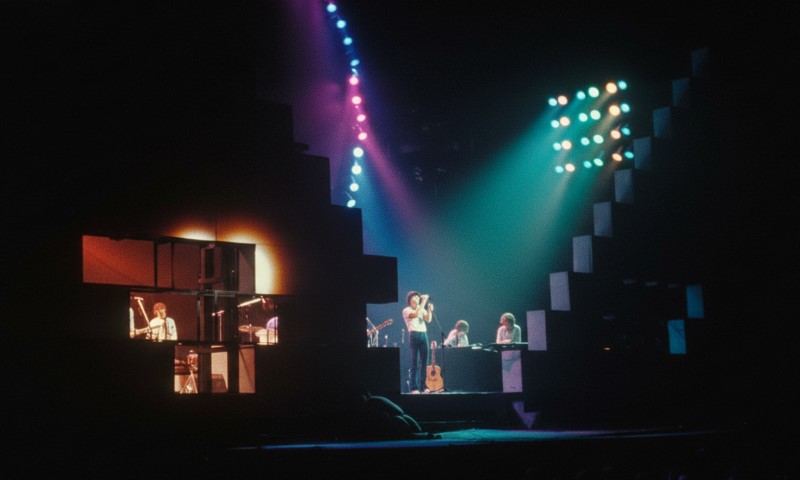
Pink Floyd turned concerts into immersive experiences.
Wall Tour pushed that idea further by building a massive structure right in front of the audience during the show.
Bricks were stacked one by one until a full barrier separated the band and the crowd. Visual carried meaning tied directly to the music.
The concert became more than a setlist. It turned into a narrative playing out live, with visuals shaping how people experienced every song.
4. Jimi Hendrix at Woodstock (1969) – The American Flag Reimagined
Woodstock brought together massive crowds during a time filled with tension and change.
Mud covered the ground, but energy stayed high. Jimi Hendrix closed the festival with a performance that flipped expectations.
His version of “The Star-Spangled Banner” didn’t sound clean or traditional.
Guitar twisted the melody into something raw and intense. Sounds echoed like sirens, explosions, and chaos.
Context around that performance makes the moment even more powerful:
- The Vietnam War was ongoing during the festival
- Youth culture is pushing back against authority
- Woodstock symbolized peace, music, and counterculture
No flag waved on stage, yet symbolism filled every note. The guitar became a voice for frustration and identity. Performance questioned what that song meant at the time.
An earlier moment at Monterey Pop in 1967 already showed Hendrix’s visual impact. Setting his guitar on fire created a shocking image that people still talk about.
Woodstock took that intensity and tied it directly to national identity, making it even more charged.
5. Queen at Live Aid (1985) – Unity as a Human Banner
Live Aid reached around 1.4 billion viewers, turning a concert into a global moment.
Stadium packed, cameras rolling worldwide, and Queen stepped into that space with total control.
Freddie Mercury didn’t rely on props or elaborate staging. The crowd became the focus almost immediately.
His interaction turned thousands into a single moving force.
Key elements of that interaction made it so powerful:
- Call-and-response chants kept everyone engaged
- Simple vocal runs mirrored back by the audience
- Rhythmic clapping synced across the stadium
People watching at home saw something incredible. The audience became part of the show. The entire crowd acted like one giant symbol of unity.
Music connected people for a shared cause, and visuals came straight out of that connection. No banners needed. Human energy filled that role perfectly.
6. The Rolling Stones at Hyde Park (1969) – Symbolic Tribute Imagery
The Hyde Park concert carried a heavy emotional weight. Brian Jones had died just days earlier, and the band turned the show into a tribute.
Mick Jagger opened by reading poetry, setting a reflective tone.
The visual moment that followed became unforgettable. Butterflies released into the air created a striking scene that people still remember.
Moments tied to loss often stick deeper, and Hyde Park captured that perfectly through imagery and atmosphere.
7. Punk Rock (Sex Pistols, The Clash) – Political Flags and DIY Aesthetics
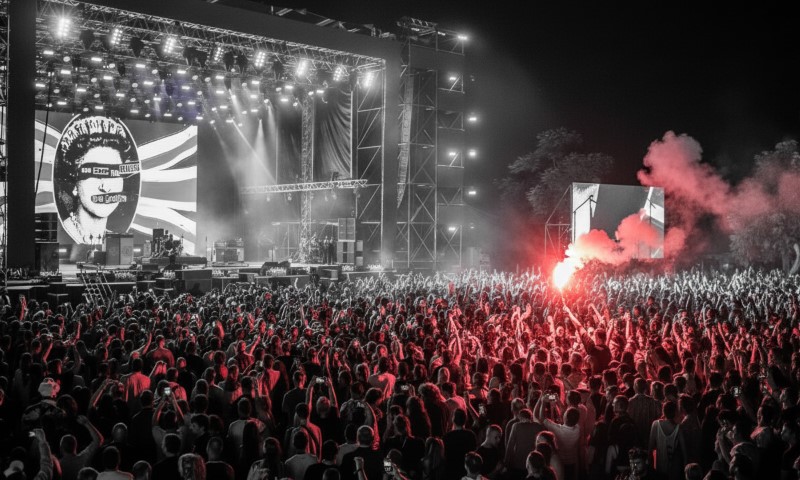
Punk exploded onto the scene with raw energy and zero interest in polish.
Sex Pistols and The Clash embraced chaos in both sound and visuals. Everything looked rough, and that was the point.
Visual style carried strong political and anti-establishment messages:
- Anarchist flags appeared at shows and in artwork
- National symbols altered or defaced
- Clothing ripped, customized, and often handmade
Nothing felt accidental. Rough edges told a story of rejection. Mainstream culture got pushed aside in favor of something more direct and confrontational.
Earlier shake-ups like Dylan going electric already challenged norms. Punk took that spirit and made it louder, faster, and more visual.
Fans wore it, waved it, and turned it into part of their identity.
8. Nirvana & Grunge Era – Subverting Symbols
Grunge shifted focus away from spectacle. Nirvana leaned into simplicity and irony, avoiding flashy visuals that defined earlier eras.
Symbols still appeared, but they carried a different tone:
- Logos often looked rough or intentionally unpolished
- Flags and imagery used in ironic or stripped-down ways
- Merchandise avoided glossy, commercial styles
Energy came through authenticity rather than big visual statements. Kurt Cobain and the band focused on raw emotion, letting music carry most of the weight.
Earlier rebellion in rock took louder, more aggressive forms.
Grunge continued that thread but pulled things inward, making visuals quieter yet still meaningful.
The Bottom Line
Iconic rock moments mix sound, visuals, and crowd energy in a way that sticks forever.
Cultural shifts show up on stage through symbols, gestures, and shared experiences.
Controversy like Dylan’s electric switch, protest like Hendrix’s anthem, and unity like Live Aid all prove one thing. Visuals give music a form people can see and remember.
Most unforgettable concerts don’t just sound powerful. They create images that capture what the music means in that exact moment.

- Best Universities for Music Production in 2026 - September 11, 2026
- Ethan Klein Biography 2026, Age, Career, Wife, Family and H3H3 - September 11, 2026
- There Is Much More to Steve Aoki Than Music and Flying Cakes - September 3, 2026